Tag

Bias

All articles tagged with #bias

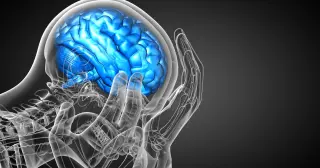
Big Amygdala, Subtle Bias: Brain Structure and Our Reactions to the Unknown
science10 days ago

Big Amygdala, Subtle Bias: Brain Structure and Our Reactions to the Unknown

Neuroimaging links larger amygdala and stronger responses to unfamiliar faces with conservative leanings and threat sensitivity, but large replication studies show the effect is small and not diagnostic; the amygdala may function as a significance detector rather than a fear center, habituation reduces responses to known faces, and cross-group contact generally reduces prejudice, suggesting biology partly influences discomfort with difference but isn’t destiny.

AI Hiring Could Sideline Midlife Women
technology19 days ago

AI Hiring Could Sideline Midlife Women

BBC reports that AI-powered recruitment tools may disadvantage women aged 40–65 returning to work, with many experiencing automated rejections or no responses after numerous applications. Experts warn AI can overlook transferable skills from career breaks, reinforcing gendered ageism and risking large-scale job displacement for mid-career women unless there’s more regulation, transparency, and retraining opportunities.

AI-written stories fool readers into thinking they're human
technology20 days ago

AI-written stories fool readers into thinking they're human

A Villanova University-led study (published via Cambridge University Press) compared three human-authored short stories with three AI-generated ones. In multiple experiments involving over 1,600 participants (plus groups of 424 and 481), readers often couldn’t reliably distinguish AI from human writing and frequently rated AI-generated stories highly when they were told they were human, revealing a bias that AI creativity is now harder to separate from human craft. Participants with higher AI literacy were better at spotting AI text, while general literary expertise didn’t help as much; AI prose tended to be clearer and more direct, whereas human writing remained subtler and more complex.

Red States Dominate CNBC’s ‘Worst Places to Live’ Ranking, Sparking Bias Debate
business1 month ago

Red States Dominate CNBC’s ‘Worst Places to Live’ Ranking, Sparking Bias Debate

CNBC’s 2026 quality-of-life ranking lists Arkansas, Oklahoma, Alabama, Missouri, Utah, Georgia, Louisiana, Indiana, Texas and Tennessee as the bottom 10 states to live in, all Republican-led, prompting critics to allege liberal bias in the criteria despite ongoing population growth in several of those states. The ranking factors include crime, air quality, healthcare, childcare, inclusiveness, and reproductive rights, with some commentators arguing the metrics unfairly penalize conservative policy environments.

White House Report on Smithsonian Draws Fire for Biased History
politics1 month ago

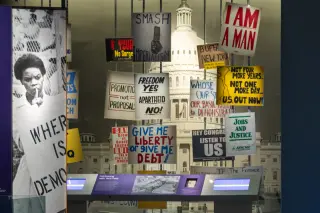
White House Report on Smithsonian Draws Fire for Biased History

An op-ed argues the White House’s 160-page report accusing the National Museum of American History of “ideological capture” is itself biased and selective, misreading evidence on race and immigration, and aimed at enforcing a single celebratory narrative of American exceptionalism, while praising the Smithsonian for presenting diverse perspectives and prompting critical questions about the nation’s past.

Global study reveals subtle left-turn bias in human movement
science2 months ago

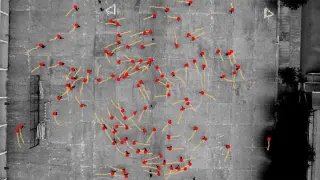
Global study reveals subtle left-turn bias in human movement

An international study published in Nature Communications finds people show a modest but consistent bias to turn left (counterclockwise) when walking, persisting across cultures, spaces, and even solo experiments. The bias is stronger in younger participants and does not depend on dominant hand, sex, or eye movement; researchers ruled out explanations like the Coriolis effect or large-scale forces, pointing to a possible biomechanical basis. The finding could influence the design of evacuation routes and crowd-flow planning in airports, museums, stadiums, and other crowded spaces, with future work including VR testing and cross-species comparisons.

Brains Predict Before Perception: How We Classify the World in Real Time
science3 months ago

Brains Predict Before Perception: How We Classify the World in Real Time

Neuroscientists Lisa Feldman Barrett and Earl Miller argue that the brain constructs categories on the fly through predictions before sensory input, meaning we infer what we’re seeing (like a cat) based on past experience, bodily signals, and language. This predictive view challenges bottom-up ideas of perception and ties bias, beginner’s mind, and even mental-health concepts to how we categorize the world.

Vincke Suggests Reviewing Reviewers, Igniting Gaming-Press Debate
gaming6 months ago

Vincke Suggests Reviewing Reviewers, Igniting Gaming-Press Debate

Larian CEO Swen Vincke floated the idea of a system to evaluate and review the reviewers themselves, aiming to curb bias and improve accountability in game criticism. The notion sparked a wide online debate about fairness, transparency, and practicality, with supporters arguing for improved scrutiny of outlets and individual critics, while opponents warn of potential abuse, censorship, and the erosion of independent voices. The discussion also touches on existing dynamics like Metacritic weighting, free review codes, and the difficulty of measuring subjective art.

When AI Becomes Your Life Coach: Prompts, Pitfalls, and Practical Tips
technology7 months ago

When AI Becomes Your Life Coach: Prompts, Pitfalls, and Practical Tips

AI can lower the barrier to self-reflection and help organize goals, acting as a collaborative partner in goal setting. Experts caution that AI may produce generic or biased goals, risk echo chambers, and provide persuasive but flawed advice; use it as a reflective tool, feed it high-quality feedback, anticipate obstacles, and keep personal accountability central.

The Impact of AI on Hiring: Challenges and Opportunities
business8 months ago

The Impact of AI on Hiring: Challenges and Opportunities

AI is transforming the hiring process in the US, with increased use of AI-led interviews and automated cover letters, but this shift is causing issues such as reduced hiring success for applicants, increased application volume, and concerns over bias and fairness. While companies embrace AI for efficiency, workers and lawmakers push back due to fears of discrimination and loss of the human touch, and legal challenges are emerging. Despite these challenges, AI-driven hiring tools are likely to persist, offering new opportunities but also risks for job seekers.