Tag

Burden Sharing

All articles tagged with #burden sharing

NATO Spending Canard: Why 5% GDP Isn’t the Measure of Alliance Strength
world3 days ago

NATO Spending Canard: Why 5% GDP Isn’t the Measure of Alliance Strength

The Bulwark argues that fixating on a 5 percent of GDP defense-spending target distorts NATO’s purpose; military capability and alliance cohesion depend on how resources are used and integrated, not the raw spending percentage. It highlights Poland as a case study of strategic modernization, notes the U.S. budget supports global commitments, and calls for strengthening Europe’s defense-industrial base and burden allocation rather than chasing a single fiscal target, especially as Ukraine’s war exposes procurement weaknesses and the need for interoperable, capable forces.

Trump Faces NATO Rift as Iran Clash Tests Burden-Sharing at Ankara
world4 days ago

Trump Faces NATO Rift as Iran Clash Tests Burden-Sharing at Ankara

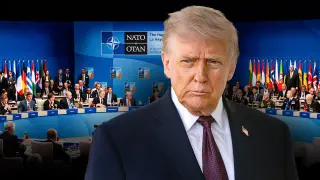
Trump arrives at the Ankara NATO summit frustrated by European allies' responses to the Iran operation, accusing Spain and others of overflight denials and pressing for higher defense spending (5% of GDP) and stronger burden-sharing as the alliance weighs Ukraine and Russia strategy and long‑term NATO reforms; Whitaker says Trump is disappointed by allies' actions and political criticisms, with private talks expected to shape how partners meet U.S. leadership and defense commitments.

NATO Spending Watch: Allies Lag on 5% Target Ahead of Ankara Review
world22 days ago

NATO Spending Watch: Allies Lag on 5% Target Ahead of Ankara Review

NATO members pledged to devote 5% of GDP to defense by 2035, but several allies—Spain (~2%), the UK (~2.6% with a gap to 3.5%), Hungary (~2%), the Czech Republic (~2% via a highway upgrade), Slovenia (~2% with accounting concerns), and Italy (~2.8%)—are lagging or relying on questionable accounting. A classified NATO review ahead of the Ankara summit will assess progress and the credibility of spending plans as the U.S. presses for greater burden-sharing and European defense responsibility.

NATO’s Perennial Crises, Lasting Unity
world24 days ago

NATO’s Perennial Crises, Lasting Unity

NATO has weathered eight decades of disputes over burden sharing and actions beyond its treaty boundaries, yet endures because allies repeatedly choose shared security over disintegration. The piece traces a pattern of crises—from early spending fights to out‑of‑area interventions—that have rarely produced irreparable rupture, aided by the cost of divorce and the alliance’s core interests. Despite current tensions intensified by Trump-era pressure and the Ukraine war, European defense spending is rising toward the two‑percent target and cohesion persists, with the understanding that abandoning NATO would be costlier than reform.

Hegseth presses burden-sharing among Asia-Pacific allies, warns China
world1 month ago

Hegseth presses burden-sharing among Asia-Pacific allies, warns China

At the Shangri-La Dialogue in Singapore, Defense Secretary Pete Hegseth urged Asia-Pacific allies to shoulder more defense burdens, praising countries such as the Philippines, Australia, Indonesia, Malaysia and Singapore while noting improvements by Vietnam and India. He warned China against imposing its hegemony and called for a durable regional balance of power, criticizing Europe for not contributing enough. He also pressed allies to meet a 3.5% of GDP defense-spending target and promised expedited arms sales, deeper industrial cooperation, and expanded intelligence sharing for “model allies.”

politics2 months ago

Hegseth Skips Ukraine Meeting Again, Colby Attends in His Place

Defense Secretary Pete Hegseth will again skip the Ukraine Defense Contact Group meeting, with policy chief Elbridge Colby attending virtually, signaling Washington’s push for Europe to shoulder more defense burden as the U.S. prioritizes homeland security and actions in the Iran conflict; roughly 50 defense ministers will participate as NATO leaders coordinate Kyiv support, while the Pentagon’s PURL program continues weapon shipments to Ukraine, albeit amid warnings that U.S. arms could be prioritized elsewhere; EU hopes for a stalled 90 billion euro Kyiv loan may gain momentum after Hungary’s Orban loss.

Europe's Strategic Edge: Why America Needs to Keep Its Alliance
world4 months ago

Europe's Strategic Edge: Why America Needs to Keep Its Alliance

An op‑ed from The Bulwark argues that US-European alliances are a strategic asset, not charity. Rubio and Colby use Munich to push a transactional view of burden-sharing, potentially eroding NATO and deterrence, while the piece emphasizes that Europe’s forward US presence enables rapid crisis response and power projection. European defense spending has risen largely due to Russia, not American coercion, and NATO’s cohesion is essential for US interests; treating alliances as negotiable could weaken the security architecture that underpins American strategy.