
Tag

C H Activation

All articles tagged with #c h activation

science13 days ago

Phosphine-Promoted C–H Azine Functionalization with Water and Ammonia

Nature reports that simple triarylphosphines enable selective azine C–H coupling with water and ammonia through a non-metal mechanism in which aldehyde/imine motifs interconvert to acetal- and aminal-type forms; this neighboring-group participation guides water and ammonia into a P(V) coordination environment, promoting C–O and C–N bond formation via ligand coupling. The method works across a broad range of pyridines, quinolines, and diazines and provides a late-stage hydroxylation/amination strategy for complex pharmaceuticals and agrochemicals, supported by experimental and computational studies.
science2 months ago

Ligand-guided remote desaturation converts simple aliphatic acids into gamma-lactones

Researchers report a ligand-enabled palladium-catalyzed method that activates distal γ-C(sp3)–H bonds in unbiased aliphatic carboxylic acids (from fatty and cyclic feedstocks) using designed O-allyl amido ester ligands, directly furnishing distal desaturated γ-lactones and double-desaturated γ-spirolactones. Mechanistic data support Pd(II)-mediated γ-C(sp3)–H activation, followed by dehydrogenation and intramolecular cyclization; the approach enables rapid assembly of biologically relevant scaffolds (e.g., muricatacin) from simple acids, offering a streamlined route to complex natural products and pharmaceuticals.

Direct Observation of Charge-Transfer Interactions in C-H Activation
chemistry3 years ago

Direct Observation of Charge-Transfer Interactions in C-H Activation

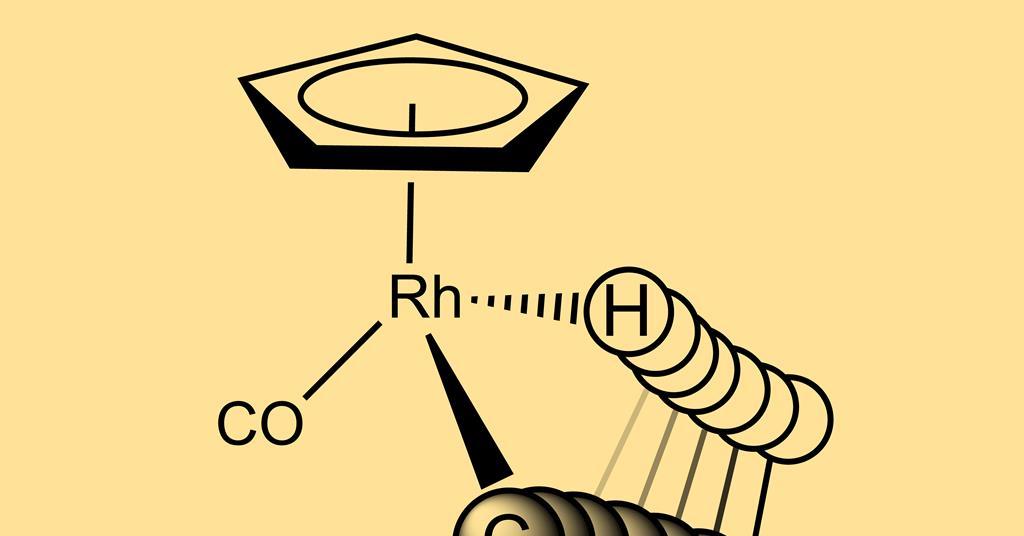
Researchers at Uppsala University have used time-resolved x-ray spectroscopy to directly observe metal-alkane charge-transfer interactions during C-H activation. The method offers synthetic chemists a better understanding of C-H activation reactions and could help guide the design of new catalysts. The findings shed important light on the metal ligand's influence on crucial mechanistic steps governing reactivity and could help researchers discover better catalysts for the chemical industry.