Tag

Catalysis

All articles tagged with #catalysis

Nitrogen Radical Cations Mimic Lewis Acids in Key Organic Reactions
science14 days ago

Nitrogen Radical Cations Mimic Lewis Acids in Key Organic Reactions

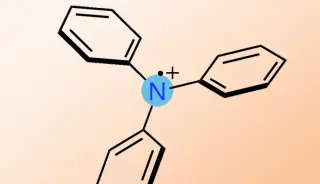
Researchers have discovered that nitrogen radical cations, such as the commercial oxidant Magic Blue, can catalyze reactions typically associated with Lewis acids, including hydrosilylations and Diels-Alder cycloadditions. This finding challenges the traditional assumption that Lewis acid-like reactivity requires a formally vacant acceptor orbital. The study, published in Chemical Science, demonstrates that these open-shell species can activate substrates through electrophilic mechanisms, offering a new perspective on catalyst design.

science19 days ago

Copper complexes generate carbon radicals via irreversible charge transfer

Researchers at the Shanghai Institute of Organic Chemistry and ShanghaiTech University have developed a new method to generate carbon-centered radicals using visible light. By employing copper-heteroaryl sulfone complexes, the team achieved irreversible metal-to-ligand charge transfer, breaking C-S bonds to create diverse alkyl radicals. This approach enables copper-catalyzed C-H fluoroalkylation and addresses long-standing challenges in incorporating perfluorocyclobutyl motifs into alkenes.

science1 month ago

Osaka chemists use single carbon atom to stitch flat molecules into rigid 3D spirocycles

Researchers at The University of Osaka have developed a rhodium-catalyzed method to construct spirocyclic frameworks by inserting a single carbon atom into carbon-carbon single bonds. Using a reagent called PINC as a carbon source, the reaction converts flat biphenylene molecules into rigid, three-dimensional structures by forming four new carbon-carbon bonds simultaneously. Published in Nature, this approach enables the synthesis of complex materials for electronics and drug design on a gram scale, overcoming previous limitations that relied only on double-bond reactivity.

Iron Catalysts Use Hydrogen Bonds to Convert Nitrate Pollution into Ammonia
science-and-technology2 months ago

Iron Catalysts Use Hydrogen Bonds to Convert Nitrate Pollution into Ammonia

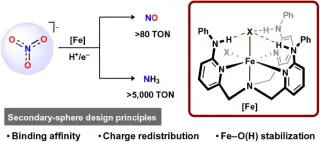
University of Michigan researchers have developed a bioinspired iron catalyst that uses secondary-sphere hydrogen bonds to bind and reduce nitrate, a persistent groundwater pollutant. By mimicking biological nitrate transport proteins, the catalyst achieves up to seven orders of magnitude higher binding affinity for nitrate compared to non-hydrogen-bonding analogues. This activation allows for the catalytic reduction of nitrate into nitric oxide under thermal conditions or ammonia under photochemical conditions, offering a potential pathway for converting environmental pollutants into useful fertilizers.

science2 months ago

Palladium catalysis unlocks precise ketone homologation via decarboxylative rearrangement

Jing Gong, Qian Wang, and Jieping Zhu from EPFL have published a new method for ketone homologation in Nature. The approach uses palladium(II)/palladium(IV) catalysis to convert beta-hydroxy carboxylic acids into ketones. Unlike older electrochemical methods that suffer from side reactions and loss of stereochemical data, this new pathway is concerted. It allows for precise control over stereochemistry, retaining the configuration of the migrating carbon while inverting the alpha-stereocenter. The method avoids hazardous diazo reagents and demonstrates high selectivity for unsymmetrical ketones. The authors validated the technique by using it as a key step in the total synthesis of (+)-rupestine D.

science3 months ago

Phosphine catalysts enable direct C–H coupling with water and ammonia

Researchers at Colorado State University and the University of Zaragoza have developed a new method for modifying organic molecules using simple triarylphosphine catalysts. This approach allows for the direct coupling of azine C–H bonds with water and ammonia, bypassing the need for transition metals. The technique offers a viable pathway for late-stage functionalization of pharmaceuticals and agrochemicals, enabling the introduction of hydroxyl and amino groups through a distinct mechanism involving neighboring group participation.

New Catalyst Bypasses Traditional Electron Transfer Rules to Unlock Complex Molecules
science3 months ago

New Catalyst Bypasses Traditional Electron Transfer Rules to Unlock Complex Molecules

Researchers at the University of Wisconsin-Madison, in collaboration with teams from Colorado State University and the University of Colorado Boulder, have developed a new catalytic method that circumvents a decades-old limitation in single-electron transfer reactions. By ejecting electrons directly into the solvent rather than relying on conventional chemical preferences, the team created a highly reactive environment where electrons attach to the first available molecule, regardless of its natural reduction potential. This approach, published in Nature, allows chemists to access previously unreachable reaction pathways and synthesize complex molecules essential for drug development and advanced materials. The breakthrough redefines how selectivity is determined in redox reactions, shifting the focus from initial electron capture to subsequent molecular behavior.

science5 months ago

Ligand-guided remote desaturation converts simple aliphatic acids into gamma-lactones

Researchers report a ligand-enabled palladium-catalyzed method that activates distal γ-C(sp3)–H bonds in unbiased aliphatic carboxylic acids (from fatty and cyclic feedstocks) using designed O-allyl amido ester ligands, directly furnishing distal desaturated γ-lactones and double-desaturated γ-spirolactones. Mechanistic data support Pd(II)-mediated γ-C(sp3)–H activation, followed by dehydrogenation and intramolecular cyclization; the approach enables rapid assembly of biologically relevant scaffolds (e.g., muricatacin) from simple acids, offering a streamlined route to complex natural products and pharmaceuticals.

Gold’s Surface Pattern Dictates Oxygen Activation, Explaining Inertia in Bulk and Reactivity in Nanoparticles
science6 months ago

Gold’s Surface Pattern Dictates Oxygen Activation, Explaining Inertia in Bulk and Reactivity in Nanoparticles

Computational study shows that gold’s surface atom arrangement governs its ability to activate oxygen: tightly packed reconstructed surfaces block O2 from splitting, keeping bulk gold inert, while looser unreconstructed square-like surfaces allow oxygen dissociation, enabling nanoparticle-catalyzed oxidation and suggesting new ways to design gold-based catalysts that balance durability with reactivity.

Triangular Aluminum Molecule Could Challenge Platinum in Catalysis
science6 months ago

Triangular Aluminum Molecule Could Challenge Platinum in Catalysis

Researchers at King’s College London synthesized a novel Al3 triangular compound, cyclotrialumane, that remains intact in solution and reacts with ethylene at room temperature to form unprecedented aluminum–carbon rings, a reactivity once seen only in precious metals, signaling a potential path to replacing platinum-group catalysts—though the work is early-stage and lab-scale, published in Nature Communications.

Atomic Corrals Unveil a Hidden Liquid State in Metals
science10 months ago

Atomic Corrals Unveil a Hidden Liquid State in Metals

Scientists used transmission electron microscopy to watch molten platinum nanoparticles on graphene and found that some atoms remain pinned at defect sites, forming an atomic corral that traps liquid metal and alters solidification. When only a few atoms are fixed, crystallization proceeds normally; with many pinned atoms, the liquid can remain unfrozen well below its normal freezing point and turn into an amorphous metal instead of a crystal. This corralled, hybrid state could impact catalyst design and materials science, and researchers aim to learn to place pinned atoms more precisely to build larger corrals.

Manganese Catalyst Breakthrough Enables Durable CO2-to-Formate Conversion
science10 months ago

Manganese Catalyst Breakthrough Enables Durable CO2-to-Formate Conversion

Researchers from Yale and the University of Missouri report that manganese-based catalysts can efficiently convert atmospheric CO2 into formate, a potential hydrogen carrier for fuel cells. The key advance is stabilizing the Mn catalysts by incorporating an additional donor atom into the ligand (hemilabile, pincer-like design), dramatically extending catalyst lifetimes and outperforming many precious-metal systems. This low-cost, durable approach to CO2 utilization could be broadly applicable to other catalytic transformations and supports sustainable hydrogen storage strategies.

Scientists Measure Tiny Electron Fraction, Solving Century-Old Catalysis Mystery
science1 year ago

Scientists Measure Tiny Electron Fraction, Solving Century-Old Catalysis Mystery

Scientists at the University of Minnesota and University of Houston have developed a new technique called Isopotential Electron Titration (IET) to directly measure the tiny fraction of an electron involved in catalytic processes, providing new insights into how catalysts like gold, silver, and platinum work, which could lead to more efficient and cost-effective manufacturing of fuels, chemicals, and materials.