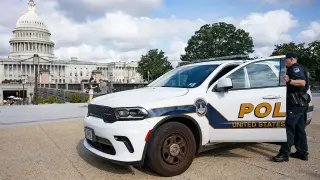
An armed man was arrested at the North Barricade of the U.S. Capitol after police found a firearm; authorities briefly closed the area as investigators probe why he drove onto restricted grounds, with no charges announced and the suspect still unidentified.
Capitol Police arrested 67-year-old Wendell J. Royster of Mississippi after spotting a handgun on his lap at the North Barricade. Royster was charged with carrying a pistol without a license and without a permit; the weapon did not discharge and there were no injuries. The North Barricade was briefly closed and later reopened as investigators looked into the incident.
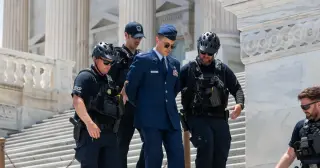
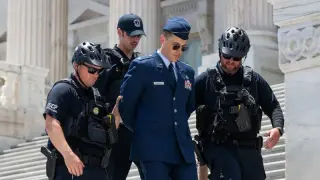
An active-duty U.S. Air Force Major, Jason Watson, was arrested on the Capitol steps after speaking at a news conference urging President Trump’s impeachment. Capitol Police said the demonstration was illegal on the House steps unless a member of Congress was present; Watson refused officers’ orders and was charged with crowding, obstructing, and incommoding. The incident underscores restrictions on service members’ political activity in uniform and highlights tensions around impeachment efforts.
An active-duty US Air Force major, Jason Watson, was arrested on the Capitol steps after delivering a speech at a Removal Coalition event calling for the impeachment and removal of President Donald Trump and Vice President JD Vance. Police said he refused lawful orders, resulting in a 22-1307 charge for crowding/obstructing; a DC official later said a case would not be filed and he was being released. Wearing a military uniform at a political event is prohibited, and dissent within the armed forces is rare.
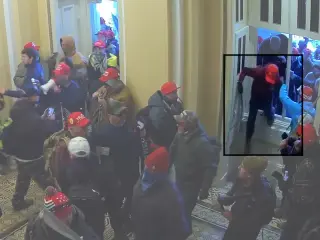
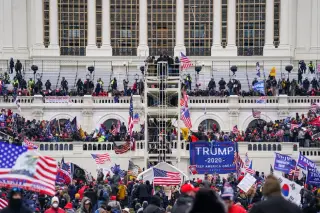
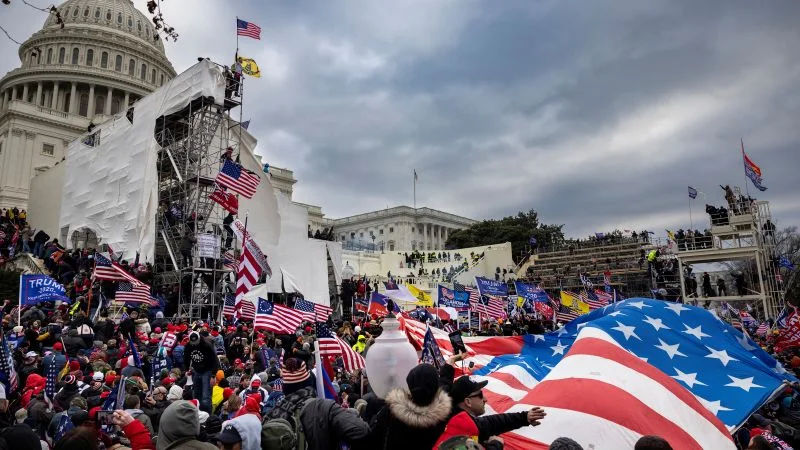
A Washington Post Visual Forensics analysis shows Elias Irizarry, a Pentagon counterterrorism appointee, moving through restricted Capitol grounds and climbing through a broken window with a metal pole during the Jan. 6, 2021 riot; he later pleaded guilty to trespassing and was pardoned by Donald Trump.
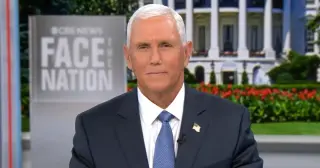
Former Vice President Mike Pence told CBS's Face the Nation that he hopes the Trump administration will drop its $1.776 billion 'anti-weaponization' fund, arguing it would compensate people who assaulted police or vandalized the Capitol; he noted GOP opposition is mounting and suggested the Justice Department should resolve related rights concerns without funding rioters.
Rioters loyal to Trump are lobbying for payments from his new "anti-weaponization" fund, a move that has drawn backlash as controversy over the Jan. 6 Capitol attack continues.
Two Washington, DC police officers filed a lawsuit against the Trump administration to dissolve a $1.776 billion ‘anti-weaponisation’ fund created from a settlement with the DOJ, arguing it would finance January 6 rioters and endanger officers who defended the Capitol, despite ongoing threats; the fund’s creation and oversight are controversial, and more legal challenges to the settlement are expected.
Senate Parliamentarian Elizabeth MacDonough’s forthcoming decision on whether a $1 billion Secret Service funding provision for the White House ballroom can stay in a budget-reconciliation bill is driving GOP strategy, with members weighing reductions and more detail due to political optics and Byrd-rule constraints. House Republicans, led by Mike Johnson, say they’ll push changes to the Senate’s housing bill despite White House and Senate pushback, while cross‑chamber talks continue on immigration enforcement, homeland provisions, and a crypto bill ahead of a June 1 deadline, as Trump presses for faster movement.
Several January 6 attendees filed a federal class-action in Florida against the U.S. Capitol Police and DC Police, seeking about $18.405 million in damages for alleged physical injuries and emotional distress caused by police responses (tear gas and other irritants) on the Capitol grounds. Named plaintiffs Patrick Sullivan, Marie Sullivan and Alan Fischer seek to certify a class of all Capitol grounds attendees harmed that day and a jury trial to determine damages. Fischer, who was prosecuted in 2022, was pardoned by Trump. In total, 46 protesters are pursuing similar claims (43 others), with the case highlighting ongoing political divisions five years after the riot.
A Florida-based class-action suit filed by members of the Jan. 6 mob accuses Capitol Police and DC Metropolitan Police of using indiscriminate and dangerous crowd-control methods, seeking tens of millions in damages and aiming to represent others on the Capitol’s West Front. Lead plaintiffs include A.J. Fischer, a Proud Boy who was charged in the riot, and Patrick and Marie Sullivan; the case cites pepper balls, chemical spray, and other non-lethal munitions as injuring rioters and bystanders. The filing follows Trump-era pardons and prior government settlements with other allies, and may be expanded if certified as a class. Note: Fischer was charged, not convicted.
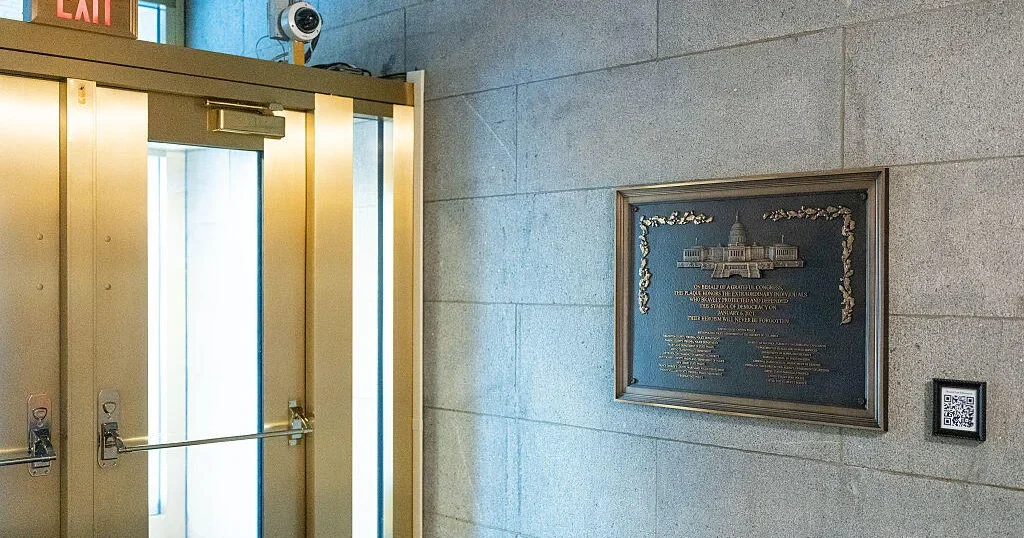
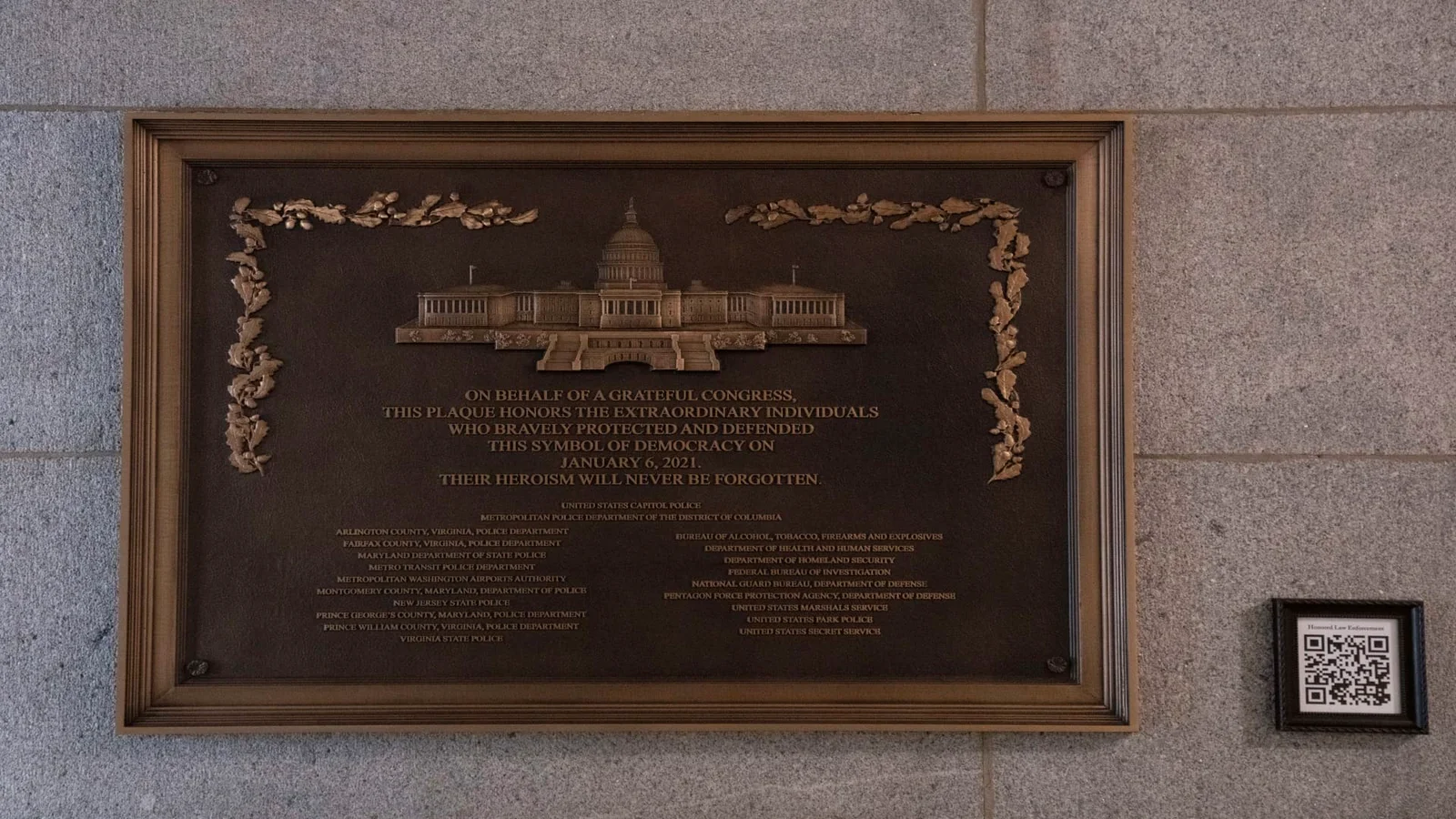
Two police officers asked a judge to let their civil suit proceed over a plaque honoring law enforcement at the Capitol, arguing the indoor placement on a door is not a public display and violates the law requiring the memorial to be shown on the exterior western front; the Architect of the Capitol is named as a defendant.
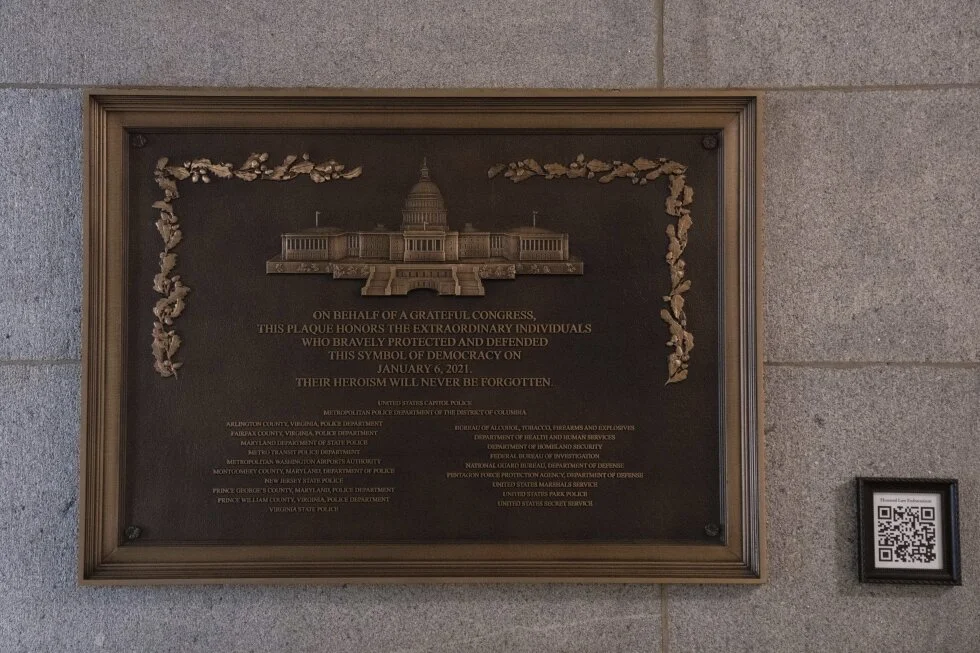
A memorial plaque honoring officers who defended the Capitol on Jan. 6, 2021 was quietly installed on the Senate side three years after a 2022 law required it, following bipartisan support and a lawsuit over technical compliance; supporters say it honors responders, while one officer says the law’s requirements are not fully met and the case continues.
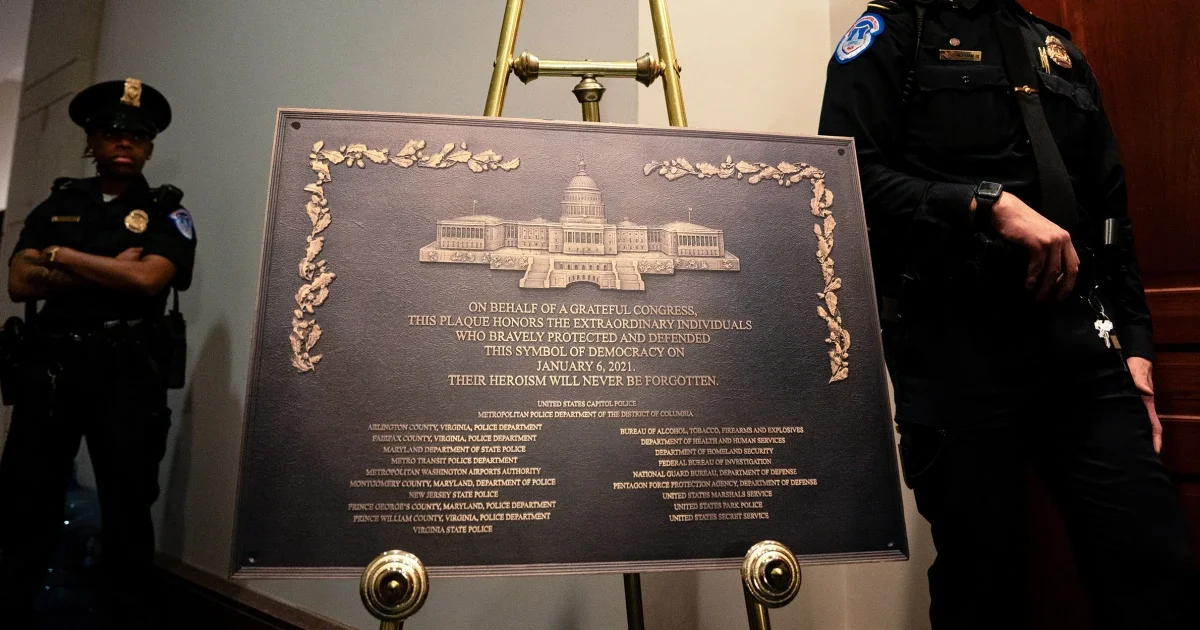
The Capitol has installed a plaque honoring the police officers who defended the Capitol during the Jan. 6 attack, ending a three-year delay and formally recognizing law enforcement for their actions that day.
A plaque honoring Capitol Police and other law enforcement for defending the Capitol on Jan. 6, 2021 was installed on the Senate side after years of delay, driven by a Senate resolution and a 2022 law; it lists the agencies involved and remains a temporary display while the two chambers work out a permanent placement amid ongoing related lawsuits.