Tag

Coatings

All articles tagged with #coatings

science24 days ago

Rain Drops Charge Up and Strike: Tiny Lightning Erodes Coatings

New research shows rain droplets can become electrically charged as they slide across surfaces; when these charged droplets later strike a coating they discharge at a tiny point, causing localized damage that can lead to corrosion of the underlying material. Experiments across different materials reveal charging depends on the crossed surface (up to tenfold differences), suggesting a previously overlooked factor in coating deterioration and guiding the design of more durable protective coatings for cars, infrastructure, and everyday surfaces.


Charged Rain Sparks Erode Protective Metal Coatings, New Study Finds
science1 month ago

Charged Rain Sparks Erode Protective Metal Coatings, New Study Finds

A Nature study shows raindrops can acquire tiny electrical charges as they contact surfaces; these charges can break down protective coatings (e.g., PFOTS/Teflon coatings), exposing and corroding the metal underneath. After about 3,000 charged drops—the equivalent of a rainy day—the coating failed, while uncharged drops caused no damage. The findings suggest water’s electrical state, not just acidity, drives corrosion and could guide the design of tougher coatings for cars, bridges, and ships.

Charged Rain Breaks Through Coatings, Sparking Hidden Corrosion
science1 month ago

Charged Rain Breaks Through Coatings, Sparking Hidden Corrosion

New research shows raindrops carry enough electrical charge to electrostatically punch through insulating coatings, causing dielectric breakdown and exposing metal to corrosion. In experiments with charged drops hitting a thin Teflon layer over copper, thousands of impacts produced nanometer-scale pits and accelerated degradation, while uncharged drops left surfaces intact. The finding suggests rain-driven electrostatic damage could affect paints, plastics, composites, outdoor electronics, and historic structures, and that thicker or field-tolerant coatings may be needed to mitigate the effect.

Ultra-dark automotive coating blends carbon black and nanotubes to trap 99.9% of light
science3 months ago

Ultra-dark automotive coating blends carbon black and nanotubes to trap 99.9% of light

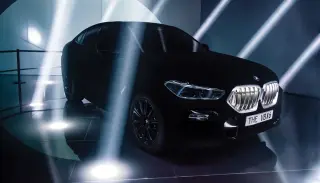
Researchers have developed a new ultrablack coating for cars by combining carbon black pigment with carbon nanotubes in a structure that traps light, achieving absorption of more than 99.9% of visible light while meeting humidity, water-resistance, and adhesion tests and compatible with standard spray-coating processes. This approach aims to overcome manufacturability and durability limits of nanotube-only coatings like Vantablack, potentially enabling luxury, deeply black finishes in automotive and other applications.

Atomic Oxygen: The Hidden Material Menace in Low Earth Orbit
space4 months ago

Atomic Oxygen: The Hidden Material Menace in Low Earth Orbit

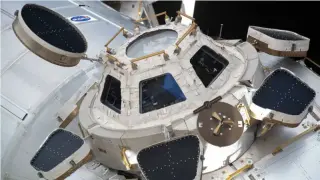
Atomic oxygen in low Earth orbit aggressively erodes carbon-based polymers, carbon composites, and optical surfaces on spacecraft such as the ISS. NASA tests exposed material trays outside the station to study damage and variations in material properties, leading to protective coatings like silicon dioxide or aluminum oxide to mitigate reactions with single oxygen atoms. In LEO, the atmosphere is a thin, UV-driven environment rather than a hard vacuum, so long-duration missions require careful material selection and protective measures; very low orbits demand extra care for satellites. Deep space exposure to atomic oxygen is much less of a concern, making this primarily a LEO issue.

Revolutionary Coatings Unlock New Possibilities
technology1 year ago

Revolutionary Coatings Unlock New Possibilities

High-performance coatings are crucial in enhancing the functionality and durability of various technologies, from jet engines to space equipment. These coatings allow materials to withstand extreme conditions, such as high temperatures and low gravity, improving efficiency and reducing costs. Researchers are continuously developing advanced coatings to address challenges like biofilm formation in space and non-stick solutions in manufacturing. However, the effectiveness of coatings can vary, and incorrect applications can lead to significant financial losses.