Tag

Low Earth Orbit

All articles tagged with #low earth orbit

Delta to Get Orbit-Powered Wi-Fi as Amazon Leo Expands Across 500 Planes in 2028
technology11 days ago

Delta to Get Orbit-Powered Wi-Fi as Amazon Leo Expands Across 500 Planes in 2028

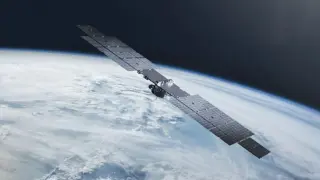
Amazon Leo will power Delta Air Lines’ in-flight Wi‑Fi starting in 2028, initially equipping 500 aircraft with high‑speed, low‑latency connectivity via a low‑Earth‑orbit satellite network and aviation‑grade phased‑array antennas offering up to 1 Gbps download and 400 Mbps upload. The service will be free for Delta SkyMiles members, and the multi‑year deal strengthens Delta’s AWS relationship by enabling Leo, AI, and other Amazon technologies to enhance the end-to-end travel experience across Delta’s global fleet.

Starlink Anomaly Sparks Debris Cloud in Low-Earth Orbit
technology11 days ago

Starlink Anomaly Sparks Debris Cloud in Low-Earth Orbit

Starlink-34343 suffered an in-orbit anomaly on March 29 at about 560 km altitude, losing communications. LeoLabs detected tens of debris fragments nearby and warned more could exist, though SpaceX and LeoLabs downplayed risk to the ISS and Artemis 2, noting the debris should deorbit within weeks due to the low altitude. SpaceX followed the event with a Falcon 9 Transporter-16 launch carrying 29 Starlink satellites roughly six hours later, while the company works to determine the root cause and implement corrective actions.

ISS Countdown: Can Private Space Stations Keep the U.S. in Orbit?
space21 days ago

ISS Countdown: Can Private Space Stations Keep the U.S. in Orbit?

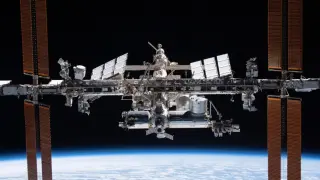
With the International Space Station aging and its retirement looming around 2030, the U.S. risks losing continuous human presence in low Earth orbit unless commercial space stations come online. NASA's plan hinges on late-2020s/early-2030s proposals and contracts, while a Senate bill seeks to extend ISS operations to 2032 to avoid a gap. Private firms like Vast and Axiom Space are racing to launch habitats (Haven-1, ISS-attached modules), but overall funding and NASA procurement delays complicate the timeline. China’s Tiangong and Russia’s potential withdrawal add geopolitical pressure. In the long run, LEO could become a thriving space economy and national security asset, but near-term leadership depends on timely NASA contracts (up to about $1.5B).

China’s Shenlong space plane kicks off its fourth orbital mission in secrecy
science1 month ago

China’s Shenlong space plane kicks off its fourth orbital mission in secrecy

China’s Shenlong reusable space plane has kicked off its fourth orbital mission from Jiuquan, but the mission’s specifics remain secret; observers note Shenlong has previously conducted rendezvous and proximity operations with satellites and may deploy small payloads. Experts say these activities raise space-security questions, but the craft’s limited payload and power make it unlikely to be an immediate weapon, and they call for greater transparency from authorities.

Solar Storms Could Trigger a Rapid Kessler-Style Debris Cascade in Low Earth Orbit
space2 months ago

Solar Storms Could Trigger a Rapid Kessler-Style Debris Cascade in Low Earth Orbit

Scientists warn that a powerful solar storm could abruptly trigger a Kessler syndrome–style cascade in Earth's low orbit, turning orbital debris into a self-perpetuating cloud that endangers satellites and could shower debris back to Earth. Researchers introduced the CRASH clock, suggesting a catastrophic collision could unfold in roughly 5.5 days if navigation is disrupted, a sobering risk given the growing megaconstellations from SpaceX, Amazon, and others and the current high rate of in-orbit maneuvers.

LEO Faces Rapid Instability as Cascading Debris Threatens Satellites
space2 months ago

LEO Faces Rapid Instability as Cascading Debris Threatens Satellites

A new arXiv study warns that Low Earth Orbit could shift from stable to chaotic within days due to high satellite and debris densities, triggering a cascade of collisions that would disrupt communications, navigation, weather monitoring, and other services, while exposing gaps in mitigation and governance that require rapid detection and coordinated action.

US Space Force taps Starfish Otter for first-ever satellite disposal contract
space2 months ago

US Space Force taps Starfish Otter for first-ever satellite disposal contract

The U.S. Space Force awarded Starfish Space a $52.5 million contract to deorbit satellites using the Otter servicing spacecraft—the first end-of-life disposal deal for a large low-Earth orbit constellation. Starfish aims to launch Otter by 2027 to retrieve and dispose of at least one (potentially more) satellites within the Proliferated Warfighter Space Architecture network, signaling a shift toward affordable, repeatable satellite servicing in orbit.

Starlink Satellite Explodes and Spirals Toward Earth After Anomaly
science-and-technology3 months ago

Starlink Satellite Explodes and Spirals Toward Earth After Anomaly

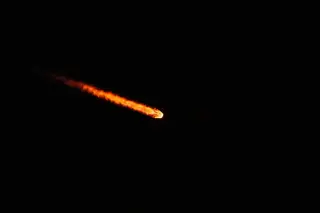
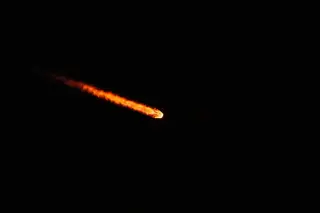
A SpaceX Starlink satellite malfunctioned and is now spiraling toward Earth, likely due to an internal explosion, raising concerns about space debris and congestion in low Earth orbit, which is becoming increasingly crowded with over 24,000 objects and projected to reach 70,000 satellites by the end of the decade.

Countdown to Crisis: The Urgent Need to Address Low Earth Orbit Congestion
science-and-technology3 months ago

Countdown to Crisis: The Urgent Need to Address Low Earth Orbit Congestion

A new study warns that the increasing density of satellite mega-constellations in Low Earth Orbit creates a fragile system at risk of catastrophic collision, especially during solar storms, with potential for a rapid cascade of debris and loss of space access within days if control is lost. The paper emphasizes the urgent need for better management and risk assessment to prevent a future space debris catastrophe.