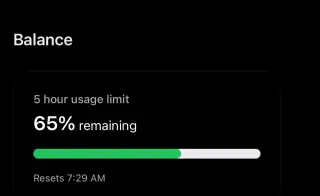
OpenAI’s Codex app is gaining traction among developers for its parallel task handling and clean interface, though usage costs remain a major concern. Recent updates include cloud-based environments and new model capabilities.
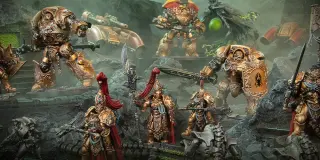
Games Workshop has published tactical advice for the new Adeptus Custodes Codex, highlighting two primary detachment combinations for players. The first focuses on defensive durability using Shield-Captains and Wardens, while the second emphasizes mobile melee superiority via Terminators and Dreadnoughts. These strategies utilize specific rules like 'Living Fortress' and strategic reserve redeployment to maximize battlefield impact. The new Codex and Combat Patrol set are set for pre-order on Saturday, October 3, 2026.
The new Codex: Adeptus Custodes introduces six flexible martial ka'tahs, replacing the previous two, allowing units to act in any phase. It also restores Aegis of the Emperor as a Feel No Pain 5+ ability and adds Aquila Commander for extra Command Points. Sisters of Silence gain a psychic null aura to protect nearby Custodians.
Google released renderings for the Thompson Center redevelopment in downtown Chicago, highlighting a 30-foot sculpture by Sanford Biggers anchoring the plaza and a redesigned 17-story atrium with a larger central opening, cascading staircase, terrace seating and new retail and dining spaces open to the public; the project, tied to Google’s 2022 purchase of the building for $105 million and demolition that began in 2024, is planned to open in 2028 and will accommodate about 2,000 employees along with other tenants and visitors.
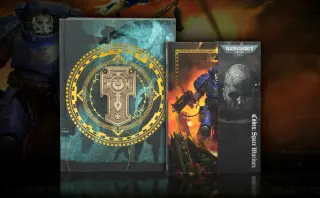
Warhammer Community reveals Codex: Space Marines will come in Regular softback, Special Edition hardback, and a Limited Edition. The book features a magnetic panel that lets you swap emblems among Ultramarines, Raven Guard, Iron Hands, Imperial Fists, Salamanders, and White Scars, plus a metal Crux Terminatus. All editions share 232 pages of lore, 15 detachments, and 85 datasheets; the Limited Edition adds six art prints and the Space Marines Command Pack, while the Special Edition adds wraparound fortress monastery artwork, gold-foil details, printed page edges, and a ribbon. Pre-orders are coming soon alongside new Space Marines infantry and a Captain on Bike, with more previews to follow.
OpenAI announced GPT‑6 Astra, a major upgrade that speeds up desktop use, enhances Codex with cross‑context note retention, and expands professional capabilities for ChatGPT. Astra rolls out gradually to a limited set of organizations before becoming available to Plus/Pro/Business/Enterprise users, with Astra Pro for Enterprise; the upgrade also emphasizes stronger cybersecurity alignment and faster multi‑step workflows across coding, documents, and software tasks.
Downdetector reported a major ChatGPT outage with user-reported issues climbing from about 5,000 at 7:53 a.m. PT to over 74,000 within hours. OpenAI’s status page initially showed no issues but later indicated it was investigating outages affecting ChatGPT and Codex, signaling a widespread disruption for users.
Updated points for Codex: Orks are live on the Munitorum Field Manual ahead of the release, including Ghazghkull at 300 and several unit price changes; the Munitorum Field Manual and Warhammer 40,000 app display the new values, Legends units appear in Battle Forge, new Ork detachments with Force Dispositions are live, and Warhammer+ unlocks expanded features and datasheets.
Warhammer TV debuts the brand-new Codex: Orks in a Battle Report against a Necron force led by Illuminor Szeras and two C’tan shards, highlighting new Ork datasheets and the Try Dat Button! detachment mechanics, while also previewing upcoming Warhammer Plus episodes and subscriber perks.
Warhammer Community previews a big pre-order week: Codex: Orks for the first edition of the new Warhammer 40,000 rules with 15 detachments, expanded Waaagh! and 50+ datasheets, plus an app-update code and a Collector’s Edition. Alongside are Armageddon Ork solo releases (including Big Mek Dakkarig), plus new Warboss, Mek, Boyz, Warbikers, Trukk and the 94-card Ork Command Pack with tokens and dice. Nazdreg has regional delays; Made to Order Skaven and Middle-earth elves and dwarves return, and Black Library titles such as Deathwatch Special Edition, Ghazghkull Thraka: Prophet of the Waaagh!, and Bjorn: The Fell-Handed, plus Demolisher and Warlord of Warlords are highlighted, with daily codex dives teased ahead of the Orks’ release.
OpenAI marks GPT-5’s first anniversary by unveiling Agent Plugins, an open, vendor-neutral standard for portable AI agents and skills that can load across compatible products; in its first year GPT-5 introduced automatic routing, saw Apple integration across iOS/macOS, and spawned a wave of updates from GPT-5.1 through 5.6, while Codex evolved into a desktop-style hub, and GPT-6 timing (Astra) remains unclear.
OpenAI president Greg Brockman described the merged ChatGPT and Codex desktop app interface as “kind of a mess” but framed it as incremental progress toward a tab-free future, with plans to eventually remove the Work tab and seamlessly fold its features into ChatGPT. The interview notes strong early adoption for Codex (up to 10 million users) after the merger, while Brockman emphasizes broader aims to bring more people to AI and enable agent-based capabilities, alongside discussions of ChatGPT Voice and other initiatives.
OpenAI unveiled a ChatGPT for small business program featuring hands-on virtual training, in-person AI academies in the U.S., practical getting-started guides, and access to new agents and partners, while highlighting that ChatGPT Work and Codex have reached 10 million users, signaling strong adoption of its enterprise productivity tools.
OpenAI updated the redesigned ChatGPT Mac app to restore direct access to chats and Projects, adding a prominent Chat/Work toggle and a sidebar to switch between ChatGPT, Codex, and Work, addressing user confusion from the Electron-based overhaul and promising to bring back key chat features.
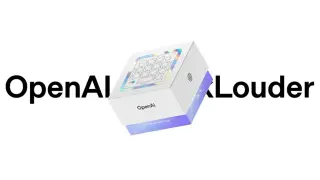
OpenAI has rolled out its first hardware—a $230 Codex Micro programmable macro keypad made with Work Louder to control Codex AI agents. The palm-sized pad features 13 mechanical switches, a joystick, a rotary dial, a touch sensor, six color-coded status LEDs, and 32 icon keycaps to map shortcuts and workflows like debugging and refactoring, marketed as a "command center for agentic work." For now it’s the only OpenAI hardware available amid rumors of a broader consumer device and related acquisitions.