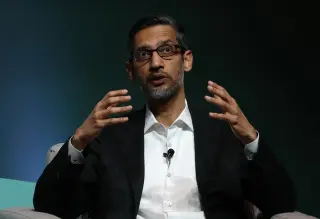
Sundar Pichai Skips AI in Stanford Commencement Talk
Alphabet CEO Sundar Pichai spoke to Stanford graduates but did not mention AI in his remarks, a notable omission given AI’s prominence in tech and industry discussions.

All articles tagged with #commencement
Alphabet CEO Sundar Pichai spoke to Stanford graduates but did not mention AI in his remarks, a notable omission given AI’s prominence in tech and industry discussions.
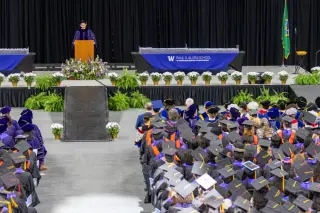
Jeff Dean, Google’s chief scientist and UW alumnus, returned to the university’s Allen School to address graduates, saying AI should accelerate human ingenuity—not replace it, and urging students to design safeguards, focus on meaningful problems, and apply their fresh perspectives across industry; he reflected on his path from UW in the 1990s to leading Gemini AI at Google and highlighted AI’s potential to advance healthcare, education, and disaster forecasting.

Viral clips show college graduates booing commencement speakers who hype AI. In response, Microsoft vice chair Brad Smith published a lengthy blog acknowledging the backlash, urging the industry to raise standards and channel AI uncertainty into constructive steps that serve people, not replace them, while noting lingering skepticism about tech companies’ handling of AI’s impact.
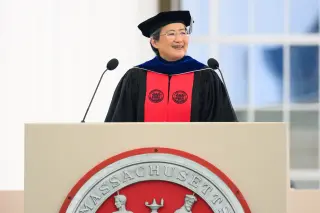
In her MIT Class of 2026 remarks, Lisa Su recalls her journey from MIT to IBM and AMD, praises UROP and the ‘mind and hand’ ethos, and argues AI will accelerate discovery but must be guided by people with purpose and judgment. She urges graduates to chase hard problems with teamwork and an engineer’s instinct, and to recognize that luck plays a role in turning ambitious ideas into reality.
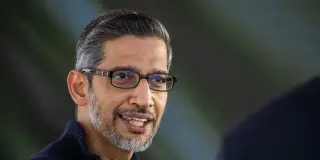
Google CEO Sundar Pichai says booing graduates at commencements reflects AI anxiety, but he’ll use his Stanford speech to frame AI as a force for progress that graduates will help shape while also facing its employment consequences amid public concern and a tougher job market.
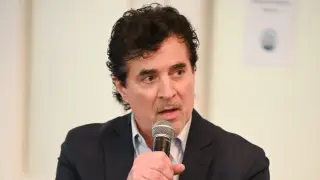
An analysis of a viral commencement moment where music executive Scott Borchetta urged embracing AI, prompting boos; the piece argues his “tool” analogy echoes past streaming-era battles, highlights AI's rising role in business, and cites data showing CEOs deploy AI while planning smaller teams, framing the debate as a tension between innovation and income inequality.

Apple cofounder Steve Wozniak earned enthusiastic applause at Grand Valley State University's graduation by saying graduates have 'AI — actual intelligence,' offering a measured take on the AI era, reflecting on Apple experiences and encouraging students to think differently as AI reshapes the job market.
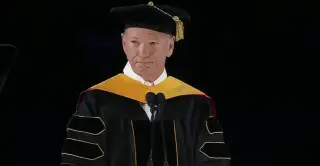
Graduates across multiple universities boo and heckle speakers—ranging from former Google CEO Eric Schmidt to other tech leaders—who praise AI at commencements, arguing that AI promises threaten jobs, education, and critical thinking. The viral videos reflect a generation facing a bleak job market and rising environmental and societal concerns around AI, while also fueling activism against AI deployment and data-center projects.

Public attitudes toward AI are turning skeptical as new graduates and workers fear automation could threaten entry-level jobs, with backlash at commencements and data showing persistent labor-market anxiety despite AI’s touted productivity gains.
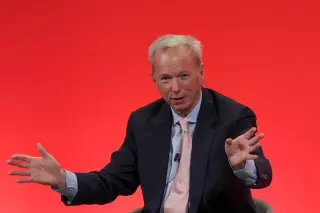
At several college commencements, graduates boo pep talks about artificial intelligence, signaling skepticism about AI’s role in higher education and concerns about its impact on jobs and curricula, with responses described as mixed rather than uniformly favorable.

Former Google CEO Eric Schmidt drew boos at the University of Arizona’s commencement after warning about AI’s societal effects, acknowledging graduates’ fears about jobs and polarization while urging them to help shape how AI is used. The moment reflects broader AI debate, with other speakers highlighting potential opportunities even as automation disrupts work, and the university defended Schmidt’s remarks.

Ex-Google CEO Eric Schmidt was booed at a college graduation after praising artificial intelligence, a moment captured by 404 Media that highlights growing graduate skepticism toward AI. The episode, echoed by earlier pro-AI speeches, is framed as a potential barometer for rising populist attitudes toward AI, labor, and public life as graduates enter a job market already shaped by automation.
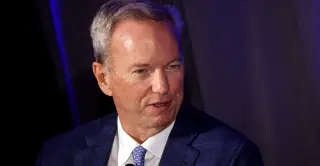
Former Google CEO Eric Schmidt delivered the University of Arizona’s commencement address, but his AI-focused remarks were repeatedly drowned out by boos from graduates; some booed Schmidt over sexual assault allegations reportedly leveled against him, while Schmidt acknowledged the anxiety around AI and urged graduates to take a seat on the 'rocketship' without hesitation, reflecting Silicon Valley’s struggle to read the room amid rising anti-AI sentiment.
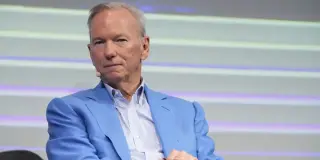
Former Google CEO Eric Schmidt faced boos at the University of Arizona’s commencement while warning that AI will reshape the job market and society, urging graduates to actively influence how the technology is used despite fears of automation and disruption to entry-level work.
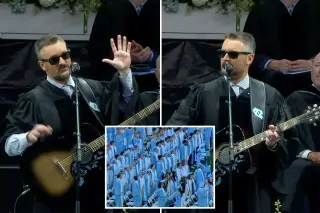
Country star Eric Church gave a guitar‑themed commencement address to the University of North Carolina Class of 2026 at Kenan Memorial Stadium, using the six strings as a guide to faith, family, a life partner, community, ambition, and resilience; after months of prep, the Tar Heel‑inspired performance drew praise online and was hailed by fans as one of the best graduation speeches.