Apple announced that sales and use taxes will apply to specific App Store categories in California starting January 1, 2027. Additionally, automatic price adjustments for apps and in-app purchases will take effect in five countries on December 3, 2026, reflecting new tax laws and exchange rate shifts.
Google announced three Gemini 3.5-based models—3.6 Flash, 3.5 Flash-Lite, and 3.5 Flash Cyber—boasting lower token costs, faster performance, and stronger cybersecurity workflows; Gemini 3.5 Pro remains in testing with partners, while 3.6 Flash and 3.5 Flash-Lite are now available to developers, and 3.5 Flash Cyber will expand from governments and trusted partners to broader access later.
Google will begin deploying its Android developer verification in September, starting in Brazil, Indonesia, Singapore and Thailand. The system will block installation of unverified apps on Google-certified devices and extend verification to trusted third-party stores such as HONOR App Market, OPlus (OPPO App Market), Samsung Galaxy Store, Palm Store, vivo's V-Appstore and Xiaomi GetApps. New APIs—the Android Developer ID Status API and the Android Developer Console API—will let developers register and manage packages from their IDEs. A July rollout will introduce limited-distribution accounts for hobbyists (no fee, up to 20 devices); August adds the advanced flow to bypass verification (with multiple confirmations and a 24-hour wait); September expands verification to the initial markets, with plans to broaden globally in 2027.
Apple’s Beta Software Program site is down ahead of WWDC 2026, with first developer betas expected today for iOS 27, iPadOS 27, macOS 27, watchOS 27, tvOS 27, and visionOS 27; public betas typically follow in July.
Sega clarified that generative AI was used as an optional tool to help develop background assets for Crazy Taxi: World Tour, with assets reviewed by the development team; no AI was used for performers, and the Steam page disclaimer accompanied the confirmation to emphasize AI aids developers to focus on creative work.
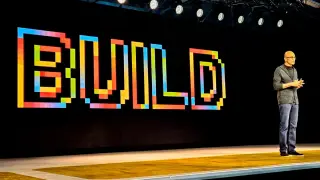
At Microsoft Build 2026 Day 2, Microsoft doubles down on AI agents and on-device intelligence, unveiling OpenClaw/Execution Containers for secure autonomous agents, seven new MAI models (including MAI-Thinking-1 and MAI-Code-1) and updated speech/voice models, a desktop Copilot app, and the Web IQ/Work IQ/Fabric IQ/Foundry IQ enterprise suite; Project Solara introduces agent-first devices (Access Badge and a desk unit), Majorana 2 delivers longer-lived qubits toward a 2029 scalable quantum computer, and Discovery for scientists accelerates research—all while pushing data-center efficiency and hardware partnerships with Nvidia and Qualcomm.
Google reportedly invited Play Store app developers to join a confidential pilot to sell access to their production and archived code to help train Google's AI coding tools, with non-exclusive licenses and 100% IP retention; the program signals Google's push to secure high-quality training data as rivals expand in AI-assisted coding.
Apple seeded the first iOS 26.6 and iPadOS 26.6 betas to developers, two weeks after the 26.5 releases, with no major features expected as Apple focuses on bug fixes and performance improvements ahead of iOS 27.
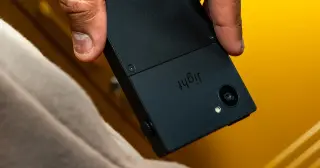
Light Phone is launching a LightOS developer program to allow anyone to build 'Tools' for the Light Phone III, expanding its minimalist device with community-created apps (like transit trackers or ebook readers) via an official Tool Library that vets and curates tools, while still supporting optional sideloading. First-party tools (Calculator, Alarm, Calendar, Podcasts) are planned, plus a Signal Tool, and the program aims to keep the experience simple, private, and free of ads.
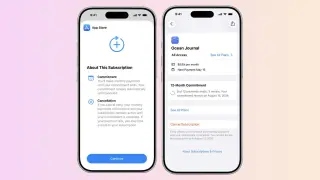
Apple announced a new App Store option that lets developers offer subscribers monthly payments at a discount typically tied to annual pricing, with a 12‑month commitment. Users can cancel anytime, and Apple will show completed versus remaining payments and send renewal notices. Developers can configure and test these subscriptions in App Store Connect and Xcode, with a live rollout on iOS 26.4+ and related platforms next month; the US and Singapore are currently excluded from this feature.
Apple released the third betas of iOS 26.5 and iPadOS 26.5 to developers, a week after the second betas. The updates do not bring new Siri features (likely saved for iOS 27); Maps gains a Suggested Places feature and ads groundwork, while Apple continues testing end-to-end encryption for RCS messages between iPhone and Android. In the EU, Apple is testing proximity pairing, notification forwarding, and Live Activities for third‑party wearables, enabling more features for earbuds and smartwatches. Details are covered in the iOS 26.5 beta features guide.
Apple released the second beta builds of iOS 26.5 and iPadOS 26.5 to developers—two weeks after the first betas. The update avoids new Siri features (likely saved for iOS 27) and adds Maps Suggested Places with groundwork for ads. It also continues testing end-to-end encryption for RCS messages between iPhone and Android, while the EU is trialing proximity pairing, notification forwarding, and Live Activities for third‑party wearables to mirror many Apple Watch/AirPods capabilities. Details are summarized in the iOS 26.5 beta features guide.
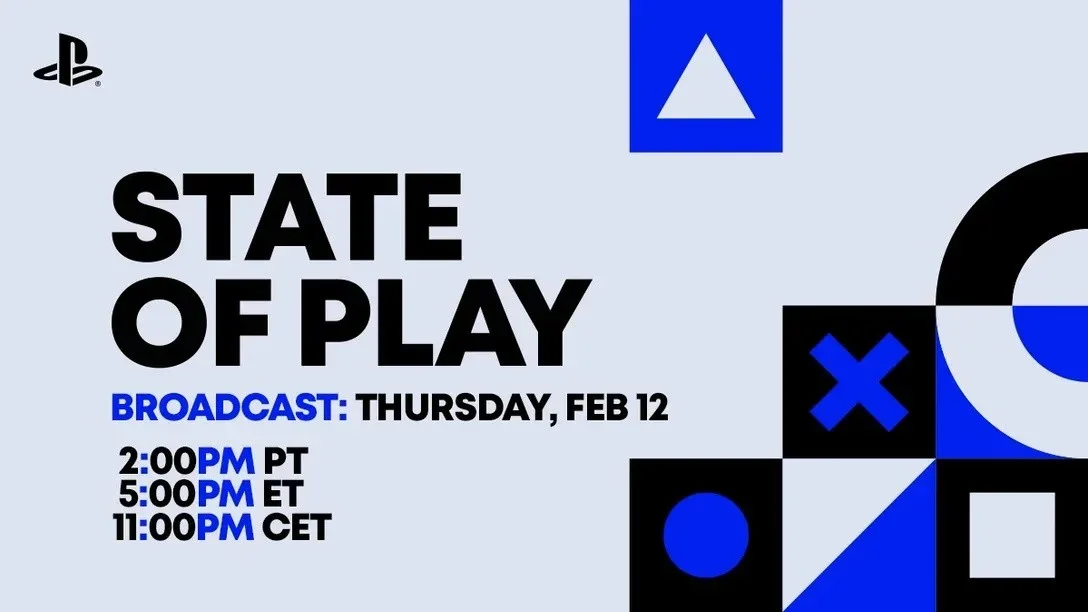
Sony confirms a 60+ minute State of Play for Thursday, February 12, featuring news and updates from developers worldwide—including third parties, independents, and PlayStation Studios—streaming on YouTube and Twitch across multiple time zones.
Razer CEO Min-Liang Tan says players hate “generative AI slop” but want AI tools that assist developers in making better games, a stance aligned with the company’s $600 million AI investment to hire 150 engineers for QA and development support.