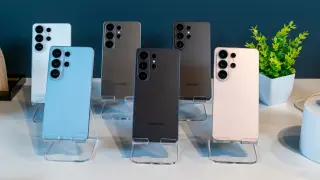
A new leak suggests the Samsung Galaxy S27 Ultra will launch in Black, White, Blue, and Light Pink. These are described as 'base' colors, implying broad retail availability, while exclusive shades like Violet may still be limited to Samsung's online store. The phone is expected to arrive in early 2027.
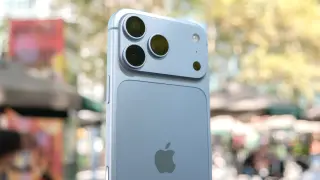
Tom’s Guide’s Mark Spoonauer breaks down the iPhone 18 Pro and Pro Max in 10 key questions. The Pro Max is heavier (249 g / 8.78 oz) than the Pro (211 g) largely due to a bigger vapor‑chamber cooling system, blades for a wider variable aperture, and a larger internal battery. The Max also carries a larger battery—about 5,567 mAh on the eSIM version versus 5,088 mAh on the 17 Pro Max—aiming for better endurance, while Apple keeps the phones’ overall external dimensions similar to last year so many 17 Pro accessories still fit. The piece casts the upgrade in terms of an A20 Pro performance leap, battery life, and whether you should opt for the Pro or Pro Max, or wait for rumors of an iPhone Duo. It also notes case compatibility across generations (17 Pro cases fit 18 Pro/Max) and compiles reader questions from Tom’s Guide YouTube, TikTok, and an Apple leadership interview.
Oppo has officially unveiled ColorOS 17, its latest Android skin, at a developer conference in China, touting AI-powered features and performance upgrades, with a rollout schedule announced for Oppo, OnePlus, and Realme devices.
CNET revisits the original 2007 iPhone review to highlight a device that was innovative and easy to use but lacked features, struggled on EDGE, and carried a $499 price (about $800 today) that many viewed as steep for a phone tied to an AT&T contract; the piece contrasts that hype and pricing with today’s buzz around the iPhone Duo’s rumored foldable design and its $2,000 starting price.
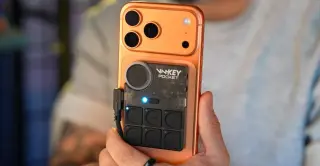
Voicemod announced the Key Pocket, a pocket-sized external audio bridge that brings real-time voice changing to iOS and Android devices via USB-C. Available as a standalone for $99.90 or a $129.90 bundle with a Voicemod Pro license, the Pocket attaches to your device and routes mic input through the Voicemod app to be altered and shared with other apps (Fortnite, Roblox, Discord, calls). The Pro license unlocks over 200 Voicemod voices plus 76,000 community voices, six programmable buttons, a mute button, and an LED dial with cloud syncing across platforms. It respects mobile OS privacy by not altering mic audio inside other apps and can also be used for newer consoles like Switch 2 and Meta Quest.
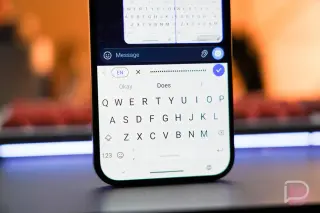
SwiftKey Beta for Android gains an AI Voice typing feature that mirrors Google Pixel 11’s Rambler by cleaning up long dictations and waiting until you finish speaking to process, but it lacks Rambler’s in-voice editing, emoji additions, or word-by-word live display, and isn’t as instant; it currently works on Pixel 11 and some non-Pixel devices like Galaxy Z Fold 8 via Google Play.
Trump Mobile quietly raised the price of its T1 Phone to $749—a $250 jump from the $499 launch price—without any hardware changes, and the update appeared on the site overnight. In reviews, the device remains unimpressive at this price compared with other flagships, and there has been only one software update since launch; BBC reports some buyers did not receive their phones. The move comes amid broader RAM-price pressures in tech.
9to5Mac reports that iOS 27 beta code hints at four major pro features for the Camera app: waveform and histogram exposure scopes, focus peaking with highlight overlays, highlight clipping indicators to warn about blown highlights, and a true manual focus slider (potentially limited to future iPhone models). The report also mentions a self-timed photo sequence and an adaptive image-processing approach for a variable aperture on the iPhone 18 Pro, though none of these are enabled in betas yet.
The Verge humorously examines the crossbody phone strap trend, noting it’s popular with Europeans and younger users, convenient for texting and paying on the go, and paired with fashion tweaks, but it can feel self-conscious and pricey (about $700) while blurring the line between style and practicality.
Pokémon Champions is cross‑platform on mobile and Switch, but high‑level competition at the World Championships still requires Switch hardware; local mobile play is allowed in some events, the game has around 25 million downloads, and players can build and train teams across devices via Pokémon Home.
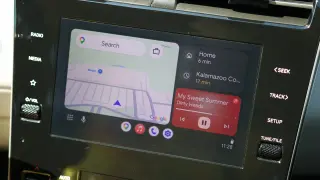
Google is testing a weather notification system for smaller Android Auto head units, featuring Jimothy the raccoon moving across the music widget to show current conditions; the feature appears in Android Auto beta 17.6.66 but there’s no word on a wide rollout, and it’s not easy to trigger.
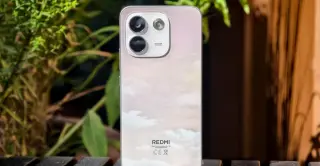
Xiaomi’s Redmi Note 17 Pro Max uses a 9,210mAh silicon-carbon dual‑cell battery to fit a large capacity into a phone roughly the size of an iPhone 17 Pro Max, delivering up to three days of use (about 37 hours of video) with 100W wired charging and an estimated 80% capacity retained after 1,600 cycles. The device runs Android 16 with up to 12GB of RAM and 256GB of storage, features a 6.83‑inch OLED display, IP69K ingress protection, and a 50MP main camera (with weaker overall camera performance), and will launch in Europe, Australia, and other markets (not the US) around $499.
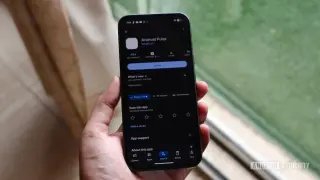
Android Pulse, initially spotted as a mysterious app, is confirmed by Google to be a Google system service meant to monitor device health. An update has made Pulse visible in Settings, and Google describes system service updates as improving security, reliability, and features, stressing it’s an internal maintenance tool rather than something to worry about.
Samsung’s Galaxy S26 FE largely repeats last year’s hardware (6.7-inch OLED, 4,900mAh, triple camera) with a few upgrades—a new Exynos 2500 chip, a slightly wider 12MP selfie, and pistachio color alongside graphite/blue. RAM-driven price hikes bring it to $699.99 for 8GB/128GB and $799.99 for 256GB. Software adds My FanCam, Audio Eraser across third‑party apps, and new Now Brief/Now Nudge features borrowed from Samsung’s foldables, making this a modest refresh with a stronger software angle.
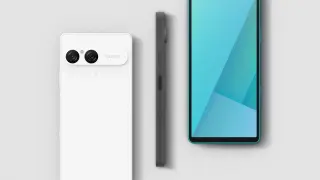
A leaked image shows the Xperia 10 VIII maintaining the Xperia 10 VII’s flat back, horizontal camera bar, and side‑mounted fingerprint sensor, with Geekbench suggesting Snapdragon 6 Gen 3 and 8GB RAM; Sony’s August 25 reveal is near, but concrete upgrades beyond design remain unclear.