Tag

Directed Evolution

All articles tagged with #directed evolution

LySE: A tunable phage-bacteria platform for rapid, on-target evolution of large gene clusters
science26 days ago

LySE: A tunable phage-bacteria platform for rapid, on-target evolution of large gene clusters

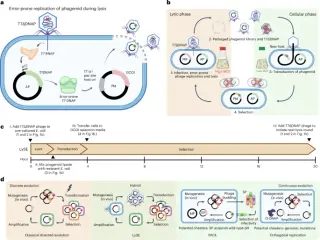
LySE is a T7 phage–based system that merges discrete, checkpointed mutagenesis with continuous-like selection to accelerate evolution of large gene clusters (up to ~39 kb) while preventing off-target host mutations. It uses a biocontained phagemid, an accessory plasmid expressing a hypermutagenic T7 DNA polymerase, and cycles of lysis and transduction to rapidly mutate and select GOIs. Variants v8 and v9 achieve mutation rates up to 3.82×10⁻⁵ substitutions per base, with balanced transition mutations aided by TadA-8e and TadDE deaminases. Demonstrations include evolving tetA for tigecycline resistance and a five-gene ethylene glycol assimilation pathway, outperforming ALE in on-target evolution and enabling rapid optimization of complex metabolic pathways with potential applications in plastics recycling and beyond.

"Unveiling the 'RNA World': Clues to Earth's Life Origins"
science2 years ago

"Unveiling the 'RNA World': Clues to Earth's Life Origins"

Scientists at the Salk Institute have made a significant advance in supporting the RNA World theory, a hypothesis about the origins of life on Earth. They developed an RNA molecule capable of making accurate copies of a different type of RNA, a crucial step in the process of life's emergence. This experiment provides key evidence for the plausibility of the RNA World theory and could lead to further understanding of how life evolved.

"Harnessing Nature's Power to Disrupt Synthetic Chemical Bonds"
science-and-technology2 years ago

"Harnessing Nature's Power to Disrupt Synthetic Chemical Bonds"

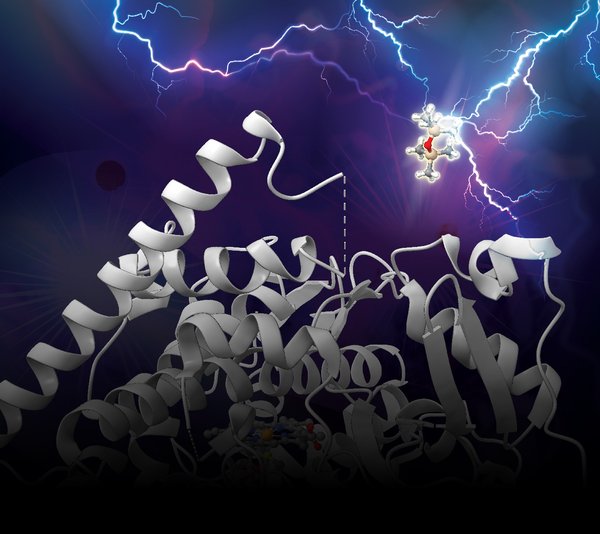
Scientists have successfully engineered an enzyme capable of breaking man-made silicon-carbon bonds found in widely used siloxane chemicals, marking a significant step towards making these chemicals biodegradable. The breakthrough, achieved through directed evolution, could lead to the development of natural organisms or improved enzymes that can degrade siloxanes, which are present in various household and industrial products. The research, published in the journal Science, offers promising implications for environmental and health safety, as siloxanes are known to persist in the environment and pose potential risks.

"Unleashing the Power: The Race to Master Evolution"
science2 years ago

"Unleashing the Power: The Race to Master Evolution"

Scientists are now shifting their focus from predicting evolution to controlling it. While artificial selection has allowed humans to selectively breed plants and animals with desirable traits, the goal now is to exert direct control over the reproductive process at the molecular level. Techniques like directed evolution and counterdiabatic driving have shown promise in steering evolution towards predetermined goals, such as developing more efficient enzymes or treating certain strains of malaria parasites. However, the technical challenges and ethical considerations surrounding evolutionary control remain substantial, as they intersect with issues related to genetically modified organisms and embryo selection in humans. Ultimately, the ambition to fully control evolution may underestimate the complexity and caprice of biological evolution.

"Revolutionizing Antibody Evolution with Protein Language Models"
science-and-technology3 years ago

"Revolutionizing Antibody Evolution with Protein Language Models"

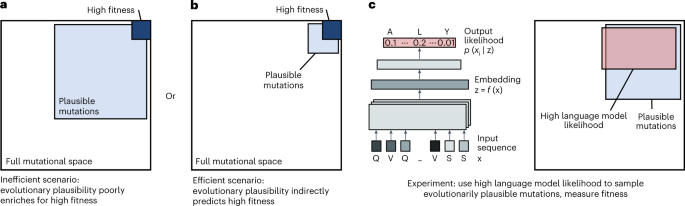
Researchers have used protein language models to guide the directed evolution of human antibodies with unprecedented efficiency. The language models were used to identify plausible amino acid substitutions that were experimentally screened for improved fitness. The researchers evolved seven human immunoglobulin G (IgG) antibodies that bind to antigens from coronavirus, ebolavirus, and influenza A virus. The affinity of all antibodies was improved after measuring only 20 or fewer new variants of each antibody across just two rounds of evolution.