
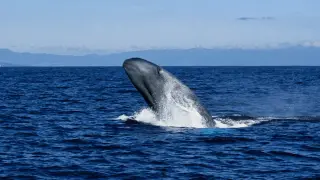
Whales Boost Heart Rate During Deep-Dive Lunges to Fuel Prey Capture
Researchers at Stanford University’s Hopkins Marine Station have solved a long-standing mystery regarding how blue and humpback whales maintain energy during deep dives. By attaching custom suction-cup tags to nine whales in California and Antarctica, the team discovered that these animals do not maintain a constant slow heartbeat while foraging. Instead, their heart rates spike significantly during lunges to support intense physical exertion, then gradually decline as they filter water. This flexible cardiovascular response allows whales to balance oxygen conservation with the high energy demands of hunting, similar to human recovery patterns after interval sprints. The study also captured the first reliable resting heart rate measurement for a free-ranging humpback whale, revealing a rate of 18.5 beats per minute, which aligns with metabolic expectations for large mammals.