Tag

Earth Rotation

All articles tagged with #earth rotation

Three Gorges Dam Tiny Spin: NASA Calculations Show Subtle Shift in Earth's Rotation
science11 days ago

Three Gorges Dam Tiny Spin: NASA Calculations Show Subtle Shift in Earth's Rotation

NASA scientists calculated that filling the Three Gorges Dam reservoir would lengthen the length of day by about 0.06 microseconds and shift Earth’s pole by roughly 2 centimeters due to moving 40 cubic kilometers of water higher up; the effect is minuscule compared with the Moon’s tidal slowing and other mass redistributions such as groundwater pumping and ice melt. It’s a real but negligible physical consequence of large-scale engineering, not a weapon or warning.

Humans Are Lengthening Earth's Day, New Study Finds
science17 days ago

Humans Are Lengthening Earth's Day, New Study Finds

Researchers show Earth's day is lengthening by about 1.33 milliseconds per century due to climate-driven mass shifts from melting ice, using fossil foraminifera and a physics-informed deep learning model; the trend could soon surpass the Moon's influence, with implications for communications and space navigation, per a Journal of Geophysical Research: Solid Earth study.

Climate-Driven Spin: Melting Ice Lengthens Earth’s Day and Nudges GPS
science17 days ago

Climate-Driven Spin: Melting Ice Lengthens Earth’s Day and Nudges GPS

New research ties climate-driven water redistribution from melting ice to a measurable slowdown in Earth’s rotation, lengthening the day by about 1.3 milliseconds per century. By analyzing 3.6 million years of benthic foraminifera fossils and deep learning, scientists find this rate is unprecedented in the Quaternary and could, by the end of the century, surpass the Moon’s tidal effect, complicating leap seconds and precise GPS-based navigation.

Climate change lengthens Earth's day, study finds
science26 days ago

Climate change lengthens Earth's day, study finds

A study by researchers from the University of Vienna and ETH Zurich finds Earth’s day is lengthening by about 1.33 milliseconds per century due to climate‑driven mass redistribution from melting polar ice and mountain glaciers, moving water from land to oceans and slowing Earth's rotation. This unprecedented pace in 3.6 million years could subtly affect GPS satellites and space missions over time, though the change is far too small for people to notice; by the end of the century, climate-driven effects could rival the Moon's influence on day length.

Moon Slowly Recedes, Extending Earth's Day by Fractions Each Year
science1 month ago

Moon Slowly Recedes, Extending Earth's Day by Fractions Each Year

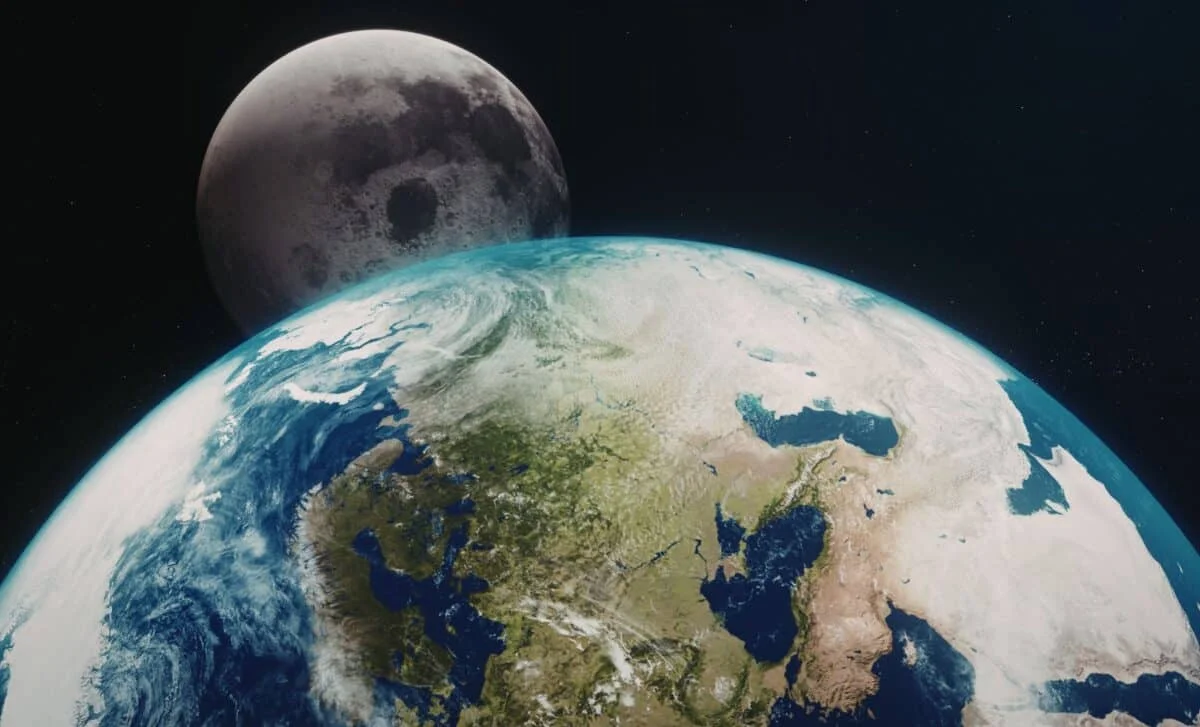
NASA measurements show the Moon is moving away from Earth at about 3.8 centimeters per year, transferring rotational energy from Earth to the Moon and gradually lengthening the length of a day. Fossil shells indicate shorter past days (roughly 23.5 hours around 70 million years ago), and the ongoing tidal evolution will continue to lengthen Earth's day by tiny amounts over millions of years.

Scientists develop device harnessing Earth's rotation for electricity
science3 months ago

Scientists develop device harnessing Earth's rotation for electricity

Scientists in the US have developed a device that can generate tiny amounts of electricity by harnessing Earth's rotation and magnetic field, suggesting a potential, though currently impractical, new energy source if scaled up. The experiment involved a specially shaped ferrite shell that avoids the usual cancellation of voltage caused by electromagnetic forces, producing measurable microvolts as Earth spins. While promising, the technology is in early stages, and further independent testing is needed to verify and explore its scalability.

Scientists Explain Why Days Are Getting Shorter
science6 months ago

Scientists Explain Why Days Are Getting Shorter

Earth's days are slightly getting shorter due to factors like atmospheric winds, ocean currents, Earth's internal movements, and lunar gravitational pull, with the shortest day on August 5, 2025, measuring just 86,399.99867 seconds. These tiny variations, measurable with precise instruments like atomic clocks and quasars, impact systems like GPS and are influenced by both short-term weather patterns and long-term geophysical processes.