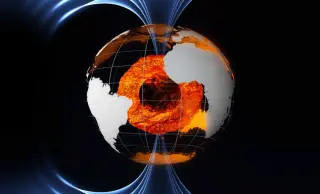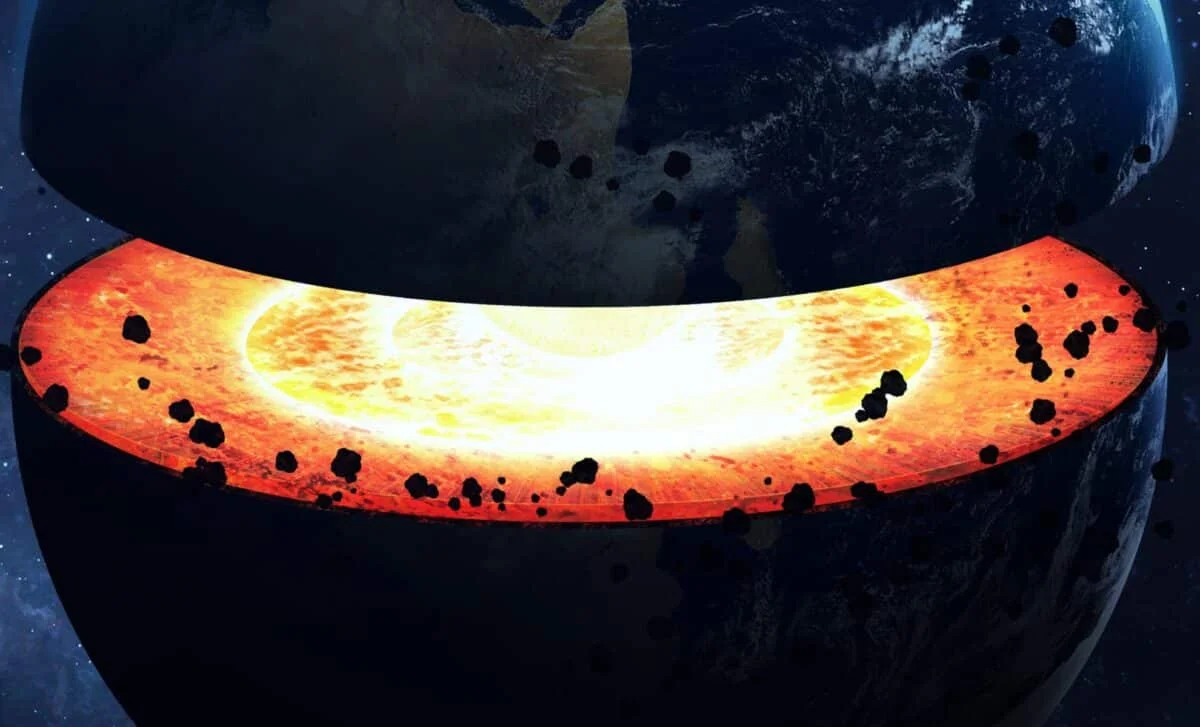
Using seismic data from underground nuclear tests (1977–1995), the study shows Earth's outer core is not a uniform liquid but dynamically mixed, with a newly identified PKrKP wave exposing a large, suspended-solid anomaly that hints at vigorous outer-core flow and potential implications for the planet’s magnetic field.
New modeling suggests the inner core could host abundant superionic hydrogen—hydrogen that flows like a liquid and conducts electricity—with the hexagonal close-packed (HCP) phase likely more stable than body-centered cubic (BCC) under core conditions. Partitioning of hydrogen is driven mainly by temperature rather than pressure, creating a radial gradient that concentrates hydrogen toward the inner-core boundary where it re-partitions into a liquid that enriches the outer core. This ongoing exchange, plus inner-core growth, could provide chemical buoyancy to power the geodynamo, while other light elements like oxygen and carbon likely further shape the core's composition and evolution.
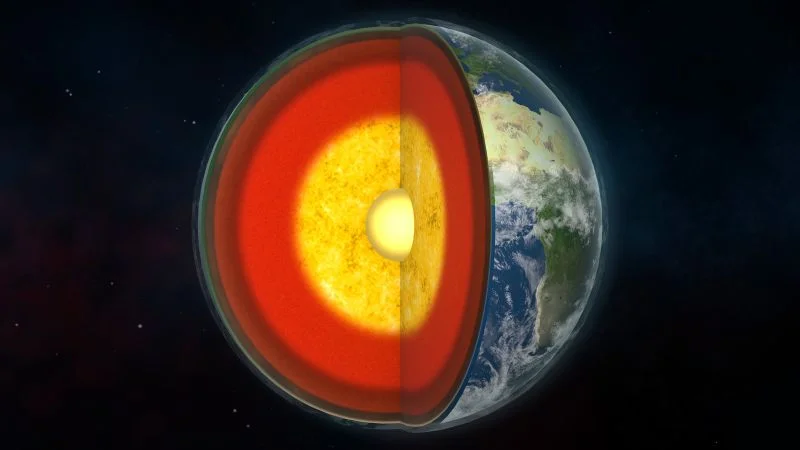
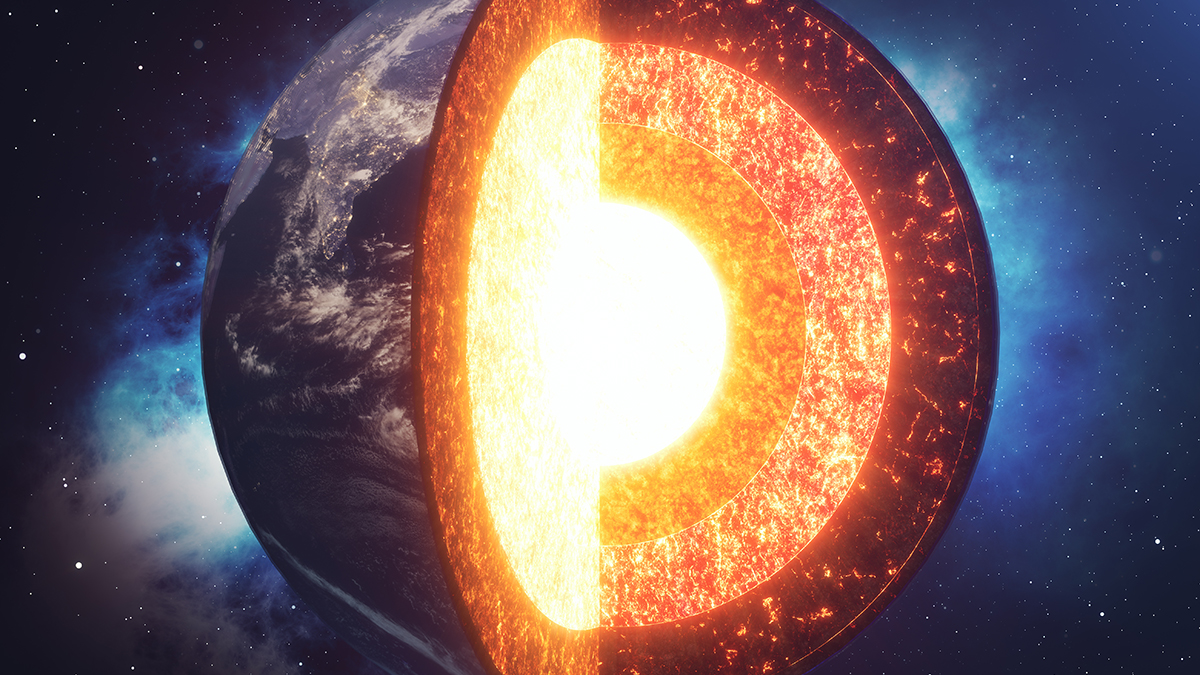
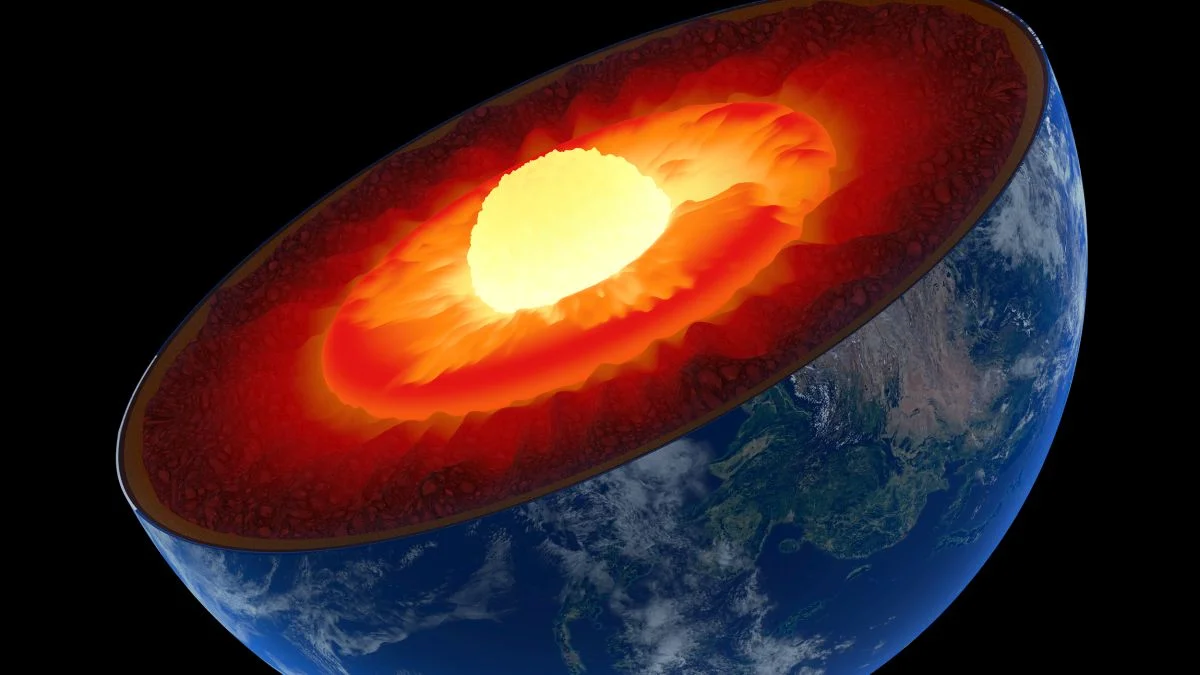
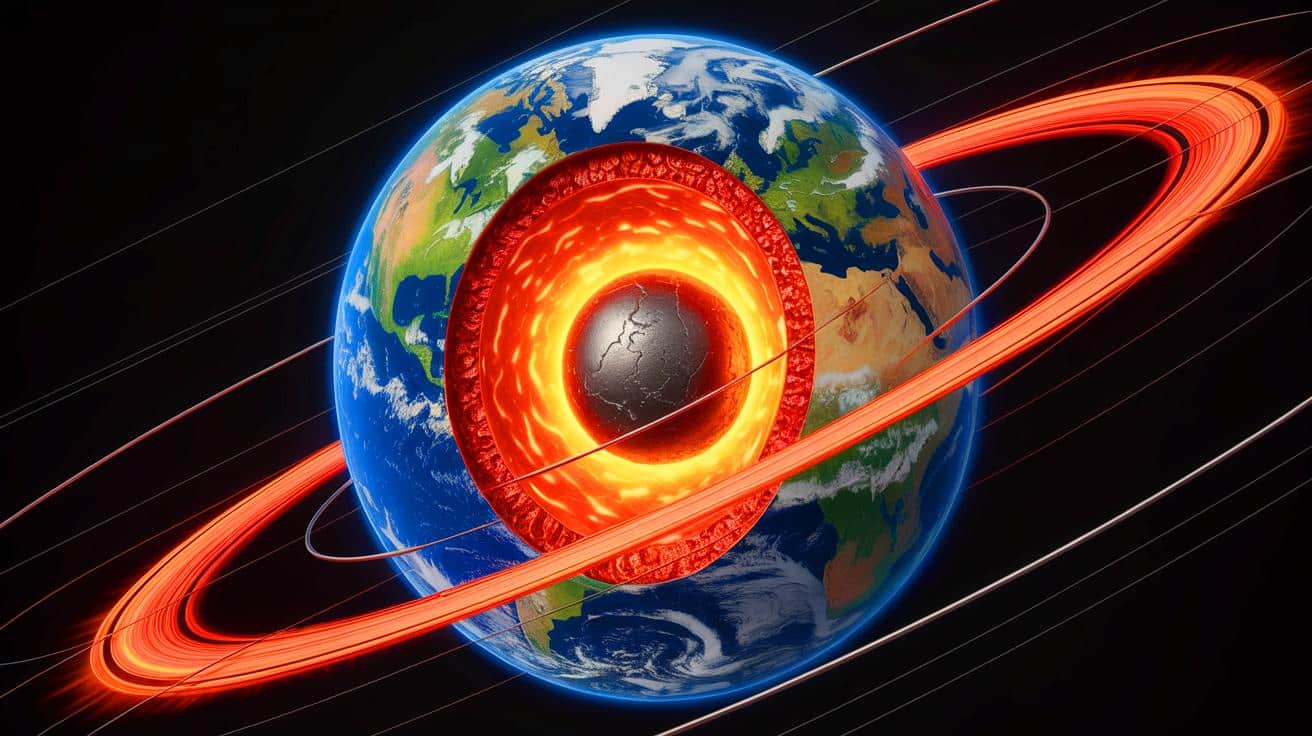
ANU seismologists in 2023 provided evidence that Earth contains an innermost inner core—a roughly 1,300-km-diameter iron sphere with crystal orientation different from the surrounding inner core—reconstructed from global seismic echoes after large earthquakes. This fifth, hidden layer tightens the picture of Earth's deep structure and may reflect an early-formed core or a different iron phase; the same seismic approach is now used to study rocky planets like Mars.
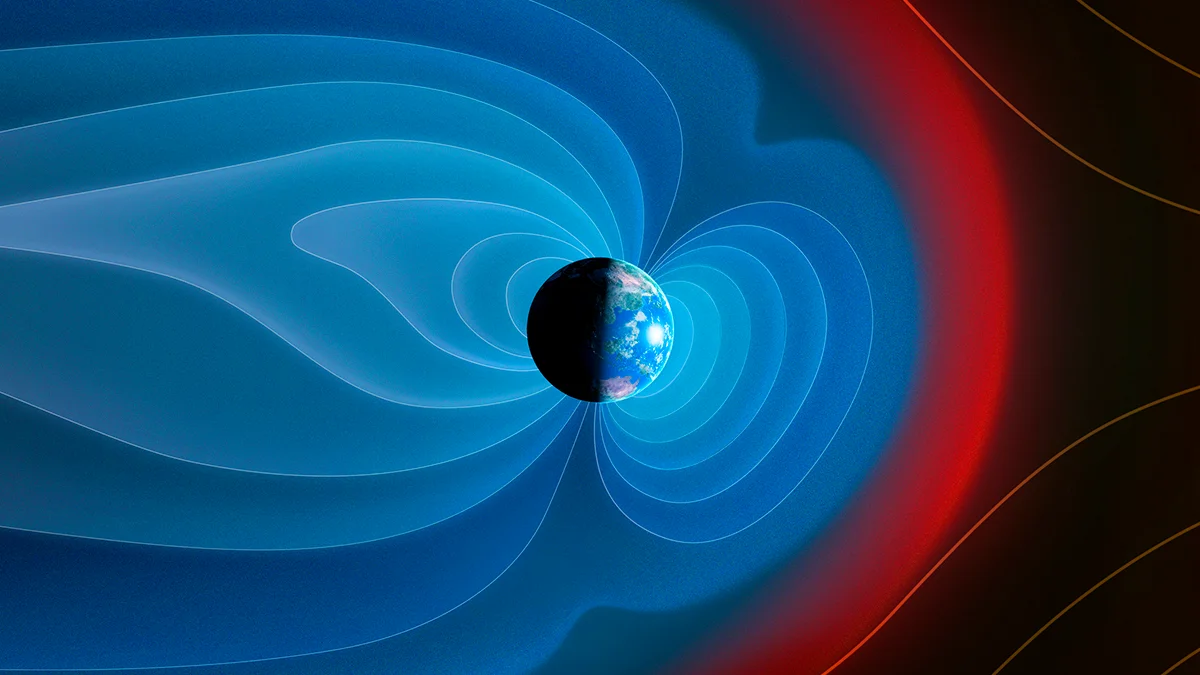
ESA satellites detected a sudden reversal of flow in Earth's liquid outer core beneath the Pacific in 2010, showing the core is more variable than once believed and offering new insights into the geodynamo that sustains Earth’s magnetic field; scientists will monitor whether this is a temporary fluctuation, part of a cycle, or a new stable state with potential impacts on navigation and space weather models.
A Newfoundland sediment core reveals two magnetic polarity reversals around 40 million years ago lasting about 18,000 and 70,000 years, far longer and more variable than the commonly cited ~10,000-year reversals. The findings suggest reversals are chaotic and driven by the Earth's geodynamo in the outer core, implying future reversals could last tens of thousands of years and may increase exposure to cosmic radiation with potential climate and biological impacts.
A Nature Communications study led by Motohiko Murakami suggests hydrogen from early Earth became chemically bound inside the metallic core as iron hydrides, not as free gas or water. If hydrogen accounts for up to about 0.36% of the core’s mass, this could translate to roughly 45 oceans’ worth of water, implying Earth’s surface water may be just a fraction of a much larger deep-water inventory formed during planet formation.
A Nature Communications study estimates Earth’s molten iron core could host a vast hydrogen reservoir—potentially the planet’s largest—amounting to about 0.07% to 0.36% of the core’s weight, equivalent to roughly nine to 45 hydrogen oceans. Using atom probe tomography and high-pressure iron experiments to mimic core formation, researchers examined how hydrogen interacts with silicon and oxygen under extreme conditions. If confirmed, this suggests Earth acquired most of its water during its early growth rather than via late comet deliveries and may relate to heat flow that helps power the magnetic field; however, the estimate relies on indirect methods with uncertainties, and further work is needed to refine the numbers.
A new study suggests Earth's inner core is layered like an onion, with variations in seismic wave speeds explained by the distribution of silicon and carbon in iron alloys, revealing a complex, stratified structure deep beneath the surface.
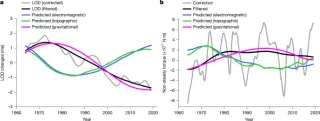
In 2025, scientific discoveries revealed Earth's ancient crust in Quebec, explained phenomena like will-o'-the-wisps through microlightning, tracked the movement of magnetic north, discovered a deep-sea methane-based ecosystem, and observed changes in Earth's core, deepening our understanding of the planet's history and inner workings.
Scientists have experimentally demonstrated a superionic state of matter inside Earth's inner core, where carbon atoms move freely within a solid iron matrix, explaining seismic observations and challenging traditional models of Earth's interior.
A NASA-led study reveals a strong correlation between Earth's magnetic field and atmospheric oxygen levels over the past 540 million years, suggesting that processes in Earth's molten core have played a crucial role in creating conditions suitable for complex life, with implications for understanding planetary habitability and the search for life on exoplanets.
Scientists from Oxford, Leeds, and UCL discovered that carbon played a crucial role in Earth's inner core formation, reducing supercooling requirements and potentially more abundant than previously thought, which impacts our understanding of Earth's magnetic field and interior dynamics.
A new study suggests that the presence of about 4% carbon in Earth's core allowed the iron to solidify under high pressure and temperature conditions, explaining how the planet's inner core froze and providing insights into Earth's geological history.
Recent analysis of satellite data from GRACE reveals that processes deep within Earth's mantle, possibly involving mineral phase transitions, are causing changes in the planet's gravity field, with potential implications for understanding Earth's internal dynamics and magnetic field variations.
Satellites have revealed mysterious changes near Earth's core, suggesting a transformation in deep underground rocks that may be causing the core to leak, providing new insights into Earth's internal structure and its effects on seismic activity and magnetic field.