Physicists have developed a new 21st-century theory of fluids by applying effective field theory and symmetry principles, moving beyond the 19th-century Navier-Stokes equations to account for microscopic particle behavior.
Caspar A. Jacobs challenges the common assumption that the breakdown of low-energy quantum gravity theories occurs precisely at the Planck scale, arguing that this scale is more of a heuristic than an absolute limit, and our current understanding cannot definitively pinpoint where our theories fail due to the inaccessibility of such high energies.
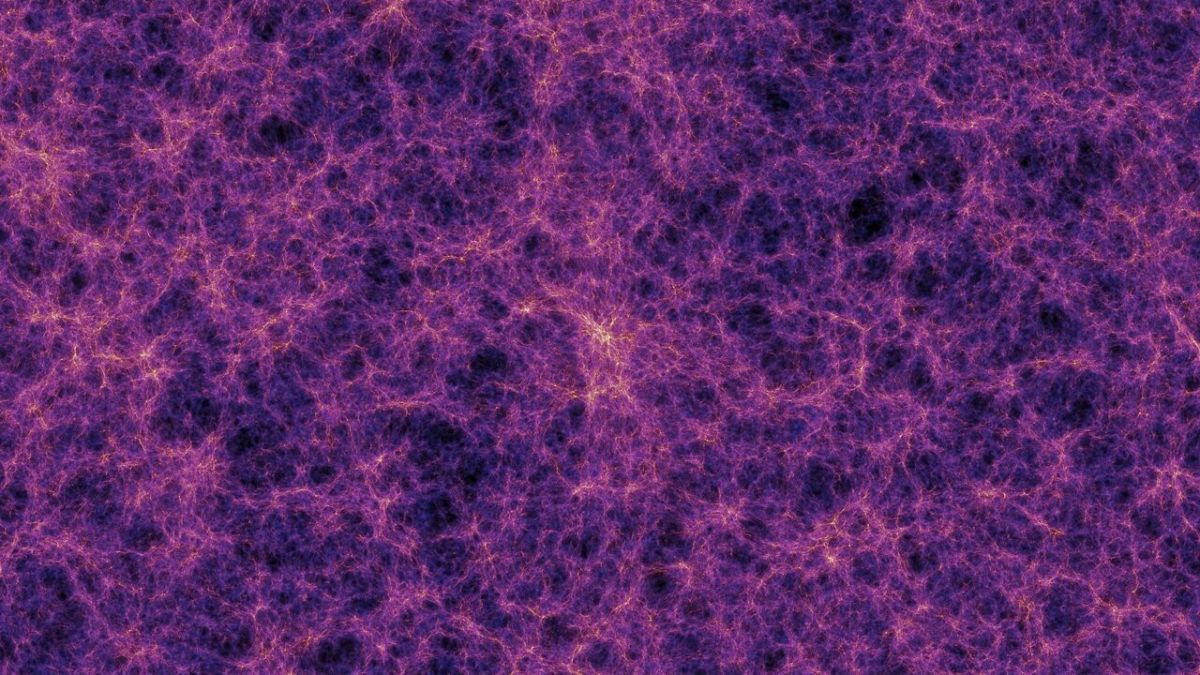
Three scientists have been awarded the New Horizons Prize in Physics and $100,000 for their contributions to understanding the large-scale structure of the universe and developing new tools to extract fundamental physics from galaxy surveys. Their work focuses on studying the cosmic web, a vast interconnected structure of matter that holds clues to the universe's fundamental forces. The prize is given annually to early career researchers by the Breakthrough Prize Foundation, and the money is donated by tech billionaires.
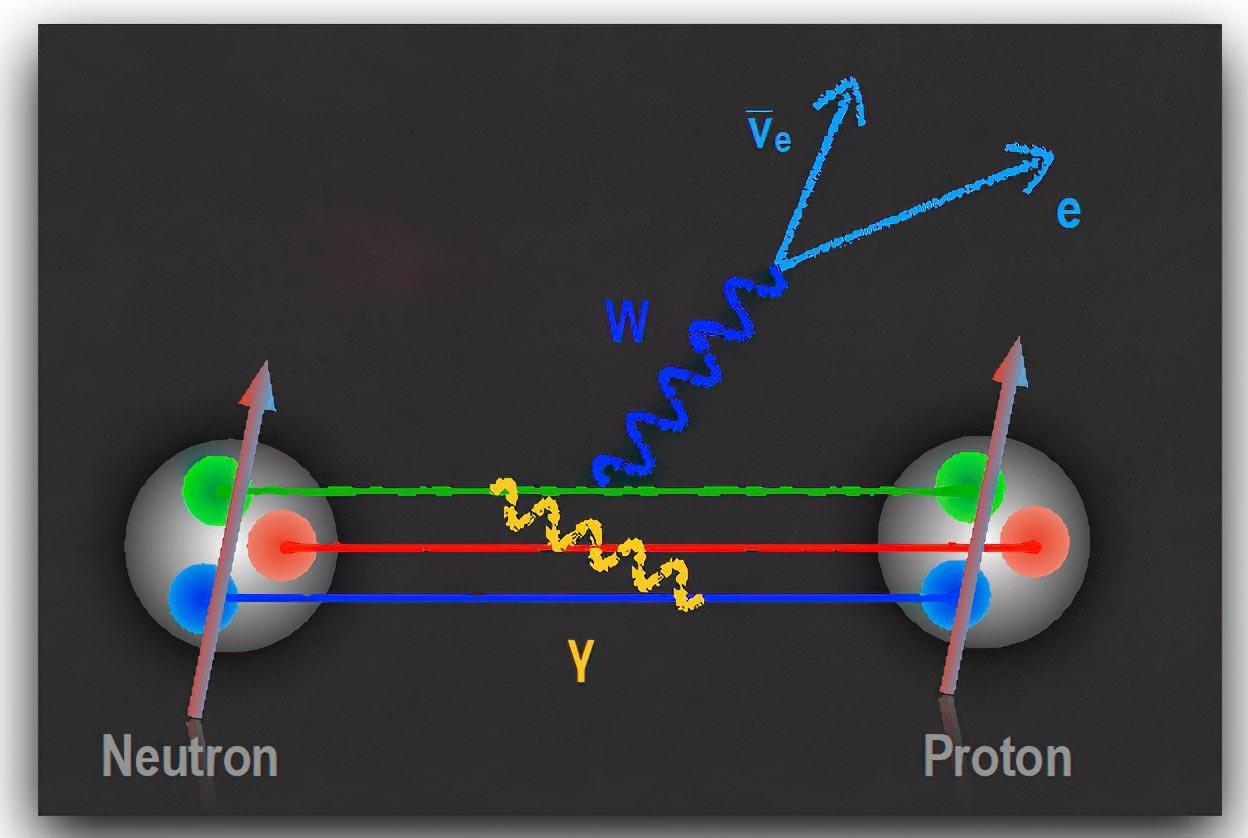
Nuclear theorists have discovered a new effect in neutron decay related to the interplay of weak and electromagnetic forces, which alters our understanding of neutron decay and signals the need for high-precision computations of electromagnetic effects. This research affects the search for new interactions, technically known as “right-handed currents,” that restore the universe’s mirror-reflection symmetry. The calculation was performed with a modern method, known as “effective field theory,” which efficiently organizes the importance of fundamental interactions in phenomena involving strongly interacting particles.
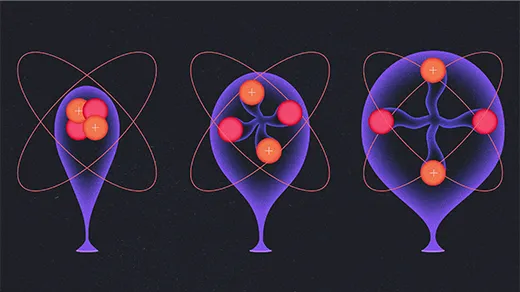
An experiment conducted by Simon Kegel and his colleagues has cast doubt on the leading theory of the nucleus. The experiment involved exciting helium nuclei by shooting a beam of electrons at a tank of cold helium gas. The team then compared the change in the nucleus's spread with a variety of theoretical calculations, but none of the theories matched the data. The calculation that came closest used an oversimplified model of the nuclear force, not the chiral effective field theory. Several groups plan to repeat the calculations to find out what went wrong.