Zephyr RTOS Patched for ARP-Triggered Memory Corruption Flaw
A reference-counting error in Zephyr RTOS allows local attackers to trigger memory corruption or crashes by exploiting ARP cache saturation and transmit failures.

All articles tagged with #embedded systems
A reference-counting error in Zephyr RTOS allows local attackers to trigger memory corruption or crashes by exploiting ARP cache saturation and transmit failures.
A medium-severity vulnerability in the Zephyr RTOS USB host stack allows a physically connected malicious device to corrupt memory. The flaw, CVE-2026-102953, stems from a use-after-free error in control transfer handling, affecting versions 4.1.0 to 4.4.9. It requires physical access and high attack complexity but can lead to crashes or data integrity issues.

David Montero Crespo has successfully ported the 1998 PlayStation classic Metal Gear Solid to the ESP32-S3 microcontroller, demonstrating that legacy console games can run on modern low-power hardware through decompilation and recompilation.

Toyota revealed Fluorite, a fully featured open-source game engine from Toyota Connected North America designed to run high-performance 3D graphics and interactive UI on embedded hardware like in-vehicle displays. It uses Dart and Flutter for logic/UI, a C++ ECS core, console-grade 3D rendering via Filament, and Blender-friendly model-defined touch zones, with Hot Reload to speed updates. The move aims to avoid licensing fees from traditional engines and could benefit indie developers, though it isn’t aimed at PC or console games.

Ars Technica reports Doombuds, a hack by Arin Sarkisan, lets the PineBuds Pro earbuds run Doom by wiring a JavaScript interface to stream a heavily compressed MJPEG video from the earbuds’ UART pads to a web server, using a 1.7MB squashware Doom build to fit into the device’s ~4MB flash and ~1MB RAM; a Twitch stream controls sessions via doombuds.com, demonstrating that inexpensive, open‑firmware earbuds can run a classic game.
GCC 16 has added support for Picolibc, a lightweight C library for embedded systems, thanks to contributions from Keith Packard, enabling easier use of Picolibc with new configuration options.
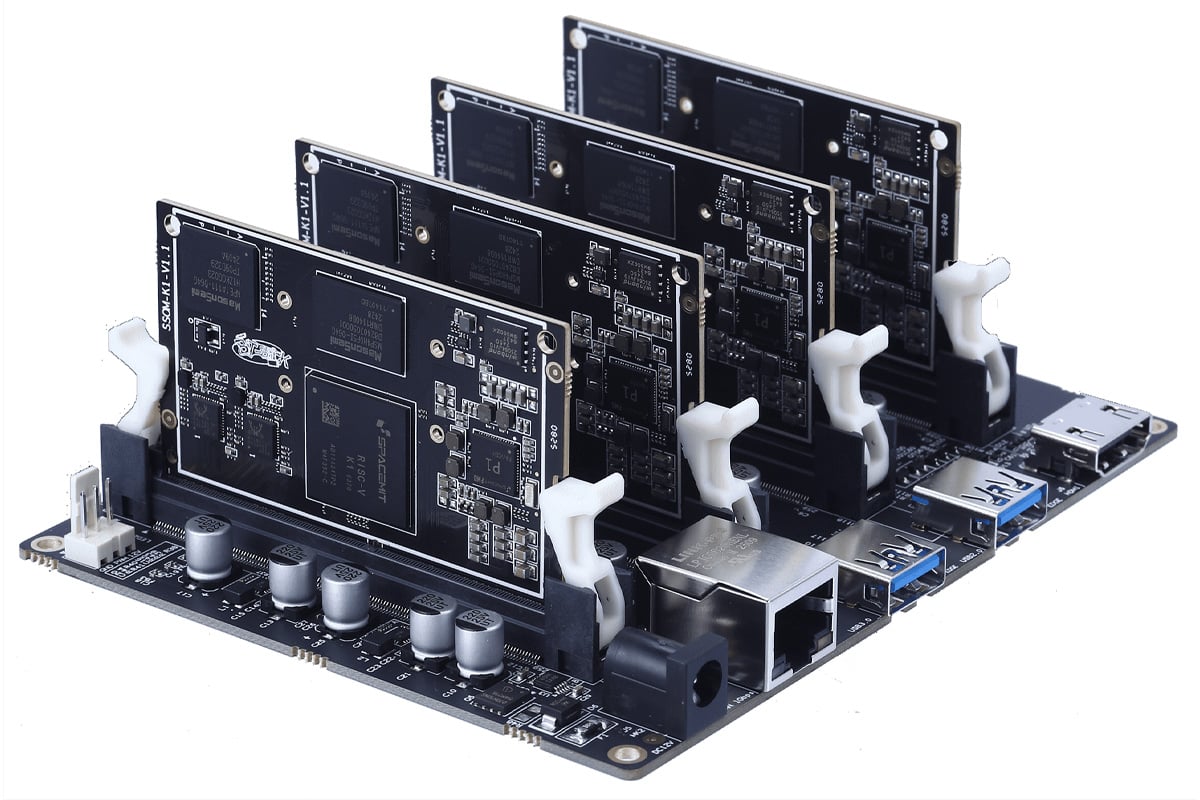
Bit-Brick Cluster K1 is a versatile 4-slot RISC-V cluster board designed for edge computing, AI, and embedded applications, supporting up to four SSOM-K1 modules with high-performance features, extensive I/O options, and software support for various operating systems, available for around $125 without modules.
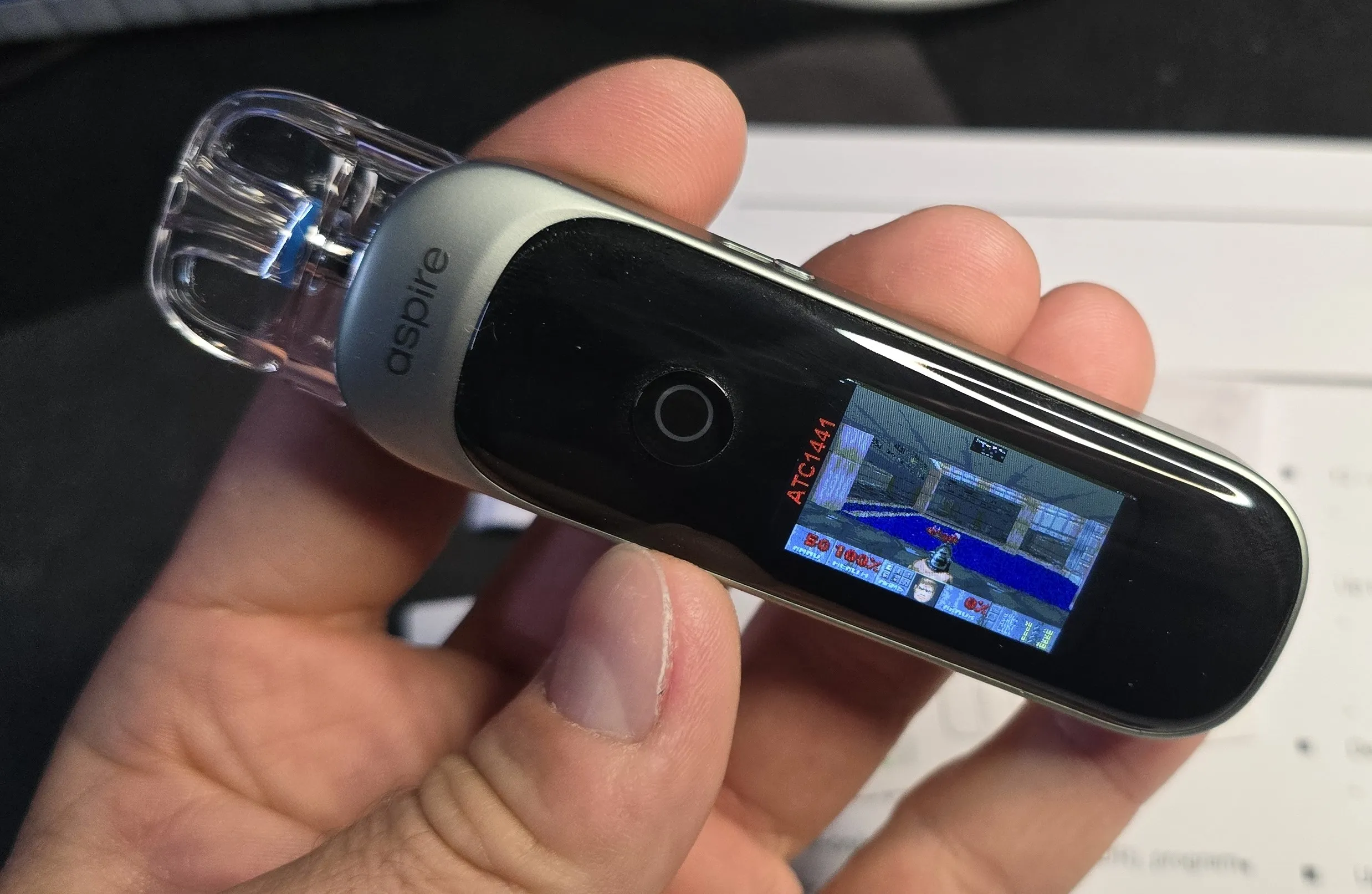
A DIY project demonstrates that a $35 vape with a Cortex-M4 MCU can run DOOM by using a screenshare firmware to connect to a PC, hinting at future possibilities of gaming on vaping devices.
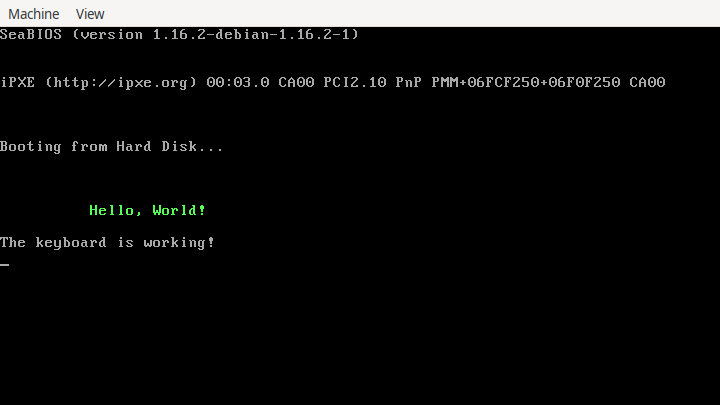
Philippe Brochard developed a 46-byte Forth operating system for the 8086 processor, featuring a minimal implementation with compile and execute commands, capable of receiving input via serial or keyboard, and designed to load more complex software, exemplifying extreme minimalism in OS design.
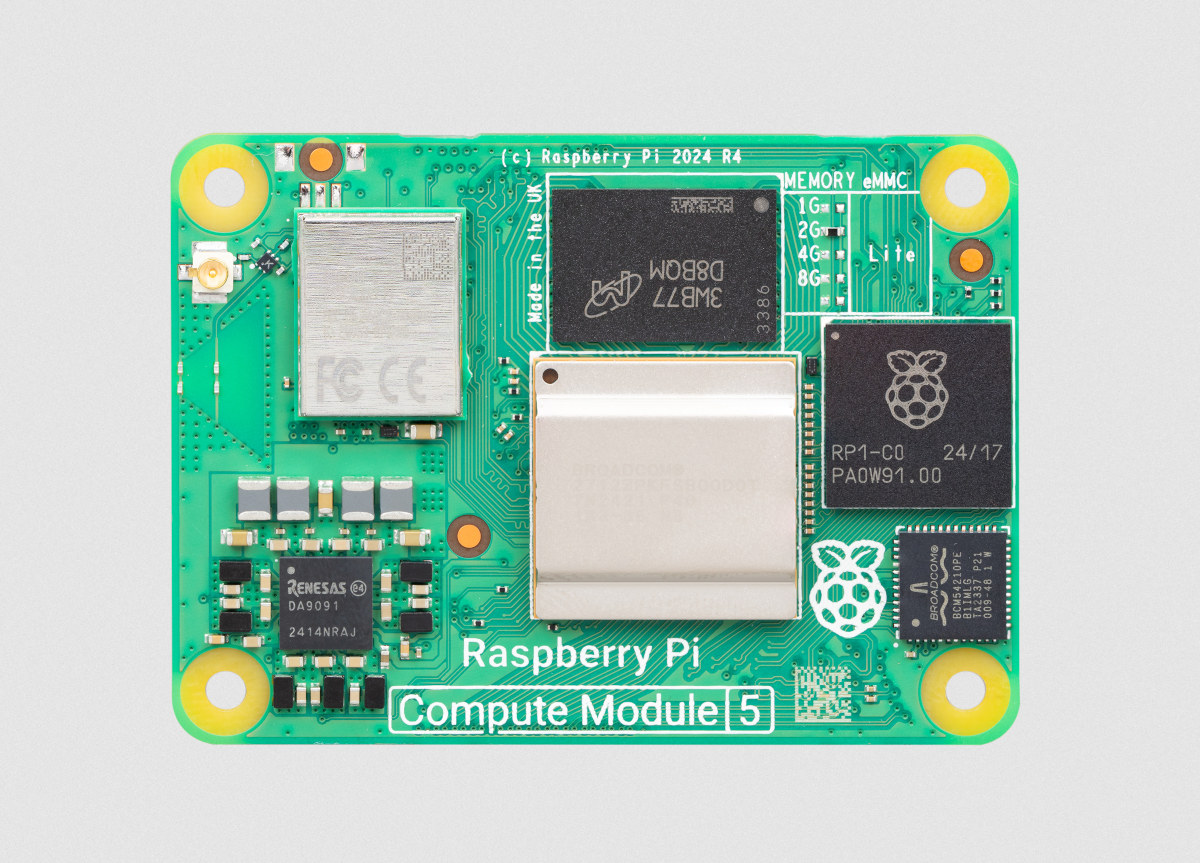
The Raspberry Pi Compute Module 5 (CM5) has been launched, featuring a Broadcom BCM2712 quad-core Cortex-A76 SoC, up to 16GB LPDDR4 ECC memory, and optional WiFi 5 and Bluetooth 5.0. It maintains the form factor of the CM4 but offers enhanced performance, making it suitable for embedded applications. The CM5 is available in various configurations, with prices ranging from $45 to $135, and includes options for eMMC storage and wireless connectivity. An IO board and development kit are also available to support early software development.
Picolibc 1.8.1, a minimal C library implementation for small embedded systems, has been released with improvements to its CMake build system, addition of allocation attributes to malloc and stdio functions, Microblaze architecture support, and static library versions of the crt0 startup code.