
Zephyr RTOS Patched for ARP-Triggered Memory Corruption Flaw
A reference-counting error in Zephyr RTOS allows local attackers to trigger memory corruption or crashes by exploiting ARP cache saturation and transmit failures.

All articles tagged with #network security
A reference-counting error in Zephyr RTOS allows local attackers to trigger memory corruption or crashes by exploiting ARP cache saturation and transmit failures.

ZTE has disclosed a medium-severity vulnerability, CVE-2026-118889, affecting the Z80 Ultra product. The flaw involves improper access control within the user interface module, potentially compromising confidentiality if exploited. It impacts versions GEN_ZTE_PQ85A01V1.0.0B29 and earlier. The issue requires high privileges and user interaction to exploit, limiting its immediate risk but highlighting the need for patching.

ZTE has disclosed a low-severity vulnerability in the Z80 Ultra device, identified as CVE-2026-118888. The flaw, classified as improper access control, affects versions up to GEN_ZTE_PQ85A01V1.0.0B29. It carries a CVSS 3.1 score of 3.3, indicating limited impact on confidentiality but no risk to integrity or availability. Exploitation requires local access and user interaction, though no special privileges are needed. ZTE has published an advisory to address the issue.

A high-severity vulnerability, CVE-2026-134753, has been identified in dsniff versions up to 2.5a2. The flaw is an integer underflow in the decode_sniffer() function that allows unauthenticated remote attackers to write past the global obuf buffer. By sending a specific UDP datagram to port 2001, attackers can disable base64_pton bounds checks, corrupt memory, and crash the application. The vulnerability carries a CVSS 4.0 score of 8.3 and a CVSS 3.1 score of 7.0, both rated as High severity.

SonicWall has ceased security updates for its Generation 6 firewalls, advising customers to immediately replace these devices with supported Gen 8 models. The vendor cites accelerated AI-assisted attacks and the collapse of the time window between vulnerability disclosure and exploitation as primary reasons for this decision. Affected users are instructed to disable remote management interfaces and enforce multi-factor authentication until migration is complete.

Security teams often prioritize detection alerts over the underlying data quality needed for effective investigation. Rich network data, including full transaction details and packet content, allows analysts and AI to reconstruct attack paths and intervene, whereas shallow data limits visibility to isolated events. As AI tools become more prevalent in Security Operations Centers, the ability to inspect and validate underlying evidence becomes critical to avoid false conclusions and ensure reliable incident resolution.
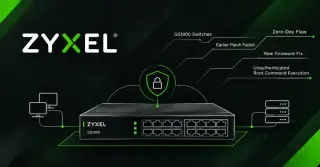
Zyxel GS1900 network switches remain vulnerable to a critical zero-day exploit despite the vendor's June patch. Researchers at Binarly discovered that the earlier fix for CVE-2026-7273 failed to address a separate out-of-bounds write flaw, now tracked as CVE-2026-107441. This vulnerability allows unauthenticated attackers with network access to execute root-level commands. Zyxel has released Patch 3 firmware for ten models to close the hole, which was reported in September and is rated 9.8 on the CVSS scale.

SonicWall disclosed two vulnerabilities in its end-of-life Global Management System (GMS) that it will not patch. The critical flaw allows unauthenticated file access, while a high-severity issue enables SQL injection. The vendor advises users to migrate to the Network Security Manager (NSM). This follows recent active exploitation of a separate critical SSRF flaw in the same product line.

Cloudflare reported 18.2 million network-layer DDoS attacks in Q3 2026, a 38% increase from Q2. Short-burst, low-bandwidth attacks surged 208%, driven by booter services, while hyper-volumetric attacks dropped 69% following law enforcement actions. DNS amplification attacks rose 215%, and the U.S., China, and Indonesia were the most targeted nations.
Tailscale released version 1.104.4 to patch critical flaws in its built-in SSH server that allowed attackers to gain root access on other servers. The vulnerabilities, identified by researcher Erica Windisch, exploited socket forwarding mechanisms that operated with root privileges. Attackers needed only a foothold on a trusted device, as Tailscale SSH relies on device identity rather than passwords. The update changes forwarding to run as the logged-in user and relies on OS file permissions. Users are advised to update immediately or disable forwarding via environment variables. The self-hosted headscale control server remains unpatched, with all SSH grants potentially granting root access.
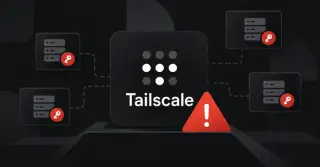
A security researcher has disclosed unpatched flaws in Tailscale SSH that allow a single compromised device to gain root access on other servers within the network. The attack exploits port forwarding and device-based authentication, bypassing traditional password checks. While Tailscale acknowledges the issue, no official patch or CVE has been released yet, leaving users to rely on configuration changes for mitigation.
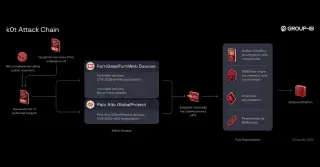
A cybercriminal group known as k0t has compromised over 70,000 credentials by exploiting vulnerabilities in exposed firewalls and VPNs. The campaign, active from February to June 2026, targets devices globally, with significant impacts in Asia Pacific and Latin America. Researchers link k0t to ransomware groups Qilin and The Gentlemen, suggesting it may serve as an initial access broker. The attack chain involves reconnaissance, exploitation of specific CVEs, and data exfiltration to cloud storage.

Investigations by Gamers Nexus reveal that LG smart TVs actively scan local networks for other devices and record audio even when in standby mode. The findings, based on tests of retail OLED models, show that these TVs collect data on phones and smartwatches to fuel targeted advertising. Additionally, the TVs store voice prompts locally when offline and upload them once reconnected. Researchers also identified remote code execution vulnerabilities in the webOS system. LG has not yet responded to these claims, and experts recommend disconnecting the devices from the internet.

Verizon experienced two distinct service disruptions in August 2026. A Saturday outage affected voice services nationwide, while a Sunday incident in Southern California was caused by deliberate fiber line vandalism. The latter impacted mobile and internet users in Los Angeles, with Verizon citing safety risks to first responders.
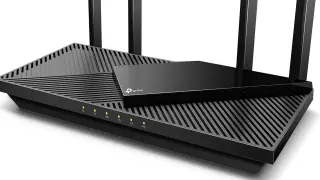
BGR outlines five frequent issues with TP-Link routers, including slow connections, network congestion, poor coverage, security gaps, and frequent reboots. The article suggests checking ISP status, updating firmware, using Ethernet cables, installing mesh systems, and enabling WPA3 encryption. For persistent rebooting, it recommends smart plugs or replacement. These problems are common across all routers, not just TP-Link models.