Tag

Breakthrough Starshot

All articles tagged with #breakthrough starshot

science1 month ago

Tiny Probes, Giant Lasers Aim for Distant Star Systems

Scientists are exploring interstellar missions using ultra-light, sensor-packed light sails propelled by a network of high-powered lasers. Tiny probes (smart-dust-like sensors) could reach nearby star systems at relativistic speeds (about 10–20% of light) and relay observations back to Earth, as envisioned by Breakthrough Starshot. Solar sails already demonstrate the concept in Earth orbit, but laser-driven sails offer a faster route to distant worlds, albeit with challenges such as deceleration at arrival and data transmission, while discoveries like the exoplanet LHS 1140b fuel the interest in visiting neighboring planetary systems.


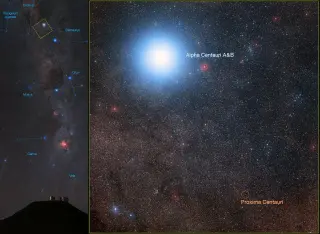
Laser sails could reach Alpha Centauri in decades, while Proxima b’s life status remains unresolved
science1 month ago

Laser sails could reach Alpha Centauri in decades, while Proxima b’s life status remains unresolved

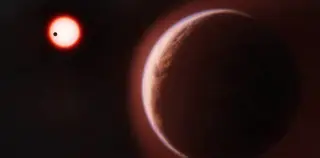
Alpha Centauri, the nearest star system at 4.24 light-years, remains unreachable with today’s tech—Voyager-like speeds would take about 75,000 years to Proxima Centauri, while a laser-sail concept like Breakthrough Starshot could reach in decades but faces major engineering hurdles (huge lasers, durable sails, long-lasting electronics, and reliable communication). Proxima b sits in the habitable zone, but that does not guarantee water, atmosphere, or life, and atmospheric loss could be significant; no confirmed signs of life exist. In short, a tiny robotic probe might someday reach Alpha Centauri, but a real second Earth there is not yet proven.

Small Probes, Big Voyages: How Light Sails Could Open Interstellar Travel
science2 months ago

Small Probes, Big Voyages: How Light Sails Could Open Interstellar Travel

The confirmation of an atmosphere on exoplanet LHS 1140b in its star’s habitable zone fuels serious discussion of interstellar missions using ultra-light light sails propelled by gigawatt lasers or solar radiation, carrying tiny smart-sensor nodes that could relay data back to Earth over decades. This Breakthrough Starshot–style concept emphasizes miniaturized tech and AI-enabled probes as potential first explorers to nearby star systems, though achieving deceleration and reliable data return remains a challenge.

Gram-scale lightsail eyes 20-year voyage to Alpha Centauri
space2 months ago

Gram-scale lightsail eyes 20-year voyage to Alpha Centauri

A Space Daily piece outlines Breakthrough Starshot's concept: a gram‑scale payload on an ultrathin lightsail accelerated by a ground‑based laser array to about 0.2c, enabling a flight to Alpha Centauri in a little over 20 years. The plan hinges on building the laser, sail, and communications systems, plus solving beam stability, navigation, and decades‑long durability challenges. Even if launched, data would take years to return—about 26 years after launch—since a transmission from Proxima Centauri to Earth adds another 4.2 years. No launch date is set; the concept remains a physics‑proof, research program rather than an imminent mission.

Tiny probes, big journeys: the path to visiting other star systems
science2 months ago

Tiny probes, big journeys: the path to visiting other star systems

Scientists announced a helium-rich atmosphere around rocky exoplanet LHS 1140b in its star’s habitable zone, renewing discussion of interstellar missions using miniature probes propelled by light sails—laser-driven or solar. Projects like Breakthrough Starshot aim to send tiny sensors at relativistic speeds to nearby star systems to observe them up close and relay data back over decades, but such flyby missions require overcoming major propulsion, data transmission, and deceleration challenges before any practical interstellar voyage is feasible.

The Light-Speed Wall: Mass Makes Reaching c Impossible and Near-Light Travel Hovers on Engineering, Not Physics
space2 months ago

The Light-Speed Wall: Mass Makes Reaching c Impossible and Near-Light Travel Hovers on Engineering, Not Physics

Traveling at the speed of light is impossible for any object with mass because it would require infinite energy; you can get arbitrarily close, which would produce extreme time dilation so travelers age less than those left behind. In theory, concepts like Alcubierre warp drives and wormholes exist, but they require exotic negative energy and remain beyond practical reach. Near-light-speed travel is the active frontier, with Breakthrough Starshot outlining a feasible (though engineering-heavy) path to about 0.2c for gram-scale probes rather than humans, while real interstellar journeys for larger objects remain firmly beyond our current physics and technology.

space3 years ago

"Revolutionary Pellet-Beam Propulsion Could Cut Voyager 1 Travel Time by 5 Years"

A new spacecraft propulsion system that uses pellets accelerated by a laser beam could reach speeds of up to 480,000 km/h, making it 10 times faster than traditional rocket propulsion systems. The system could potentially overtake Voyager 1, the farthest human-made spacecraft from Earth, in just five years. The concept, which has received $175,000 in funding from NASA's NIAC program, is still in the early stages of development and relies on significant advances in laser design.