
Tag

Global Map

All articles tagged with #global map

Global map reveals Earth's gigantic underground fungal networks could span a tenth of the Milky Way
science1 month ago

Global map reveals Earth's gigantic underground fungal networks could span a tenth of the Milky Way

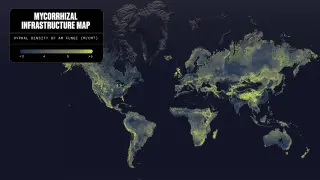
A global study maps arbuscular mycorrhizal fungal networks using 16,669 soil cores and AI, revealing dense underground hyphal networks that connect most land plants and drive carbon and nutrient exchange. Wild grasslands host the densest networks, with topsoil containing a large share of global fungal biomass, and croplands showing about 50% lower density. If laid end-to-end, the hyphae would stretch about 68 quadrillion miles (110 quadrillion kilometers), roughly 10% of the Milky Way’s width, highlighting their key role in the carbon cycle and informing biodiversity, climate, and agricultural strategies.
Deep-Earth Quakes Detected Across Continents, Redefining Earth's Interior
science4 months ago

Deep-Earth Quakes Detected Across Continents, Redefining Earth's Interior

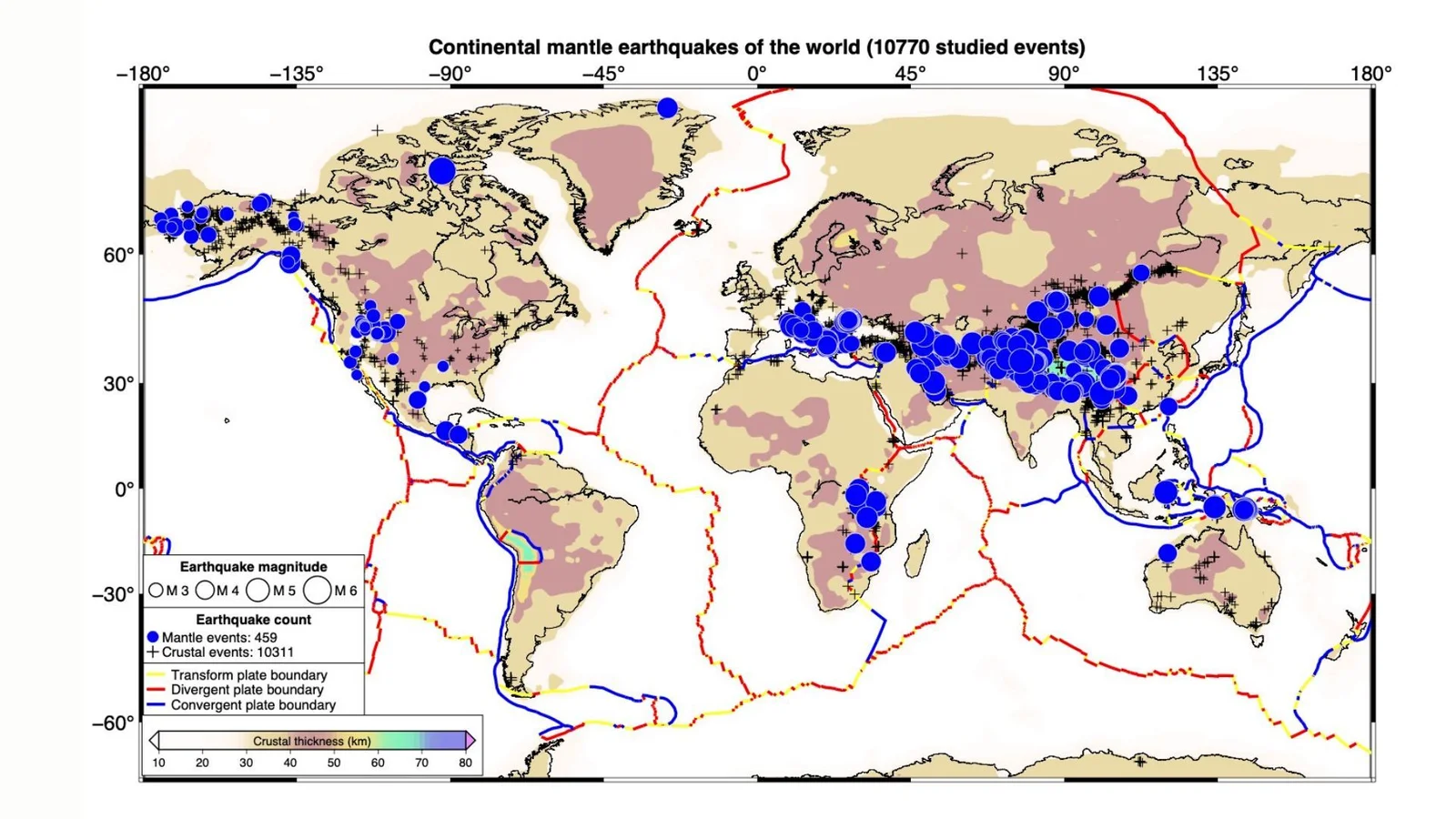
A new global study maps mantle earthquakes—deep quakes originating below the Moho—and shows they occur worldwide, not just in special regions. These deep quakes can be found from the Alps to the Himalayas, East Africa, the western United States, and even the Bering Sea, suggesting mantle earthquakes are more widespread than previously thought. The researchers used a wave-analysis method to distinguish crust-origin quakes from mantle ones and focused on non-subduction regions, highlighting potential links to continental collision and rifting; most mantle quakes are too deep to be felt at the surface (depths around 35 km or more).

Tianwen 1 orbiter creates Mars global map.
space3 years ago

Tianwen 1 orbiter creates Mars global map.

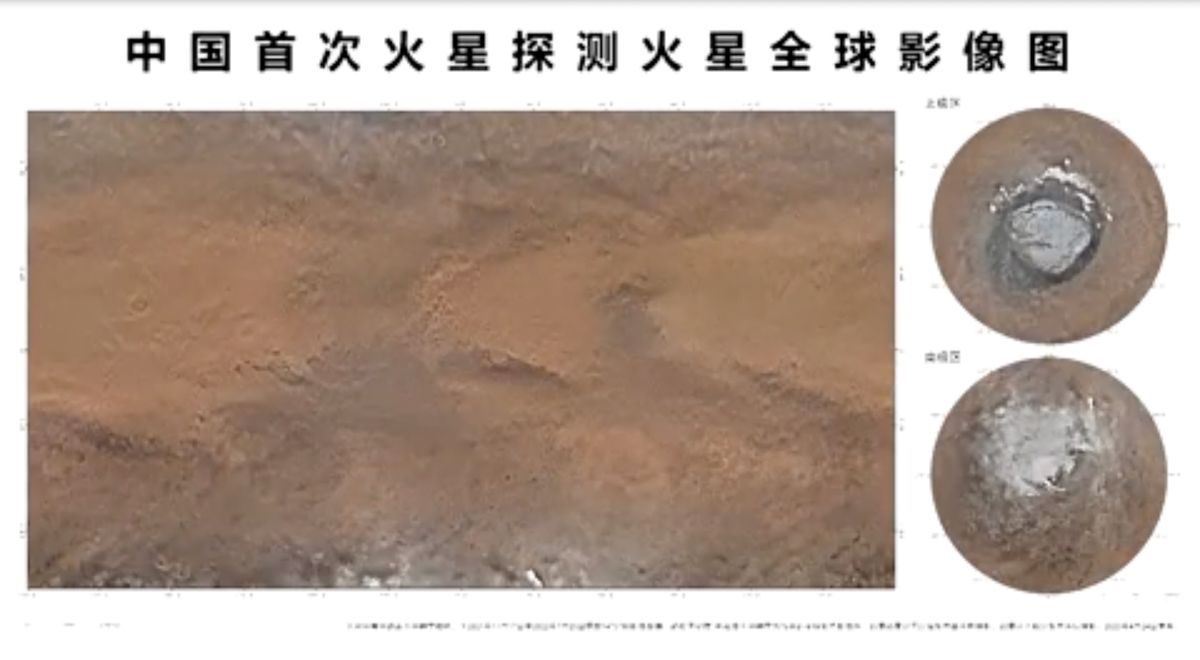
China's Tianwen 1 mission has produced a global map of Mars using data collected by its medium-resolution camera over an eight-month period. The images have a spatial resolution of 249 feet per pixel and include an orthographic projection of Mars' eastern and western hemispheres. The data will inform landing site selection for China's next Mars mission, a sample return mission expected to launch around 2030. The mission's rover, Zhurong, may never be able to reactivate itself due to an accumulation of dust on its solar panels.