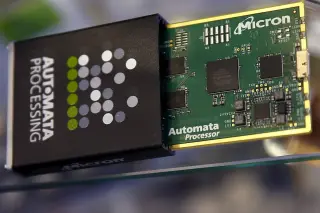
Micron Earnings Beat Hides Margin Concerns
Micron Technology reported strong earnings, but stock gains were muted due to slight gross margin guidance cuts. The company secured 75% of 2027 supply, yet investors remain cautious about peak signals.

All articles tagged with #gross margin
Micron Technology reported strong earnings, but stock gains were muted due to slight gross margin guidance cuts. The company secured 75% of 2027 supply, yet investors remain cautious about peak signals.

Xpeng reported Q2 revenue of 19.74 billion yuan (up 8% YoY and 51.5% QoQ) with a gross margin of 20.7%. The net loss widened to 1.34 billion yuan (up 179% YoY), though a non-GAAP loss of 1.24 billion yuan was noted. Vehicle deliveries reached 103,295 with vehicle revenue of 17.05 billion yuan, while services and other revenue jumped 93.9% to 2.70 billion yuan, lifting overall margin despite a 12.1% vehicle margin. The company guided Q3 deliveries to 115,000–121,000 vehicles and attributed margin gains to services and higher R&D services revenue, though profitability remains under pressure.

Sandisk jumped more than 15% after Investor Day unveiled targets through fiscal 2030, with projected revenue rising in the mid-to-high teens from 2028–2030, adjusted gross margins around 80% and adjusted operating margins near 75%. Management aims for about 50% adjusted free cash flow margin, keeps operating expenses around 5% of revenue, and plans to return excess cash to shareholders, leveraging its NAND flash business and long-term customer relationships amid questions about sustaining memory demand.
Micron Technology posted a record quarter driven by higher memory prices rather than volume, with non-GAAP gross margin at 84.9% and operating margin at 81.2% in Q3 2026. The company has signed 16 strategic customer agreements that place floors and ceilings on prices—covering about 40% of revenue—thereby locking in elevated margins even as the cycle evolves. Management expects Q4 gross margin near 86% as price growth slows, though the durability of profitability depends on volumes and external supply dynamics.

TrendForce estimates the iPhone 18 Pro’s bill of materials could rise about 38% versus the 2025 model due to memory-price inflation, putting pressure on Apple’s margins. The company could absorb part of the cost or raise prices to protect shipments, with memory costs expected to keep rising into 2027. The iPhone 18 cycle will test Apple’s premium-pricing power, even as the company enters it from a position of strength with solid Q3 revenue and margins.

Rivian posted Q2 2026 revenue of $1.66B, up 27% year over year, with a record $179M gross profit led by software/services and VW JV; automotive gross profit was negative $36M as the R2 ramp continues. R2 deliveries began June 9, with 12,613 produced and 12,194 delivered. The company raised full-year guidance to 65,000–70,000 vehicles, narrowed adjusted EBITDA loss to $1.8–2.0B, and signaled about $14B of available future capital, suggesting auto-margin improvement in H2.

Super Micro Computer jumped more than 20% after-hours after raising its June-quarter gross-margin guidance to 15-17%, roughly double the previous 8.2-8.4%, aided by favorable product mix. The company also reported a record backlog of over $60 billion in new orders, with revenue expected near the lower end of prior guidance ($11 billion to $12.5 billion). The stock has fallen about 50% over the past year amid smuggling investigations and dilution fears from a $7 billion equity financing; past DOJ charges against co-founder Wally Liaw and a Taiwan probe into Nvidia-chip smuggling have weighed on sentiment. Earnings are slated for Aug. 11.
Super Micro Computer (SMCI) stock jumped after-hours after the company raised its gross-margin guidance to about 15-17% from 8.2-8.4% as it works through a record backlog exceeding $60 billion, signaling stronger product mix and demand for AI server systems that could lift margins in the coming quarters.

Super Micro Computer jumped in after-hours trading after flagging a record backlog above $60 billion and guiding for stronger gross margins (15%–17%), driven by AI-server demand powered by Nvidia chips; the company also said Q4 revenue would be at the low end of prior guidance ($11B–$12.5B) as it continues cost controls and capitalizes on AI growth.

Stifel lowers Microsoft’s price target to $400, warning that Street FY27 gross-margin estimates don’t fully reflect Azure-driven margin compression and ongoing cloud capex. The firm models FY27 gross margins around 63% (about 450 bps below the consensus 66.5%), with Azure margins near 47.5% still dragging overall margins by roughly 300 bps YoY due to mix shift. Higher operating expenses and finance lease costs could keep FY27 EPS about $1 below Street expectations (roughly $18.5–$19 vs. ~ $19.5).
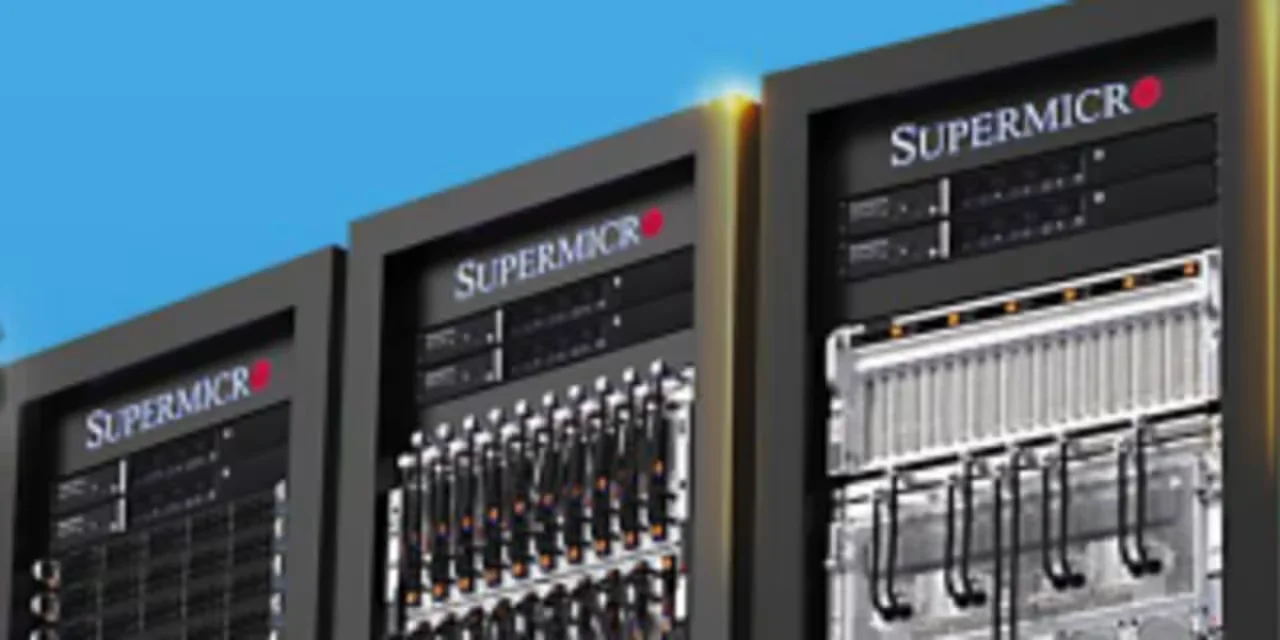
Super Micro reported a second-quarter revenue of $12.7 billion, a company record up 123% year over year, driven by AI demand, with adjusted earnings of 69 cents per share. However, gross margin fell to 6.3% due to mix and supply-chain pressures, prompting near-term margin concerns even as the enterprise-focused business underpins potential higher long‑term margins. Management guided for at least $12.3 billion in revenue next quarter and at least $40 billion for fiscal 2026. Shares rose about 7% after hours on the strong top line against a backdrop of competition and memory-price headwinds.
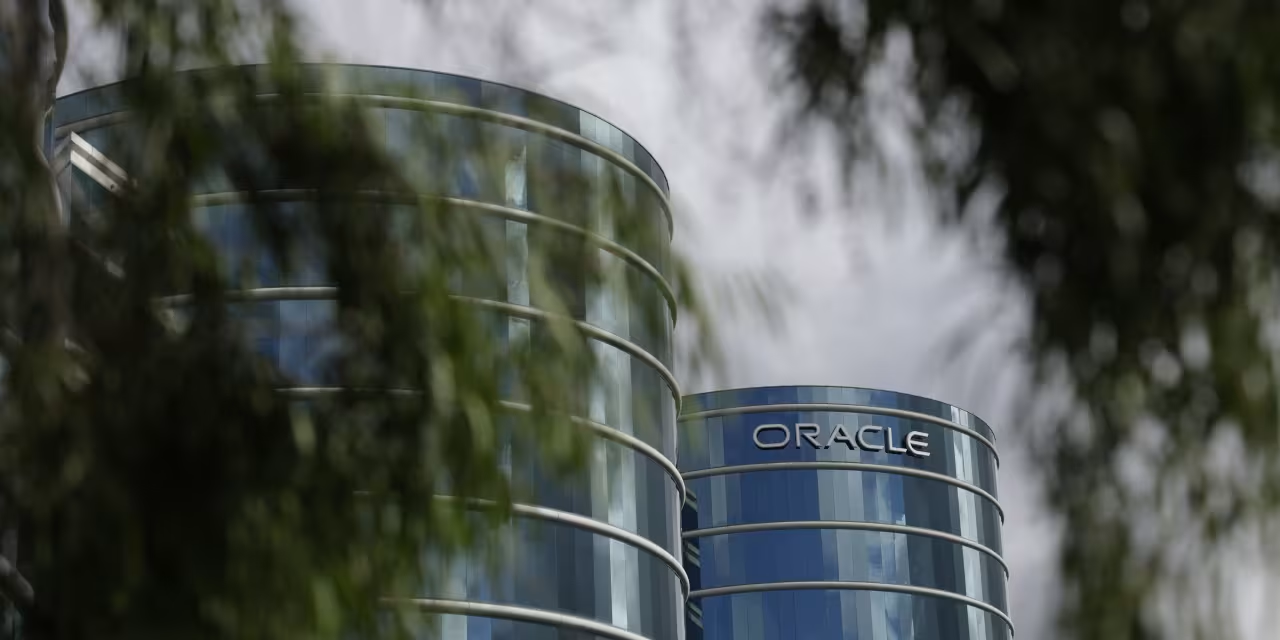
Oracle's stock experienced volatility after clarifying its AI cloud server rental business's gross margin, which it states is 35% over a contract's life, contrasting with a recent report of 14%. The company raised its 2030 revenue forecast for Oracle Cloud Infrastructure from $144 billion to $166 billion, reflecting strong growth prospects, but its stock fell slightly after the announcement. Oracle also highlighted the financial impact of data-center expenses during rapid expansion and maintained optimistic long-term growth projections, driven by a large backlog including a significant contract with OpenAI.
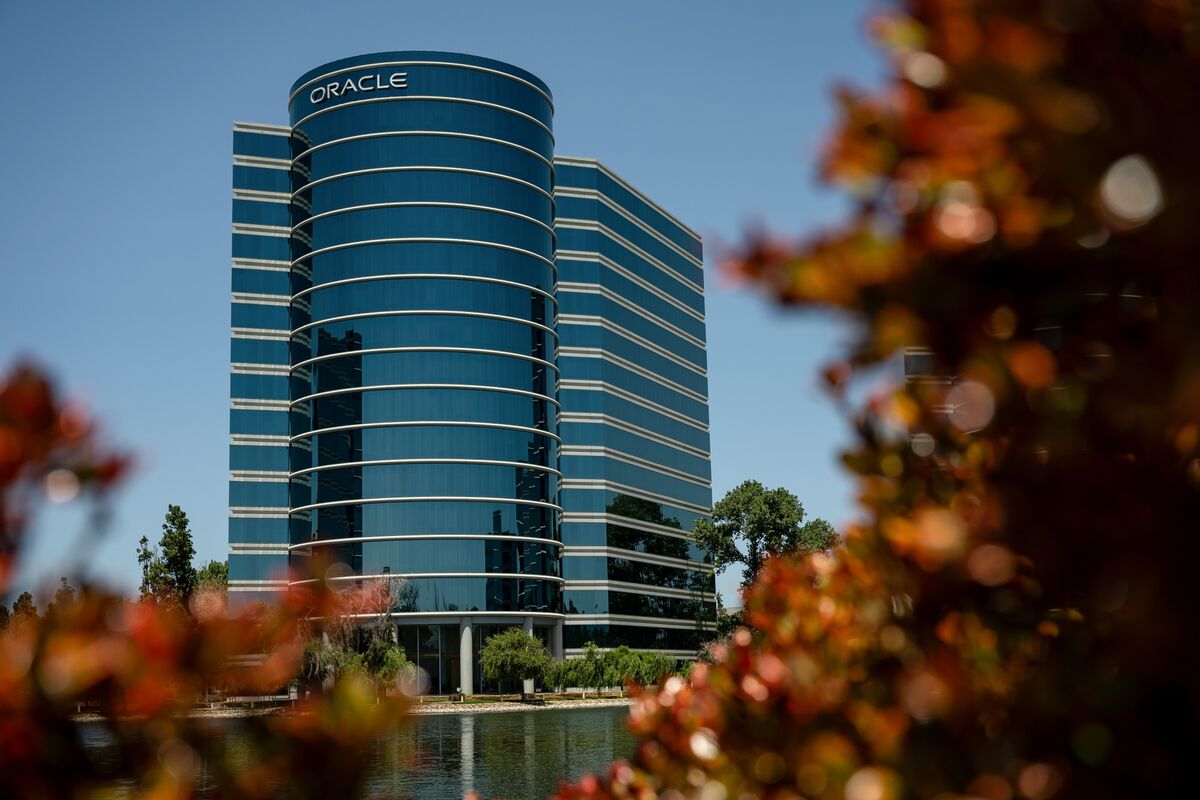
Oracle shares rose after announcing that its AI cloud infrastructure projects could achieve a gross margin of 35%, alleviating concerns about profitability. The company expects to reach $225 billion in annual revenue by 2030, surpassing analyst estimates, with a projected $21 per share in profit, driven by large deals with major AI players like OpenAI and Meta.
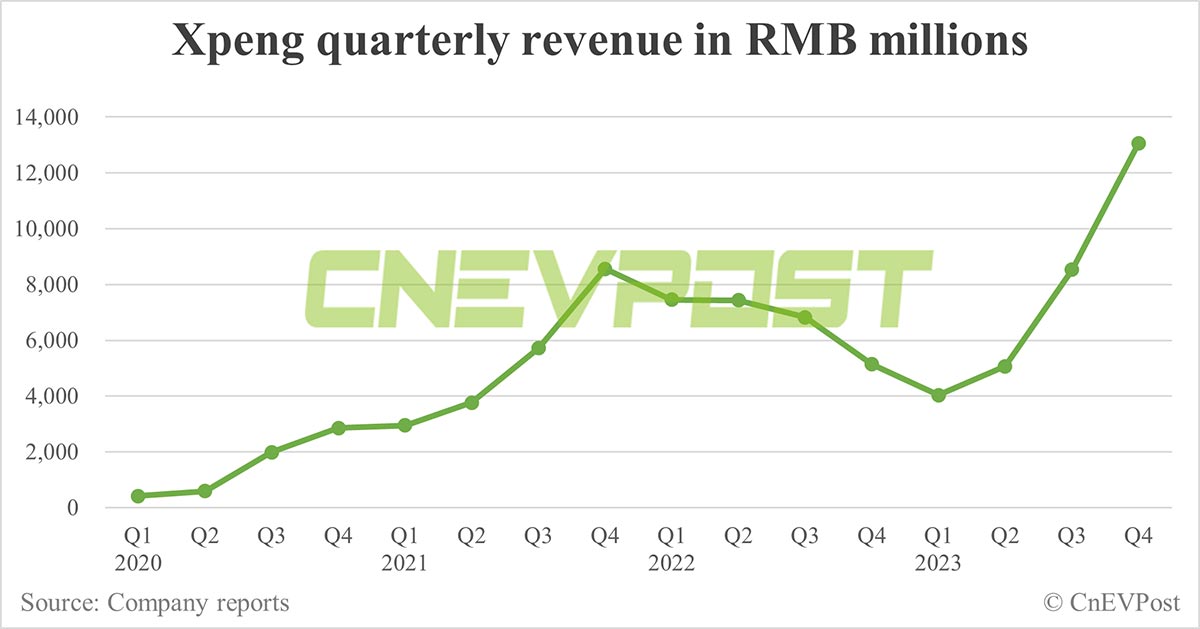
Xpeng reported record revenue in Q4 2023, with a 153.9% increase year-on-year, and a positive gross margin of 6.2%. The company delivered a record 60,158 vehicles in Q4 and saw a significant decrease in net loss. Xpeng's first-quarter delivery guidance is between 21,000 and 22,500 units, with an expected revenue range of RMB 5.8 billion to RMB 6.2 billion. Additionally, the company plans to launch a new brand targeting the lower-priced market within the next month.
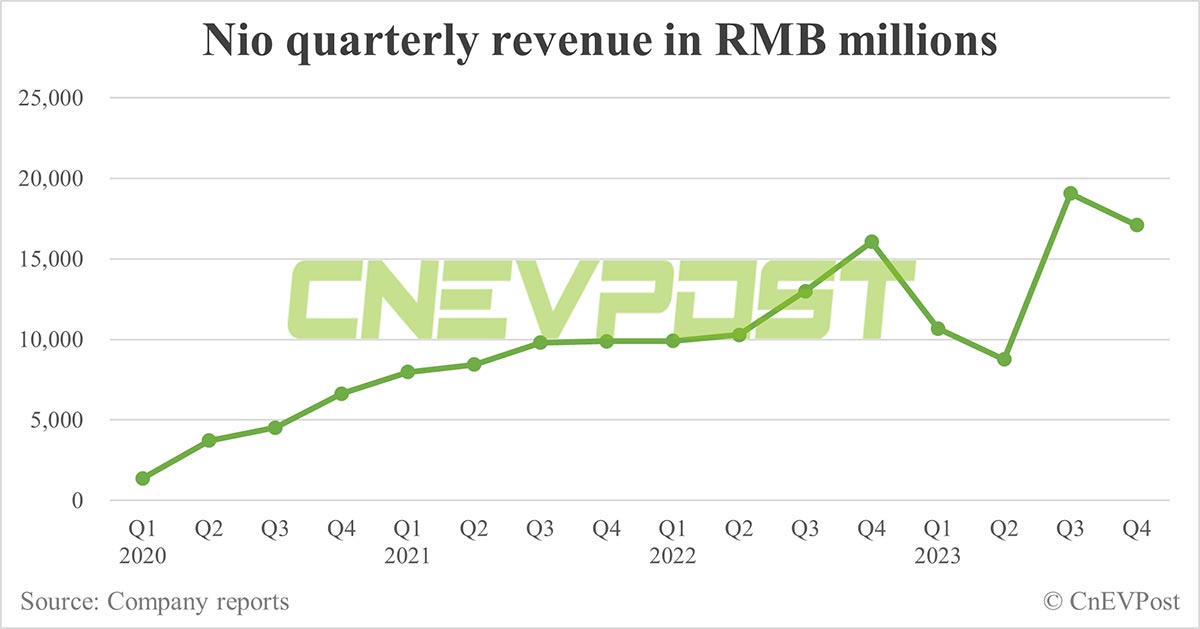
Nio's fourth-quarter revenue surpassed expectations despite a decline in vehicle deliveries, reaching RMB 17.1 billion. However, its gross margin fell short at 7.5 percent, missing analysts' 10.2 percent estimate. The company reported a net loss of RMB 5.37 billion, with a non-GAAP adjusted net loss of RMB 4.8 billion. Nio guided first-quarter vehicle deliveries to be in the range of 31,000 to 33,000 units and expects a revenue range of RMB 10.499 billion to RMB 11.087 billion. Additionally, new spy shots of the Nio Alps model have been revealed as the company aims to compete with the Tesla Model Y.