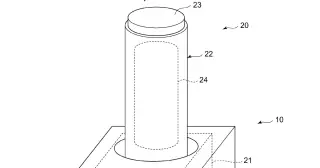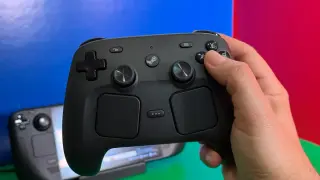
Sony has published a patent for a future PlayStation controller whose buttons can harden or soften in response to gameplay, using a magneto-viscoelastic elastomer and magnets to adjust resistance and feel—potentially expanding tactile feedback beyond the current DualSense.
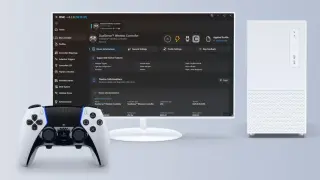
DSX PC App Beta adds Bluetooth audio and haptic feedback for Sony DualSense/Edge/DS4 controllers connected wirelessly, via the DSX+ upgrade (£9.13) or as a DLC; it's a software alternative to the Pico 2W dongle and requires opting into the Steam beta. The update also includes UI redesigns, 28‑day Steam‑less run, card-based profiles, improved button remapping, and new skins; early testing shows solid DualSense support, though some users may still prefer the Pico adapter for zero-background operation.
A DSX v3.2 beta finally enables the PS5 DualSense’s full functionality over Bluetooth on PC, including advanced haptic feedback and native audio, removing the USB-only limitation—though the feature remains in beta and may need tweaks.
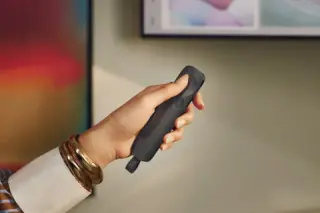
Logitech's Spotlight 2 is a $129.99 wireless presentation remote featuring built-in haptics that guide users through breathing exercises to calm nerves before a presentation, plus an on-screen spotlight or magnifier and a customizable button for shortcuts; it offers up to 100 feet of range, up to 3 months of battery life, and a 1-minute quick charge that yields about 3 hours of use.
Logitech unveiled Spotlight 2, a premium advanced presenter with built-in haptics and digital highlighting designed to boost audience engagement in hybrid and in-person settings, featuring multiple highlighting modes (Spotlight, Magnify, Squarelight, Annotate), a Digital Pointer, Logi Options+ customization, Bluetooth or Logi Bolt connectivity, up to 30m range, sustainable materials, and a $129.99 price.
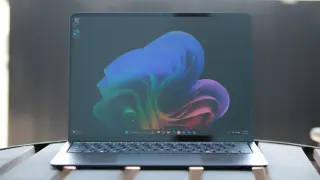
Microsoft unveiled new Surface Pro and Surface Laptop for Business, adding an optional integrated privacy screen with anti-glare and a refined haptic system for more tactile feedback during drag, resize, and pen work. Powered by Intel Core Ultra Series 3 processors, the devices support on‑device AI and come in 13‑inch, 13.8‑inch, and 15‑inch models; the 13‑inch Laptop starts at $1,300, with Pro from $1,950 and larger Laptops from $1,950, all available now in select markets. The Laptop claims up to 23 hours of battery life and the Pro up to 17 hours, and a 5G option is available on the Pro. Enterprise-focused features aim to improve security and collaboration for organizations.
The May Patch Tuesday update for Windows 11 introduces Xbox mode—a console-like fullscreen gaming view—along with haptic feedback support for select peripherals (notably the Logitech MX Master 4) and a range of other improvements across File Explorer, input, voice typing, and system security/performance.
Reddit-disseminated secret: Valve’s Steam Controller will occasionally emit the Wilhelm Scream via its haptic motors when dropped, even if it isn’t paired to a PC. The effect is randomized and not tied to drop strength, as confirmed by a weeks-long test. It’s a surprising, charming Easter egg on the $99 device that adds a fun, audible quirk to an otherwise standard controller.
The Steam Controller has a hidden easter egg: if you drop the controller while in Steam Big Picture mode, it will emit a Wilhelm scream through its built-in haptic motors rather than your PC speakers. The trigger sequence is to enter Big Picture mode, turn the controller off, turn it on, and then drop it onto a soft surface. Valve notes the controller is robust but advises against repeated drops to avoid potential damage.
MP1st reports early PS6 details: cloud streaming infrastructure is moving to PCIe Gen5 NVMe with cross-gen asset work for PS5/PS6 and an emphasis on social apps; a next-gen Unreal Engine 5 horror shooter with motion capture is in development (with Firesprite's rumored Project Heartbreak); Sony is expanding AI via PSSR and ML hiring, signaling AI-driven visuals across future hardware, plus speculative SAVANT haptics for a new controller.
Housemarque’s Saros treats the PS5’s DualSense haptics as a central mechanic, using tactile cues for ammo, weapon firing, grappling, and environmental moments to deepen immersion and potentially revive interest in the controller’s untapped potential.
Saros, Housemarque’s new PS5 roguelike launching April 30, leans into the DualSense’s haptics and 3D audio to translate on-screen action into tactile feedback—from the typing letters at the start to weapon blasts and cinematic tension. The studio aims to push PS5 hardware and inspire others to adopt these features, though wider adoption among developers remains mixed as Sony’s first-party titles showcase the tech and third-party support varies.
The article compares Logitech's MX Master 4 with Apple's Magic Mouse, highlighting the MX Master 4's new features like improved durability, quieter clicks, USB-C charging, and haptic feedback. While the MX Master 4 is technically superior and more customizable, the author prefers the Magic Mouse's intuitive touch controls and sleek design, making it a personal choice between advanced features and familiar, effortless gestures.
Razer has launched the Kishi Ultra, a versatile gaming controller that can be used with various devices including iPhone 15 series, Android smartphones, tablets, and PCs. It features Razer’s Sensa HD immersive haptics, which converts audio into haptic feedback, and is equipped with Chroma RGB lights. The controller is compatible with Android 12 or above and Windows 11, and requires the Razer Nexus app for operation. Additionally, Razer has also introduced a new version of its Kishi V2 with a USB-C port for iPhone 15 and Android. Both the Kishi Ultra and Kishi V2 are available for purchase at $150 and $99, respectively.
Google has rolled out the April 2024 update for the first-gen Pixel Watch, introducing new features such as haptic feedback for gestures on the watch face and improvements to auto brightness settings. The update, with build number TWD9.240405.001, is currently being rolled out to Pixel Watch owners and includes bug fixes and performance updates. Users can check for the OTA update in their watch's settings. It remains unclear whether the update includes the recently tested tracking app downloads feature, but it follows the March feature drop that brought pace training, heart zone training, and auto workout mode to the original Pixel Watch.