Tag

Human Physiology

All articles tagged with #human physiology

Why Kevlar Tethers Fail to Provide Artificial Gravity for Long-Duration Space Missions
science-and-technology1 month ago

Why Kevlar Tethers Fail to Provide Artificial Gravity for Long-Duration Space Missions

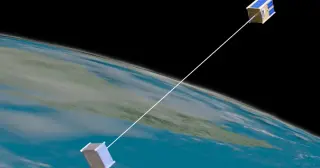
A Kevlar tether connecting two spacecraft could theoretically generate artificial gravity via rotation, but practical engineering and physiological barriers make it unfeasible for long-term human habitation. While microgravity causes severe bone and muscle loss, creating a stable, comfortable rotating system requires a tether length of at least 1.6 km to avoid nausea, which introduces insurmountable stability challenges.
Unsuited in Space: Why You Won't Explode, But Will Suffocate in 15 Seconds
science2 months ago

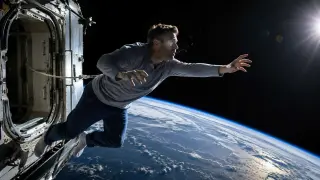
Unsuited in Space: Why You Won't Explode, But Will Suffocate in 15 Seconds

Exposure to the vacuum of space without a spacesuit does not cause immediate explosion or blood boiling, as popularly depicted in films. Instead, rapid decompression leads to ebullism, where water in exposed tissues vaporizes, and hypoxia, which causes unconsciousness within 10 to 15 seconds. Survival depends entirely on immediate repressurization, as oxygen deprivation becomes fatal within two minutes.

Microgravity Disrupts Astronaut Swallowing and Taste, Threatening Long-Duration Mission Nutrition
science3 months ago

Microgravity Disrupts Astronaut Swallowing and Taste, Threatening Long-Duration Mission Nutrition

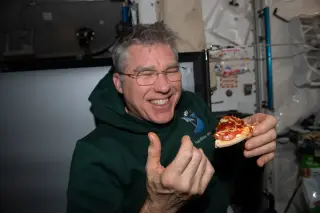
Microgravity alters fluid distribution in the body, causing nasal congestion and reduced saliva production that impair astronauts' ability to taste, chew, and swallow safely. These physiological changes can lead to decreased food intake and potential dental issues, posing significant risks for nutrition and hydration during multi-year missions to Mars. While current space food options have improved, researchers are developing 3D-printed foods with customized textures to address swallowing difficulties and ensure astronauts maintain adequate nutrition in deep space.

ISS Crews Face Biological Crisis from 16 Daily Sunrises, Prompting NASA to Engineer Artificial Light Cycles
science-and-technology3 months ago

ISS Crews Face Biological Crisis from 16 Daily Sunrises, Prompting NASA to Engineer Artificial Light Cycles

Astronauts on the International Space Station experience sixteen sunrises and sunsets daily, disrupting their natural circadian rhythms. A 2016 study found this leads to poor sleep and cognitive decline. NASA responded by installing smart LED lighting systems to artificially regulate hormone release and sleep cycles, though full biological synchronization remains elusive.

Mexico’s Crystal Cave: A Lethal Wonder Lost to Rising Waters
science3 months ago

Mexico’s Crystal Cave: A Lethal Wonder Lost to Rising Waters

In 2000, miners in Chihuahua, Mexico, accidentally discovered the Cueva de los Cristales, a chamber containing massive gypsum crystals. The site’s extreme heat and humidity made it nearly impossible for humans to survive, requiring specialized cooling suits for brief visits. Scientific interest waned after the mine’s pumps were shut off in 2015, submerging the cave.

Extreme endurance tests reveal immune-first survival strategy in humans
evolutionary-psychology7 months ago

Extreme endurance tests reveal immune-first survival strategy in humans

A study of 147 ultra-endurance athletes across ultramarathons and ocean rowing provides experimental evidence for life history trade-offs in humans: under extreme energy deficit, the body prioritizes immune defense while suppressing energy storage and reproductive investment, with leptin and fat mass dropping, testosterone decreasing in men, and markers of tissue maintenance rising. Cortisol spikes and weight loss accompany these shifts, a pattern consistent across sexes and events, suggesting deep evolutionary roots in energy allocation during stress. The findings have implications for athletic training and public health, but may not generalize to non-athletes or chronic stress, and recovery dynamics across populations remain to be explored.

"Stanford Scientists' Groundbreaking Discoveries in Health, Disease, and Aging"
health-and-science3 years ago

"Stanford Scientists' Groundbreaking Discoveries in Health, Disease, and Aging"

Stanford scientists have conducted a study on the human lipidome, which encompasses all the lipids in our bodies, revealing its association with health indicators such as insulin resistance, aging, and response to infections. The study tracked over 100 participants for up to 9 years and identified specific lipids that changed predictably with a person's health, including those associated with insulin resistance and viral infection. The researchers also found that certain lipids fluctuate with aging, and some lipids were consistently associated with better health. The findings have the potential to predict biological aging and guide health interventions.

Embracing the Coolness of Curly Hair
science3 years ago

Embracing the Coolness of Curly Hair

A study conducted by Penn State University suggests that humans evolved with more hair on their heads, particularly curly hair, to cool off their growing brains. The research found that tightly coiled hair creates more distance and air between the scalp and the top of the hair, reducing the impact of solar heat radiation. The study used a thermal manikin to test different hair textures and found that tight curls were the most effective in cooling the head. While early humans with larger brains may have relied on other strategies to cope with heat, understanding the biophysical aspects of heat transfer through hair could provide insights into human physiology.

Hibernating in Space: A Possibility?
science-and-technology3 years ago

Hibernating in Space: A Possibility?

Scientists believe that human hibernation across the vastness of space could one day be possible, which would be a boon for space exploration. Hibernating astronauts wouldn't eat or drink much, and would consume minimal oxygen, saving mission controllers a huge amount of money. There would also be health benefits to hibernation, as it could protect against muscle wastage and bone density loss. However, it's vital that we gain more of an understanding of how the body and brain would initiate the process in the first place.