Pregnancy and postpartum periods can trigger intense aversion to pets, affecting up to 15% of owners. While often linked to hormonal shifts or hyperemesis gravidarum, the phenomenon lacks sufficient medical research and support, causing significant distress and shame for new parents.
A health feature follows researchers and patients exploring metformin, a diabetes drug, as a potential preventive treatment for hyperemesis gravidarum (HG) by modulating the nausea-related hormone GDF15. Early observational data suggest taking metformin before conception may significantly reduce HG risk, with clinical trials in the works. The drug’s affordability, safety history, and broad off-label use—ranging from fertility in PCOS to obesity and potential antiaging effects—have spurred widespread interest, though more rigorous research is needed. The piece also shares the lived experience of HG and a patient hopeful that metformin could improve future pregnancies.
A multi-ancestry genome-wide study links hyperemesis gravidarum (extreme pregnancy nausea) most strongly to the GDF15 gene, with several additional genes involved in insulin signaling and appetite. The findings move away from hCG and estrogen as primary causes and suggest GDF15 as the main driver of HG across diverse populations, opening avenues for new therapies (including metformin-based trials to desensitize against GDF15). The condition currently has no FDA-approved treatments, and researchers hope these insights guide diagnosis, prevention, and targeted therapies.
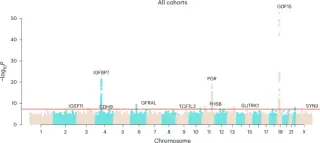
A multi-ancestry GWAS of hyperemesis gravidarum (10,974 cases, 461,461 controls) identifies ten loci, including four known (GDF15, IGFBP7, PGR, GFRAL) and six new ones (SLITRK1, SYN3, IGSF11, FSHB, TCF7L2, CDH9); functional analyses show GDF15 and TCF7L2 activity in extravillous trophoblasts with opposing maternal vs fetal effects for GDF15, while IGFBP7 and PGR act mainly via the maternal genome in spiral arteries; loci link to pregnancy weight gain, duration, birth weight and preeclampsia, with additional signals involving antisense IGFBP7-AS1 and ACP1. The study draws on data from 23andMe, MoBa, Estonian Biobank, Genes and Health and others, and provides data and code access for replication and further exploration of appetite, insulin signaling and brain plasticity pathways.
Caitlin Wright, who chronicled her five-year infertility journey online, tells People she conceived naturally at the end of December after multiple fertility steps (four IUIs and an egg retrieval). She’s now in her first trimester with a second child and again dealing with hyperemesis gravidarum, crediting her care team and supportive online communities for helping her through the journey.
A 26-year-old from Newport with hyperemesis gravidarum says extreme pregnancy sickness nearly forced an abortion and she is now pursuing sterilisation after finding access to Xonvea, an anti-sickness drug not routinely funded in Wales, difficult; campaigners argue the drug’s cost is offset by reduced hospitalisations, while AWMSG has not approved routine use due to cost-effectiveness concerns. GPs can prescribe Xonvea in certain cases, and its price is £28.50 for a 20‑tablet box; the drug’s limited availability has spurred calls for broader access as patients and doctors weigh future pregnancy decisions.
The article discusses the severe pregnancy condition hyperemesis gravidarum (HG), highlighting the challenges women face in accessing effective treatment like Xonvea in the UK, and the need for better awareness and healthcare policies to support affected women.
Pregnant women suffering from hyperemesis gravidarum (HG), a severe form of morning sickness, are often dismissed by doctors despite the condition being potentially life-threatening. Geneticist Marlena Fejzo highlights the serious risks associated with HG, including malnutrition and long-term health issues for both mother and child. Fejzo calls for better recognition and treatment of HG, noting that recent studies have identified the hormone GDF15 as a key factor, which could lead to new treatment approaches.
Geneticist Marlena Fezjo, who suffered from severe morning sickness during her second pregnancy, was initially dismissed by her doctor. She later discovered the genetic cause of her condition, hyperemesis gravidarum (HG), and is now opening a healthcare center to support women with underdiagnosed health conditions. Fezjo's research identified a genetic risk factor for HG and aims to use this information to predict and prevent the condition in the future.
A pregnant primary school teacher, Jessica Cronshaw, tragically took her own life at 28 weeks pregnant after suffering from hyperemesis gravidarum (HG), the same extreme morning sickness experienced by Kate Middleton. Medical staff failed to notice the decline in her mental health and incorrectly advised her about the safety of a medication, leading to a deterioration in her mental health. The coroner supported the family's campaign for more awareness and information about the impact of HG and emphasized the need for improved care and treatment for women suffering from this condition.
A pregnant primary school teacher, Jessica Cronshaw, tragically took her own life after being wrongly advised by a midwife that her medication for acute morning sickness was harming her unborn child. Jessica, who suffered from hyperemesis gravidarum, was found hanged at 28 weeks pregnant, and her daughter, Elsie, was born prematurely and died four days later. Her family has been campaigning for greater mental health support for pregnant women, and the Health Secretary has announced new support for mothers-to-be across England. The inquest revealed missed opportunities by medical professionals and highlighted the enormous mental and emotional toll that pregnancy and birth can have on women.
Hyperemesis gravidarum (HG), a severe form of morning sickness affecting around 2 percent of pregnant individuals, has been linked to the hormone GDF15, with breakthrough research offering hope for effective treatments. Despite its severity, HG is often dismissed and underfunded, leading to inadequate support and awareness. The condition can lead to dehydration, weight loss, miscarriage, and even life-threatening conditions for both mother and baby. Promising drugs targeting GDF15 are in the pipeline, offering potential relief for those suffering from HG.
New research has identified a hormone that may be responsible for severe morning sickness, known as hyperemesis gravidarum (H.G.), which affects about 2 percent of pregnant women. This condition can lead to malnutrition and hospitalization. The discovery offers hope for new treatments, potentially including a preventative approach to increase hormone levels before pregnancy and strategies to block the hormone's effects during pregnancy. The research is particularly significant as it addresses a condition that has been understudied and often dismissed as psychological, providing a biological basis for the severe nausea and vomiting experienced by some pregnant women.
Scientists have discovered a possible cause for extreme morning sickness, known as hyperemesis gravidarum. Geneticist Marlena Fejzo and her colleagues have identified two genes, GDF15 and IGFBP7, that are involved in the condition. The GDF15 gene produces a hormone that causes nausea and vomiting, and individuals with lower pre-pregnancy levels of this hormone are more likely to experience severe symptoms. This discovery opens up potential avenues for more effective treatments, such as building up a tolerance for GDF15 prior to pregnancy or using drugs currently being tested for cancer cachexia. It is important for pregnant individuals suffering from nausea and vomiting to seek medical attention and find healthcare providers who take their symptoms seriously.
Scientists have identified a protein called GDF15, released by the fetus, as a potential cause of severe morning sickness, known as hyperemesis gravidarum (HG). The severity of symptoms is linked to the amount of GDF15 produced by the placenta and released into the mother's bloodstream. Researchers believe that enhancing a woman's tolerance to this hormone before pregnancy may prevent sickness. A rare genetic variation that increases susceptibility to HG has also been identified. Understanding the cause of HG brings hope for developing effective treatments to alleviate the condition.