Applied Digital fell about 8% after a Q3 beat, as investors weighed low-margin segment results and awaited major customer wins; analysts remain positive on execution and near-term lease potential with hyperscalers, with Needham maintaining a Buy rating and a $41 target, while potential Ready-for-Service dates and CRWV credit upgrades could improve the cost of capital.
Hedge fund investor Michael Burry questions when the aggressive AI data-center buildout will end, criticizing hyperscalers such as Oracle, Alphabet (Google), Meta, Microsoft, Amazon and Nvidia for expansive capex and potential cash-flow strain. He warns of possible earnings restatements and depreciation masking costs, and likens current AI hype to past bubbles like the 1920s radio boom and the dot-com era.
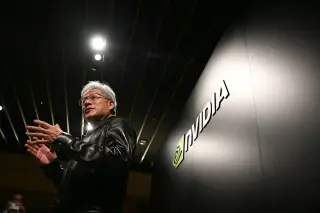
With hyperscalers like Amazon, Alphabet, and Meta driving a surge in AI infrastructure spend, Nvidia is set for continued growth in 2026. Despite AI-bubble concerns, the piece argues that ongoing AI improvements will sustain demand for Nvidia GPUs, and data-center capex is projected to rise from about $600B in 2025 toward $3–4T by 2030, suggesting the stock could be higher a year from now.
A roughly $700 billion AI infrastructure capex wave from hyperscalers like Amazon, Alphabet, Meta, and Microsoft has Nvidia underperforming relative to the spend, while suppliers such as Broadcom, Micron, Lumentum, and Bloom Energy have posted strong gains. The AI buildout spans chips, memory, optical components, and AI-powered power infrastructure, signaling multiple winners beyond Nvidia as the sector expands.
Alphabet sold $20 billion in a multi-tranche bond issue and is weighing a sterling debut that could include a 100-year note, part of a broader rush by AI hyperscalers to fund aggressive data-center expansion. Analysts see U.S. corporate bond issuance climbing to about $2.46 trillion in 2026, with hyperscaler debt driving much of the activity this year, following recent large bonds from Oracle, Meta, and others.
Kyndryl posted Q3 FY2026 revenue of $3.859B, GAAP net income of $57M, and adjusted EBITDA of $696M, with adjusted pretax income of $168M and adjusted net income of $122M. Hyperscaler-related revenue reached $500M (up 58% YoY) and Kyndryl Consult grew 24% YoY, driving trailing-twelve-month signings to $15.4B. The company reaffirmed its FY2026 outlook (adjusted pretax income $575–$600M, ~17.5% adjusted EBITDA margin, free cash flow $325–$375M) and announced leadership changes (Interim CFO Harsh Chugh, Interim GC Mark Ringes, Interim Corporate Controller Bhavna Doegar), a Solvinity acquisition, and ongoing share repurchases.
Microsoft, Amazon, and Alphabet posted December-quarter results with AI-related capex driving cloud expansion: MSFT highlighted Azure growth and OpenAI partnerships, AMZN emphasized AWS capacity and AI silicon investments, and Alphabet showed Google Cloud backlog and margins improving. Analysts still rate all three as Strong Buys, with MSFT offering the highest upside and the lowest P/E, making it the preferred value pick among the hyperscalers.
Big Tech trimmed about $1.35 trillion from market value in a week as fears about AI-related capital expenditure persist, with Amazon down sharply while Alphabet slipped and Apple rose on strong iPhone demand. Investors weigh whether giant AI investments by hyperscalers will pay off, signaling ongoing volatility around Nvidia, Microsoft, Oracle, Meta, Alphabet and other tech giants.
DRAM contract pricing is surging to levels not seen before, with Micron reportedly proposing a 115–125% price increase versus Q4 2025 as hyperscalers and AI workloads drive demand. Industry trackers (DRAMeXchange, TrendForce) expect continued sharp price gains this quarter, leaving memory in a seller’s market with limited buyer leverage. Despite Micron’s planned fab buildout, shortages are projected to persist into 2028, threatening higher costs for consumer laptops, GPUs, and other devices as allocations favor servers and AI-related applications.
AMD is gaining traction in the data-center AI race by supplying hyperscalers with its Instinct accelerators and open-source ROCm software, offering a flexible alternative to Nvidia’s CUDA. With major buyers like Microsoft, Meta, Oracle, and OpenAI deploying AMD alongside Nvidia, the company could see stronger deal flow, improved unit economics, and margin expansion as AI infrastructure spend—driven by hyperscalers—approaches hundreds of billions of dollars, potentially making 2026 a transformative year for AMD.
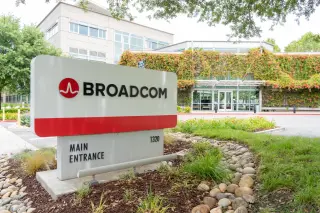
Broadcom's AI leadership—via custom XPUs and enhanced data-center networking—helped it outpace the Magnificent Seven in 2025 and earn a spot in the 'Ten Titans.' A recent pullback sets up a potential entry as hyperscalers continue AI spending, with forward earnings around 31x making it a reasonably valued growth pick, assuming its AI growth stays on track. Competition from Nvidia and broader AI capex cycles remain risks.
As AI hyperscalers commit roughly $500 billion to AI infrastructure in 2026, demand for memory and storage could lift Micron (HBM, DRAM, NAND) even as peers rally. With a comparatively lower forward P/E and AI-driven demand, MU could see significant upside toward a $1,000 share price by 2026, and the author plans to buy MU.
Tech PR-turned-skeptic Ed Zitron argues that generative AI’s hype outpaces its actual capabilities and the economics don’t add up: LLMs still hallucinate and fail to learn autonomously, and the race to build vast datacentres is draining billions with little proven profit, leaving the AI boom vulnerable to a downturn amid rising backlash.
Cédric Durand argues that the AI boom has become a debt-fueled, opaque financing frenzy centered on building massive data-center capacity by US hyperscalers. While stock market valuations soar on anti cipated AI gains, real productivity improvements remain modest, and the system relies on complex cross-funding structures (eg, Beignet/Meta lease and Nvidia/OpenAI financing) that could amplify credit spillovers if demand falters. The piece warns that enormous capex (potentially $5 trillion through 2030) may not be sustainable, risking a bubble, ecological strain, and geopolitical frictions as profits lag and profits are concentrated among a few giants. If the promised efficiencies don’t materialize, the boom could underperform, with broader economic and labor market consequences and intensified strategic competition, especially between the US and China.
Gartner forecasts global AI spending will reach $2.53 trillion in 2026 and grow to $3.33 trillion by 2027, driven largely by AI infrastructure investments from hyperscalers like Alphabet (GOOGL), Meta (META), and Amazon (AMZN). Chipmakers Nvidia (NVDA) and AMD (AMD) are also slated to spend heavily to support AI workloads and data centers, with Nvidia projecting $500 billion in AI chip sales this year and AMD suggesting the AI data-center market could be worth $1 trillion by 2030. Nvidia’s stock remains a Strong Buy among analysts, with a target around $262.75 and roughly 40% upside.