Tag

Iau

All articles tagged with #iau

IAU Officially Names Main-Belt Asteroid After 'Weird Al' Yankovic
science2 months ago

IAU Officially Names Main-Belt Asteroid After 'Weird Al' Yankovic

The International Astronomical Union has officially approved the name 'Alyankovic' for asteroid 14331, honoring musician and comedian 'Weird Al' Yankovic. The rock, discovered in 1981, orbits in the main asteroid belt between Mars and Jupiter with a four-year cycle. Planetary scientist Allison McGraw led the nomination effort, presenting a commemorative plaque to Yankovic in September 2025. This naming decision highlights the intersection of pop culture and astronomical nomenclature, as the IAU serves as the authoritative body for designating celestial objects.
Pluto's 20-Year Demotion Sparks Debate Over Planetary Definitions
science2 months ago

Pluto's 20-Year Demotion Sparks Debate Over Planetary Definitions

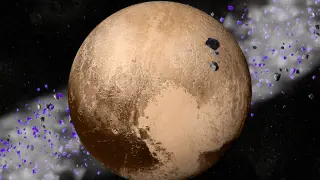
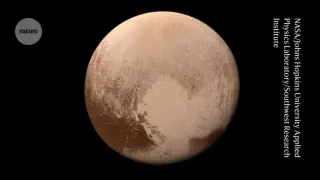
Twenty years after the International Astronomical Union reclassified Pluto as a dwarf planet, the debate over planetary definitions remains unresolved. While the 2006 vote established that planets must clear their orbital neighborhoods, critics argue this excludes Earth and other bodies sharing orbits with asteroids. New discoveries, such as the exosatellite around CD-35 2722, further complicate classification, leading some scientists to propose quantitative criteria for gravitational dominance rather than relying on the current ambiguous standards.

Pluto’s 20-Year Demotion Sparks Debate Over Nostalgia vs. Science
science2 months ago

Pluto’s 20-Year Demotion Sparks Debate Over Nostalgia vs. Science

Twenty years after the International Astronomical Union reclassified Pluto as a dwarf planet, public and scientific debate persists. NASA Administrator Jared Isaacman has recently voiced support for restoring Pluto’s planetary status, reigniting discussions about the definition of a planet. While the 2006 decision was driven by the discovery of Eris and other Kuiper Belt objects, many argue the classification is arbitrary. Proponents of the current system emphasize that Pluto shares characteristics with other dwarf planets, while critics view the demotion as an emotional overreaction to a scientific taxonomy. The debate highlights the tension between scientific precision and public nostalgia for the solar system’s traditional nine-planet model.

20 Years After Demotion, Pluto’s Dwarf Status Sparks Scientific and Public Debate
science3 months ago

20 Years After Demotion, Pluto’s Dwarf Status Sparks Scientific and Public Debate

Twenty years after the International Astronomical Union reclassified Pluto as a dwarf planet in 2006, the debate over its status remains active. While the IAU definition requires a body to clear its orbital neighborhood, critics argue this excludes scientifically significant worlds. NASA Administrator Jared Isaacman has recently expressed interest in restoring Pluto’s planet status, highlighting ongoing tensions between formal taxonomy and public sentiment.

20 Years Later, the Planet Definition Crisis Deepens as New Cosmic Oddities Defy IAU Rules
science3 months ago

20 Years Later, the Planet Definition Crisis Deepens as New Cosmic Oddities Defy IAU Rules

Twenty years after the International Astronomical Union reclassified Pluto as a dwarf planet in 2006, the debate over planetary status remains unresolved. New discoveries, such as a Jupiter-sized object orbiting a brown dwarf, have exposed flaws in current definitions. While some advocate for restoring Pluto’s status, others argue that doing so would require reclassifying Earth’s moon and other moons as planets, highlighting the need for a more precise scientific definition.

Saturn's Moon Count Surges to 285 as New Surveys Confirm Tiny, Distant Satellites
science3 months ago

Saturn's Moon Count Surges to 285 as New Surveys Confirm Tiny, Distant Satellites

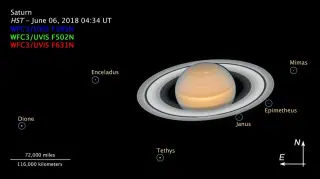
Saturn now has 285 confirmed moons, a figure that rose from 146 to 274 in March 2025 and then to 285 in March 2026. This rapid increase stems from improved telescope surveys and orbit confirmations, not new physical moons. The latest additions are tiny, irregular bodies, highlighting that planetary moon counts are dynamic and depend on detection capabilities.

Saturn Doubles Its Moon Count in a 2025 Discovery Wave
space4 months ago

Saturn Doubles Its Moon Count in a 2025 Discovery Wave

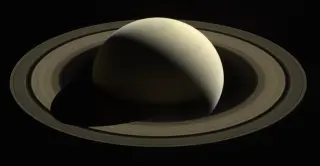
In March 2025, the IAU recognized 128 new irregular Saturnian moons, lifting Saturn’s confirmed total from 146 to 274—more than any other planet—and reflecting a shift in how we detect tiny, distant satellites via shift-and-stack surveys; by March 2026 the tally rose further to 285, underscoring that the outer solar system’s inventory is still expanding and that many new moons are fragments or captured bodies on distant, inclined orbits.

NASA chief pushes to revisit Pluto’s planetary status, reigniting a long-running debate
space6 months ago

NASA chief pushes to revisit Pluto’s planetary status, reigniting a long-running debate

NASA Administrator Jared Isaacman signaled support for restoring Pluto’s status as a planet and suggested escalating the discussion within the scientific community, a move that has sparked division among researchers who question whether such a decision should come from NASA or require international consensus and the IAU, especially given Pluto-sized objects and the IAU criteria for planets.

NASA Chief Pushes to Restore Pluto’s Planet Status
science6 months ago

NASA Chief Pushes to Restore Pluto’s Planet Status

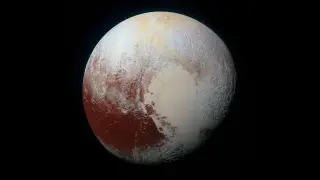
NASA Administrator Jared Isaacman told a Senate hearing he supports reconsidering Pluto’s status as a planet, reviving the decades-long debate after the IAU downgraded Pluto to a dwarf planet in 2006. The discussion centers on Pluto’s location in the Kuiper Belt and its failure to clear its orbit, one of the IAU’s criteria for a full planet, with Isaacman signaling ongoing research that could prompt broader scientific discussion—though the final call rests with the IAU.

Isaacman urges Pluto’s return to planet status
space6 months ago

Isaacman urges Pluto’s return to planet status

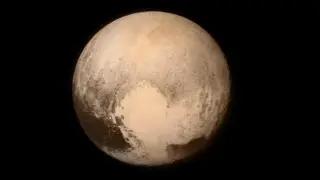
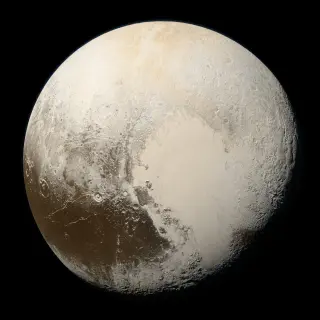
During a Senate budget hearing, NASA chief Jared Isaacman said he supports revisiting Pluto’s status and intends to push a proposal through the scientific community to restore Pluto to planet status, though the final decision lies with the IAU, which downgraded Pluto to a dwarf planet in 2006; New Horizons imagery of Pluto’s varied geology has fueled renewed calls from Pluto advocates, including Isaacman who took the NASA helm in December.

Ten-Year-Old's Pluto Plea Triggers Four-Word NASA Reply and a Planet-Status Debate
science7 months ago

Ten-Year-Old's Pluto Plea Triggers Four-Word NASA Reply and a Planet-Status Debate

A Tampa fourth grader wrote to NASA asking Pluto be restored to planet status, and NASA Administrator Jared Isaacman replied, “Kaela, we are looking into this.” While NASA has signaled support for reconsidering Pluto’s status, the final decision rests with the International Astronomical Union, which reclassified Pluto as a dwarf planet in 2006 after criteria that it must clear its orbit. The story highlights a decades-long controversy over Pluto’s classification, aided by New Horizons findings of Pluto’s geology and activity and the idea that scientific labels require international consensus rather than unilateral action by any single agency.

Astronomers Push to Redefine Planets, Pluto Still Excluded
science2 years ago

Astronomers Push to Redefine Planets, Pluto Still Excluded

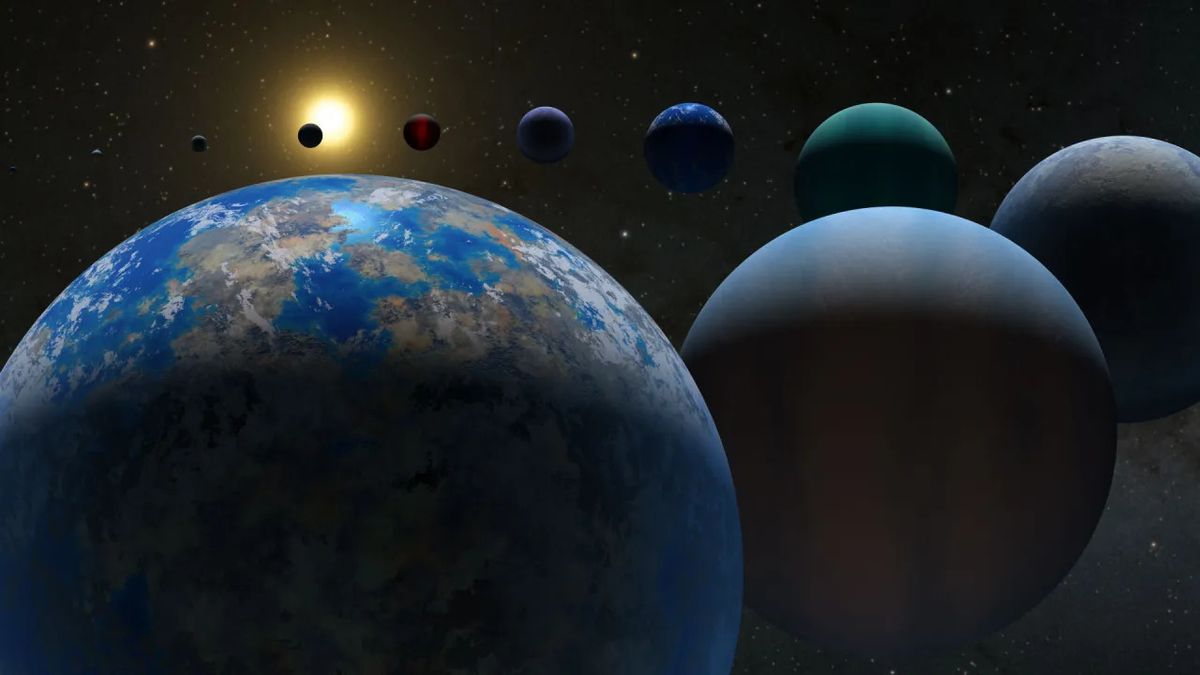
Three astronomers have proposed a new mass-based definition of a planet that would include thousands of exoplanets, challenging the current International Astronomical Union (IAU) definition which only applies to bodies orbiting the sun. The new definition suggests that a planet should be classified based on its mass, specifically if it is lighter than 13 Jupiters, to avoid ambiguities related to shape and orbit. This proposal aims to address the limitations of the current definition and will be presented at the IAU General Assembly.

Astronomers Push to Redefine Planets, Pluto Still Excluded
science2 years ago

Astronomers Push to Redefine Planets, Pluto Still Excluded

Scientists from UCLA propose a new definition of a planet that extends beyond our solar system, challenging the current IAU definition. Their criteria include specific mass limits and gravitational influence, aiming to provide a universal classification for celestial bodies. This new definition could clarify distinctions between planets and dwarf planets and better accommodate exoplanets.