Tag

Image Generation

All articles tagged with #image generation

ChatGPT Sketch lets you doodle your way to AI-generated images
ai1 month ago

ChatGPT Sketch lets you doodle your way to AI-generated images

OpenAI's ChatGPT Images 2.5 adds Sketch, a doodle-to-image tool that lets you draw inside ChatGPT and guide image creation (including in-turn edits by annotating parts of the image); OpenAI says Images 2.5 offers more natural lighting, richer textures, improved editing across turns, and up to 50% faster generation; available to ChatGPT, ChatGPT Work, and Codex users on desktop, mobile, and web.

AI Art Is Untraceable to Its Training Data, MIT Study Says
artificial-intelligence1 month ago

AI Art Is Untraceable to Its Training Data, MIT Study Says

MIT CSAIL researchers show that for diffusion-model image generators, attribution to individual training images is effectively impossible at scale: removing specific training images hardly alters outputs, a phenomenon they call attribution decay. The study finds outputs can resemble a human artist or artwork, yet it’s virtually impossible to prove which training data influenced the result, complicating IP lawsuits and signaling broader regulatory and accountability challenges for large commercial models.

Google Earth pulls AI image feature after misinformation backlash
technology2 months ago

Google Earth pulls AI image feature after misinformation backlash

Google rolled back its Nano Banana 2-powered AI image-generation feature in Google Earth a day after launch due to misinformation concerns, as users created realistic but false imagery of war zones, refugees, and other sensitive scenes; Google says it will implement stronger guardrails and has added a SynthID watermark to AI-generated images to aid identification.

AI-Generated Visions Now Shape Google Earth with Nano Banana 2
technology2 months ago

AI-Generated Visions Now Shape Google Earth with Nano Banana 2

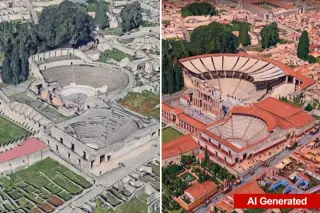
Google Earth on the web now supports Nano Banana 2, the latest AI image-generation upgrade from Google Gemini, letting users prompt aerial imagery to create historical reconstructions, future visions, or planning-related visuals. Use cases include infographics about landmarks, visualizing personal projects, or imagining Pompeii-era scenes; the feature is rolling out globally to all Google Earth on the web. As with AI, results may be imperfect or not fully authentic, and there may be no disclosed usage limits.

Meta scraps its controversial AI image tool after backlash over likeness
technology2 months ago

Meta scraps its controversial AI image tool after backlash over likeness

Meta is discontinuing Muse Image, an AI tool that used public Instagram content as reference for generative imagery and defaulted to enabling it. The move comes after strong backlash from actors and other public figures, with the SAG urging users to protect their likeness. Meta said the feature missed the mark and will no longer be available, highlighting ongoing concerns about AI image rights and privacy.

Meta's AI Watermark Struggles to Detect Its Own Cropped Images
technology2 months ago

Meta's AI Watermark Struggles to Detect Its Own Cropped Images

Meta's Muse Image introduces an invisible Content Seal watermark and a detector, but Reuters found the detector correctly flags full-size Muse Image images yet drops to about 55% accuracy after cropping, highlighting a gap between generation and detection. Privacy concerns over using public-profile photos led Meta to remove that feature, as the company pursues future tools like Muse Video.

Meta's new AI image tool stirs consent controversy over faces
technology3 months ago

Meta's new AI image tool stirs consent controversy over faces

Meta unveiled Muse Image, a feature within Meta AI that lets users generate images using the likenesses of people with public Instagram accounts by tagging them; users aren’t notified when their likeness is used and accounts must opt out to prevent usage. Privacy advocates and groups like Public Citizen, CAA, and SAG-AFTRA criticize the approach and call for affirmative consent or stricter controls, while Meta says protections exist and is evaluating next steps. No policy changes have been announced yet as the discussion continues.

Meta's Muse Image draws fire for AI pictures from public IG profiles
technology3 months ago

Meta's Muse Image draws fire for AI pictures from public IG profiles

Meta's Muse Image lets users generate AI images from other people's public Instagram profile photos without notifying them, triggering privacy and consent concerns from advocates and regulators. Meta says users can opt out in settings, and the feature will expand across its apps, all amid a crowded AI image market and ongoing scrutiny of non-consensual imagery.

Meta’s Muse Image lets you include Instagram users in AI-generated pictures
technology3 months ago

Meta’s Muse Image lets you include Instagram users in AI-generated pictures

Meta has launched Muse Image, the first AI image generator from its Superintelligence Labs, powering image tools across the Meta AI app, Instagram, and WhatsApp (with Facebook and Messenger coming soon). Described as 'agentic' and working with the Muse Spark language model to reason, search, and plan before generating, Muse Image also allows you to @mention Instagram accounts to pull in likenesses (with privacy controls), transform images, redesign rooms from web images, and draw edits on photos—plus it will power 30 new AI effects for Instagram Stories.

Google's Nano Banana 2 Lite: ultra-fast, budget-friendly AI image generator
technology3 months ago

Google's Nano Banana 2 Lite: ultra-fast, budget-friendly AI image generator

Google’s Nano Banana 2 Lite, the fast, low-cost member of the Gemini 3.1 family, generates images in about 4 seconds (vs ~20 seconds for the standard Nano Banana) and costs roughly $0.034 per 1K images, making it ideal for rapid prototyping. It trades some fidelity for speed—text accuracy, infographic data, and character consistency can suffer—and outputs include SynthID watermarks. Available in Google AI Studio and the Gemini API (Flash-Lite; Omni Flash for video expanding), Nano Banana 2 Lite offers cheap, quick visuals while higher-fidelity Pro/standard models remain for more exact work.

Microsoft's In-House MAI Lineup Falls Short in Early Hands-On
technology4 months ago

Microsoft's In-House MAI Lineup Falls Short in Early Hands-On

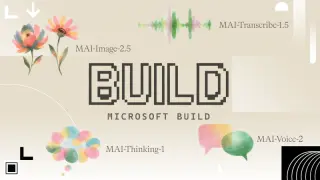
PCMag's Ruben Circelli tested Microsoft's four MAI models announced at Build 2026—MAI-Thinking-1, MAI-Image-2.5, MAI-Transcribe-1.5, and MAI-Voice-2—now in limited preview and free on the Playground, with mixed results. MAI-Thinking-1, a first-of-its-kind reasoning model, underwhelmed vs. Claude’s Sonnet and lacks internet access; MAI-Image-2.5 is an incremental upgrade but text issues keep it behind Gemini Nano Banana Pro; MAI-Transcribe-1.5 is adequate but not best-in-class; MAI-Voice-2 sounds robotic and unconvincing. Overall, the lineup is competent but not compelling enough to warrant a prime-time spotlight, though Microsoft expects rapid improvements.

ChatGPT Images 2.0 Outshines Gemini Nano Banana in Hands-On Image Tests
technology5 months ago

ChatGPT Images 2.0 Outshines Gemini Nano Banana in Hands-On Image Tests

In a 30-factor, real-world test, OpenAI's ChatGPT Images 2.0 scored 97% (150 points) to Google's Gemini Nano Banana's 85% (131 points), with Images 2.0 delivering stronger context-aware image generation and better face fidelity, while Nano Banana struggled with text prompts, rendering details, and privacy-related concerns raised by unintended inclusion of prompt history in some results.

AI Image 2.0 Rekindles Graphic Design Death Talk
design5 months ago

AI Image 2.0 Rekindles Graphic Design Death Talk

OpenAI’s Images 2.0, branded as the first image model with thinking capabilities, promises advanced text rendering and strategic design, but its demos—especially AI-generated football posters—have reignited social‑media chatter that graphic design is dead, with critics arguing outputs tend toward sameness and lack human soul, while proponents contend AI can augment designers rather than replace them.