Effective October 9, 2026, Google will restrict free Gemini users to the Flash-Lite model only. Access to the standard Flash and advanced Pro models will require paid subscriptions, with Pro features limited to the higher-tier AI Pro and AI Ultra plans.
Google is restructuring its Gemini AI access tiers, limiting free users to the Flash Lite model starting October 9. The $4.99 AI Plus subscription will lose access to the top-tier Gemini Pro model, restricting it to higher-priced AI Pro and Ultra plans.
Google is testing a hidden setting in its Gemini Desktop app that would allow the AI to read, modify, and delete files across a Mac without constant permission prompts. This move coincides with Apple announcing changes to macOS full-disk access permissions to curb AI agent abuse, following a public dispute over Meta’s Muse app accessing user messages.
Google has officially launched 'Skills' in Gemini to replace the previous 'Gems' system, allowing users to create reusable, modular instructions for repetitive tasks. Skills are now available globally in Gemini chat and will roll out to Google Workspace in stages, with Gems being phased out starting in November 2026 for personal accounts and March 2027 for business users. The new system supports stacking multiple skills and referencing external files, offering a more flexible approach to AI automation than the previous single-assistant model.
Samsung has confirmed that its first AI-powered smart glasses will launch in November 2026, following recent FCC approvals for two design variants. The devices, developed in partnership with Google and eyewear brands Gentle Monster and Warby Parker, feature a Qualcomm Snapdragon AR1 Gen 1 chip, a 12MP camera, and deep integration with Google's Gemini AI. Samsung aims to differentiate its product by making it significantly lighter than competitors, targeting a weight of approximately 46 grams compared to Meta's 51-gram models. While the exact release date and pricing remain undisclosed, the launch marks Samsung's entry into a rapidly growing market for display-less wearable AI, where privacy concerns regarding covert recording are increasingly prominent.
Google has released Gemini 3.8 Live with Live Avatar, a feature that adds near real-time video presence to its conversational AI. The system generates dynamic avatars that lip-sync speech and display facial expressions, allowing enterprise agents to handle customer service tasks while simultaneously executing background tool calls. Available exclusively to Gemini Enterprise customers, the feature supports 97 languages and includes SynthID watermarking for transparency. While Google emphasizes natural multimodal interaction, critics describe the visual output as unsettling, noting that custom avatar creation requires strict verification.
Adobe has launched its creative suite within Google Gemini, allowing users to edit photos and designs via chat. Simultaneously, Adobe expanded its Claude integration with Acrobat tools and interactive editing features.
Google has launched Gemini 3.8 Live with Live Avatar, a feature that adds near real-time video presence to its conversational AI models. The system enables dynamic visual personas to lip-sync, express emotions, and handle complex tasks simultaneously. Currently restricted to Gemini Enterprise customers, the tool supports 97 languages and allows organizations to customize avatars using reference images. All generated content is watermarked with SynthID to ensure transparency and prevent misinformation.
Google has launched an experimental beta feature called 'Call for Me' for Pixel 11 users in the US. This AI-driven tool allows Gemini to place phone calls on behalf of users to local businesses, handling tasks like scheduling appointments or checking inventory. The feature requires a Gemini subscription and enrollment in the Phone by Google public beta, offering a live transcript and manual override capabilities.
Court documents reveal that OpenAI described Apple’s 2024 ChatGPT integration as a 'dramatic underperformance' due to low user adoption. The partnership collapsed, leading Apple to switch to Google’s Gemini models for its new 'Siri AI' in January 2026. OpenAI now faces a trade secret lawsuit from Apple and is navigating antitrust challenges from xAI, while Apple delays its EU launch due to regulatory hurdles.
Sergey Brin has grown into a decisive force over Google’s Gemini AI efforts, operating from a startup-like microkitchen hub and using close ties with key DeepMind leaders to streamline development and cut through bureaucracy. As DeepMind leadership shifts and Gemini faces talent churn, Brin’s deeper involvement signals a push to accelerate Gemini, potentially reshaping product strategy and timelines while preserving his outsized influence via Google’s dual-class structure.
Google’s September 2026 Android Drop brings five features across Google apps: Gemini can remember item locations in Find Hub; Google Keep notes can be created and shared inside Google Messages; Gemini Live’s Guided Vision expands to describe scenes and help with framing in low light or fine print; Google Messages adds official Chat Themes for personalized chats; and Motion Assist provides on‑screen motion cues to reduce motion sickness. A few features began rolling out in August and require compatible Android versions and Gemini availability, with broader rollout in the Android ecosystem.
Google is gradually rolling out a refreshed Gemini Live UI for Android, adding real-time translation between languages and small interface tweaks (such as an exit X and a 'Tap to interrupt'), making multilingual conversations more practical as the rollout continues.
A side-by-side comparison of ChatGPT and Google Gemini across pricing, availability, model options, web search, research tools, image and video capabilities, file handling, writing, complex reasoning, coding, integrations, and privacy. Gemini offers deeper Google ecosystem integrations and strong video generation at better value, while ChatGPT generally delivers superior complex reasoning, coding performance, and image recognition. The best choice depends on whether you prioritize ecosystem and features (Gemini) or top-tier AI performance and polish (ChatGPT); overall, ChatGPT is the stronger all-around option, with Gemini excelling for Google-heavy workflows.
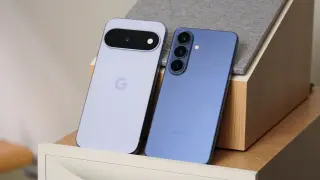
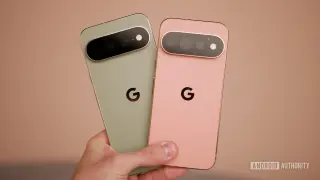
The Pixel 11 Pro’s price hike and RAM downgrade are framed as part of Google’s plan to push more frequent upgrades by wrapping AI features—like Gemini and Rambler—into software that may require newer hardware or paid services, potentially sidelining older Pixel devices and signaling a broader, sometimes questionable, upgrade path across Android.