Tag

Ai Detection

All articles tagged with #ai detection

Study Finds 12% of 2026 Philosophy Papers Contain AI-Generated Text
academia5 days ago

Study Finds 12% of 2026 Philosophy Papers Contain AI-Generated Text

Maximillian Noichl’s analysis of over 11,000 philosophy papers indicates that approximately 12% of published work in 2026 involves AI assistance. While published journals show modest increases, preprint servers face a severe surge, with 62% of unpublished material on PhilPapers flagged as AI-generated. The study highlights a growing gap between rigorous journal standards and the saturation of preprint archives with automated content.

Caine Prize confirms human authorship of winning story after AI probe
arts-and-culture11 days ago

Caine Prize confirms human authorship of winning story after AI probe

The Caine Prize for African Writing has confirmed that Zimbabwean author Simbarashe Kundizeza is the legitimate winner of its 2026 award, finding no evidence that his winning short story, 'The Blue Fighter,' was generated by artificial intelligence. This conclusion follows an internal review triggered by allegations from The Atlantic magazine, which cited AI-detection software that flagged the work as machine-generated. The prize board conducted a human-centered investigation, including interviews with the author and judges, as well as independent forensic analysis of draft metadata. Kundizeza, who was awarded £10,000, had previously denied the claims, stating the story was inspired by a poem about fish tanks and his family’s economic struggles in Zimbabwe. The controversy highlights ongoing tensions regarding AI detection tools in literary circles, particularly concerns about bias against non-white writers.

Publishing Industry Lacks Standard for Verifying Human Authorship Amid AI Accusations
technology-and-culture14 days ago

Publishing Industry Lacks Standard for Verifying Human Authorship Amid AI Accusations

The publishing industry faces a crisis of trust as authors are increasingly accused of using AI to write their works, often without definitive proof. While new 'paper trail' software tools aim to document writing processes, experts argue these solutions are imperfect and not universally adopted. The lack of a standardized verification method leaves writers vulnerable to reputational damage, while AI detection tools remain prone to false positives.

Pangram Launches Gmail Extension to Flag AI-Generated Emails
technology14 days ago

Pangram Launches Gmail Extension to Flag AI-Generated Emails

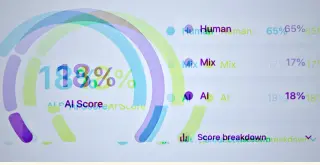
Pangram has introduced a browser extension that integrates with Gmail to scan incoming messages for AI-generated content. The tool requires a paid subscription and analyzes the 100 most recent email threads, labeling them as AI, human, or mixed. While it offers privacy assurances regarding data storage, it cannot scan the entire inbox history and only evaluates the first message in a thread.

AI Detection Tools Force Writers to Degrade Their Own Prose
technology22 days ago

AI Detection Tools Force Writers to Degrade Their Own Prose

AI detection tools are causing human writers to deliberately introduce errors and avoid standard stylistic habits to appear authentic. High-profile false positives have damaged reputations, while industry experts argue that pre-publication screening will soon eliminate public scandals, though concerns about linguistic flattening and false accusations persist.

AI Detection Tools Reshape Publishing Standards and Writer Trust
technology-and-media23 days ago

AI Detection Tools Reshape Publishing Standards and Writer Trust

AI detection tools like Pangram are increasingly used by publishers and agents to screen manuscripts, causing a surge in false accusations against human writers. While these tools help manage the flood of AI-generated submissions, they often flag human writing as machine-generated, leading to lost contracts and reputational damage. The industry is shifting toward pre-publication screening to avoid public scandals, but writers face pressure to alter their natural style to pass these tests. Critics argue this creates a 'witch hunt' environment, while supporters claim it is necessary for protecting the integrity of the literary ecosystem.

Publishing Industry Adopts AI Detectors to Preempt Scandals, Despite False Positive Risks
technology23 days ago

Publishing Industry Adopts AI Detectors to Preempt Scandals, Despite False Positive Risks

The 2026 wave of AI writing scandals is expected to diminish as publishers and agents proactively use detection tools like Pangram to screen manuscripts before publication. While this prevents public accusations, it raises concerns about false positives and the potential for AI to outcompete human authors in self-published markets.

AI Agent Uncovers Multi-Year Poker Malware Scheme Stealing Millions
security25 days ago

AI Agent Uncovers Multi-Year Poker Malware Scheme Stealing Millions

A sophisticated cyberattack compromised high-stakes online poker players by installing malware through trusted third-party software updates. The malicious program, named MeshAgent, allowed an attacker to view opponents' cards in real-time, leading to millions in stolen funds. The scheme was exposed when an AI agent detected the unauthorized software on a victim's machine. While some poker sites acted quickly to ban the cheater and refund losses, others ignored prior reports, allowing the fraud to continue for months.

Apple Integrates Google SynthID Watermarks into iOS 27.2 AI Features
technology27 days ago

Apple Integrates Google SynthID Watermarks into iOS 27.2 AI Features

Apple has activated Google’s SynthID watermarking for AI-generated images and edits within iOS 27.2. This update ensures that content created via Image Playground or modified using Apple Intelligence tools like Extend and Reframe carries an invisible, pixel-level watermark. While the technology aims to survive cropping and compression, users must rely on Google’s external SynthID Detector website to verify these marks, as no native detection tool exists on the iPhone.

AI Impersonation of Down Syndrome Athlete Highlights Social Media Detection Gaps
technology28 days ago

AI Impersonation of Down Syndrome Athlete Highlights Social Media Detection Gaps

Valeriia Litvinova Cunningham, a North Carolina State University student and Ukrainian refugee, shares how her sister Anya’s strength training journey inspired a community for people with Down Syndrome. However, the family faces AI-generated impostor accounts that mimic Anya’s face on other creators’ bodies. WRAL Investigates found that platforms like TikTok and Meta struggle to detect these fakes, often rejecting user reports. While TikTok cites C2PA technology for tracking content origins, Meta did not respond to inquiries. The incident underscores the difficulty of distinguishing real human creators from AI fabrications in current moderation systems.

Caine Prize Winner Defends Authorship After AI Detection Tool Flags Winning Story
arts-and-culture1 month ago

Caine Prize Winner Defends Authorship After AI Detection Tool Flags Winning Story

Zimbabwean author Simbarashe Kundizeza has denied using artificial intelligence to write 'The Blue Fighter,' the short story that won the 2026 Caine Prize for African Writing. The dispute emerged after journalist Vauhini Vara reported in The Atlantic that AI-detection software Pangram flagged the work as almost entirely machine-generated. Kundizeza maintains the story is his own original work, while the Caine Prize organization has launched an investigation into the allegations.

Caine Prize Winner Faces AI Allegations Amidst Global Literary Controversy
arts-and-culture1 month ago

Caine Prize Winner Faces AI Allegations Amidst Global Literary Controversy

The 2026 Caine Prize winner, Zimbabwean author Simbarashe Steyn Kundizeza, faces allegations that his winning short story, 'The Blue Fighter,' was generated by artificial intelligence. The controversy stems from a report by Vauhini Vara in The Atlantic, which cited the AI detection tool Pangram as flagging nearly the entire text as machine-generated. Kundizeza has firmly denied the claims, asserting the work is his own and highlighting potential biases in AI detection tools against non-Western writing styles. This incident marks the third major literary prize controversy involving AI this year, following similar disputes regarding the Commonwealth Prize and the Prix Goncourt. While the Caine Prize board is investigating the matter, they have committed to a 'human-centered' approach rather than relying solely on algorithmic verdicts, emphasizing support for the writer during the review process.

Zimbabwean Caine Prize Winner Defends Authorship Against AI Detection Controversy
arts-and-culture1 month ago

Zimbabwean Caine Prize Winner Defends Authorship Against AI Detection Controversy

Zimbabwean author Simbarashe Kundizeza has firmly denied using artificial intelligence to write 'The Blue Fighter,' the short story that won the 2026 Caine Prize for African Writing. The dispute arose after The Atlantic published an article citing AI-detection software Pangram, which flagged the work as entirely AI-generated. Kundizeza provided a documented chronology of the story's development, linking it to a poem about fish tanks and his own family’s economic struggles in Zimbabwe. Caine Prize chair Ellah Wakatama criticized The Atlantic for publishing allegations without a full investigation, while critics accused the scrutiny of targeting Black and African writers. The controversy highlights ongoing tensions between automated detection tools and human creative evolution.

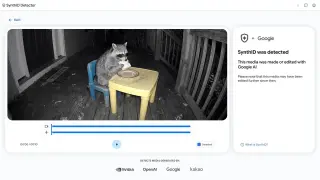
Google Opens SynthID Detector to Public, but Experts Warn It Only Checks Partner Watermarks
technology1 month ago

Google Opens SynthID Detector to Public, but Experts Warn It Only Checks Partner Watermarks

Google has launched a public website, SynthID.com, allowing anyone to upload images, videos, and audio to check for invisible AI watermarks. While the tool expands access beyond media professionals, it only detects content generated by specific partners like OpenAI and Nvidia, leaving a gap for non-participating AI models.