Semiconductor stocks jump in premarket trading as investor sentiment improves, with gains across memory and chip names like Micron, AMD and Intel and uplift from the SOXL ETF, signaling broad tech strength ahead of the market open.
Amid rising volatility from the U.S.–Iran conflict, the bigger warning is a record about $7.8 trillion held in money-market funds, signaling investor fear and a potential market pullback, with high Shiller P/E and other indicators adding to the caution.
TipRanks' Crowd Wisdom shows Walmart (WMT) investor sentiment turning negative ahead of its Q4 earnings: 2.7% of analyzed portfolios hold WMT, down 6.2% over the last 30 days with Very Negative sentiment; the stock has risen about 29% over the past year and 32% over six months, driven by AI initiatives and value pricing, but tariffs, consumer confidence, and a new CEO (John Furner) pose risks. TipRanks' Strong Buy consensus on WMT (27 Buy, 1 Hold) with a price target around $133.72 (up to $150) suggests upside despite the crowd’s caution.
Amazon unveiled plans to invest about $200 billion in AI infrastructure, robotics and related technologies in 2026, triggering a roughly 9% drop in its stock as investors weigh potential long-term returns against cash-flow concerns amid a wave of big AI investments from peers.
Investors are growing wary that the AI boom may be overheating as major tech firms unveil massive AI infrastructure expenditures (Amazon aiming $200B this year; total AI spending around $660B) and valuations slump by about $1.35 trillion, triggering a broad stock selloff in Microsoft, Nvidia, Alphabet, and Meta, while Apple bucks the trend with gains; the market is questioning near-term returns on these investments and whether a larger downturn is ahead.
Advanced Micro Devices rose about 2% in early trading after a Wednesday slide of over 17 despite solid Q4 results. TipRanksCrowd Wisdom shows growing investor caution about AI-driven revenue, with a Very Negative sentiment, even as Wall Street maintains a Strong Buy consensus and an average target of around $287 (roughly 43–44% upside).
Veteran analysts warn that the ongoing global market rally could be running on borrowed time, with stretched valuations and geopolitical risks raising the odds of a coming correction.
U.S. stock futures remain steady following the Christmas holiday, indicating a pause in market activity and investor sentiment during the holiday period.
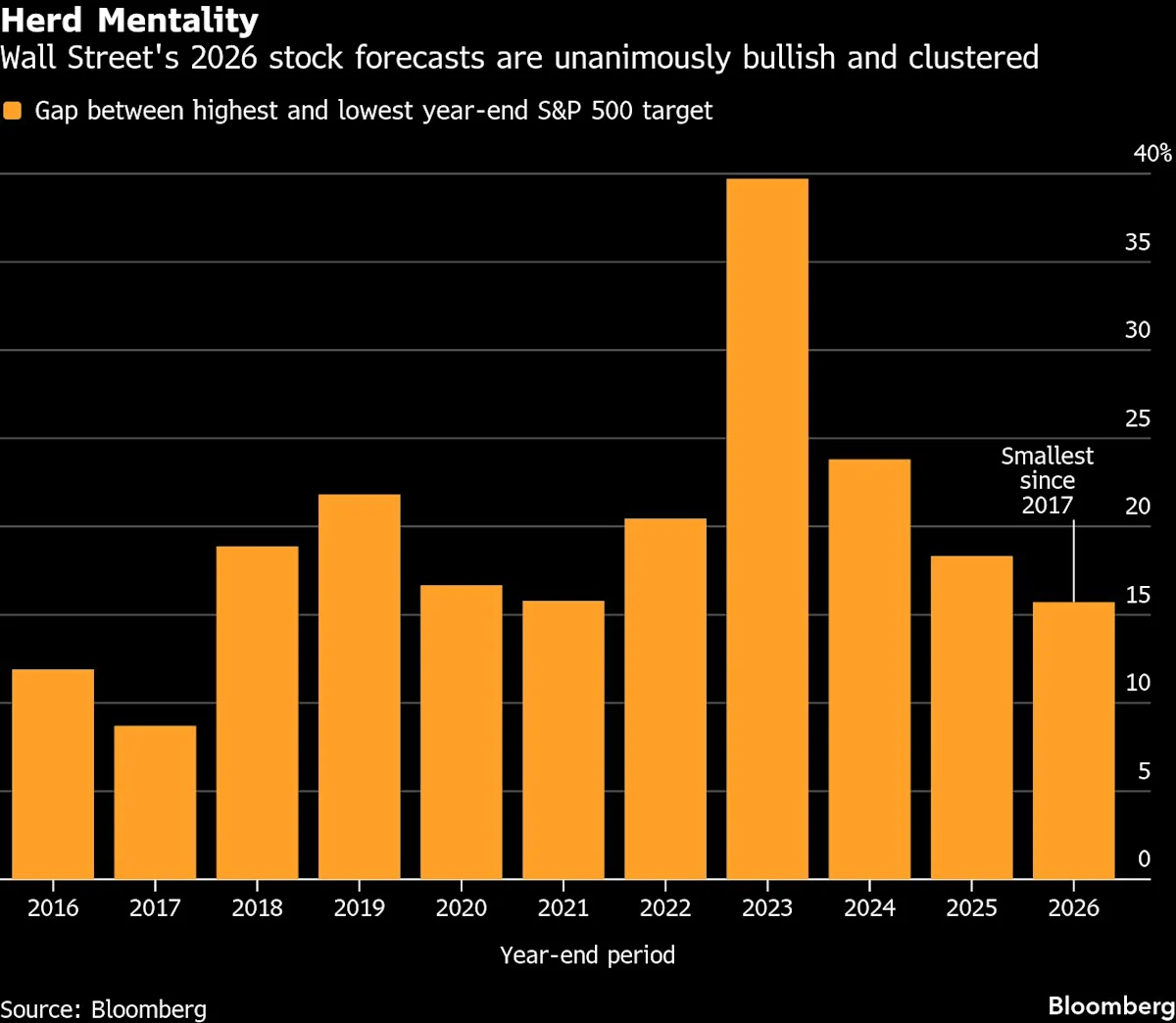
Wall Street's bullish consensus for 2026, with very tight target ranges for the S&P 500, raises concerns among investors about potential market fragility, as such unanimity may already be priced in and could lead to increased volatility if expectations are disappointed.
The article discusses the possibility of a Santa Claus rally in the stock market, specifically the S&P 500, and suggests that current signs indicate there may not be one this year, reflecting cautious investor sentiment and market conditions.
The article discusses a significant selloff in individual tech stocks like Oracle and CoreWeave, which are involved in AI infrastructure, suggesting a potential burst of the AI bubble. Despite these declines, the overall stock market remains broadly bullish, with investors shifting from overextended tech stocks to other sectors, indicating a cautious but not catastrophic market correction.
Despite strong earnings and positive outlooks for Broadcom, a major sell-off in AI-related stocks like Nvidia, AMD, and Oracle caused U.S. stock indexes to decline, reflecting investor jitters over potential AI bubble concerns and short-term uncertainties, even as some analysts remain optimistic about the sector's long-term prospects.
Tech stocks, especially the Magnificent Seven, lost over $1 trillion in market value this week amid a broader selloff driven by concerns over an AI bubble, despite some experts arguing that current valuations are supported by real earnings and structural changes. The market downturn was triggered by fears of overvaluation and a potential bubble burst, though some analysts believe the AI-driven growth reflects genuine long-term profitability.
Global markets declined following a sell-off in Wall Street tech shares, with Asian and European markets also falling, driven by concerns over high valuations and corporate earnings, while gold prices rose as a safe-haven asset.