Tag

Ion Propulsion

All articles tagged with #ion propulsion

Tiny Thrust, Endless Reach: Nuclear-Electric Propulsion Could Redefine Deep-Space Cargo
technology16 days ago

Tiny Thrust, Endless Reach: Nuclear-Electric Propulsion Could Redefine Deep-Space Cargo

Ion engines push only millinewtons of thrust but offer very high exhaust velocity; when powered by a space‑rated nuclear reactor as in SR-1 Freedom, they can provide continuous thrust for years, enabling reusable cargo tugs and dramatically higher payloads to Mars and beyond. This shifts the deep-space economics from lifting propellant mass to generating reliable electrical power, reshaping mission design, supply chains, and the industries around reactor technology. If proven, outer-planet science and Mars logistics could become orders of magnitude cheaper; if not, chemical propulsion remains the fallback.

NASA tests lithium-fed ion engine prototype, targeting nuclear-powered Mars missions
space21 days ago

NASA tests lithium-fed ion engine prototype, targeting nuclear-powered Mars missions

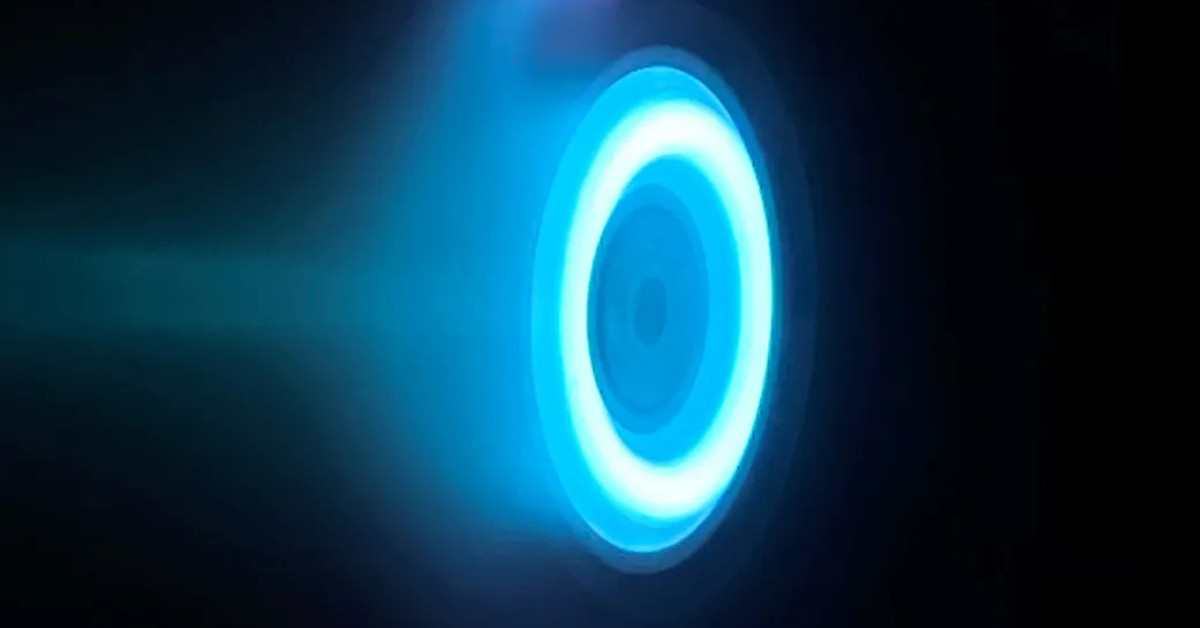
NASA’s Jet Propulsion Laboratory tested a lithium-fed magnetoplasmadynamic (MPD) thruster that ran up to 120 kilowatts—about 25 times more powerful than the Psyche mission’s ion engine—accruing five test firings. The team aims to push power toward 0.5–1 megawatt soon and ultimately several megawatts, enabling crews-to-Mars scenarios powered by space-based nuclear energy (Space Reactor-1 Freedom). Unlike traditional solar-powered ion engines, this approach could operate far from the Sun, paving the way for a future armada of high-power ion engines for crewed Mars missions.

"NASA's Psyche Mission Activates Advanced Electric Propulsion"
science-and-technology2 years ago

"NASA's Psyche Mission Activates Advanced Electric Propulsion"

NASA's Psyche mission has activated its electric Hall thrusters, propelling the spacecraft towards the metal-rich Psyche asteroid in the main asteroid belt. Launched in October 2023, Psyche is now in "full cruise" mode and has successfully tested laser-based deep space communications. Expected to reach the asteroid by 2029, the mission will study the object, believed to be the core of a planetesimal, for two years. Ion propulsion, used by Psyche, is efficient and durable, allowing the spacecraft to travel at high speeds with minimal fuel.

"ESA Develops Revolutionary Pinhole Propulsion System for Satellites"
space-technology2 years ago

"ESA Develops Revolutionary Pinhole Propulsion System for Satellites"

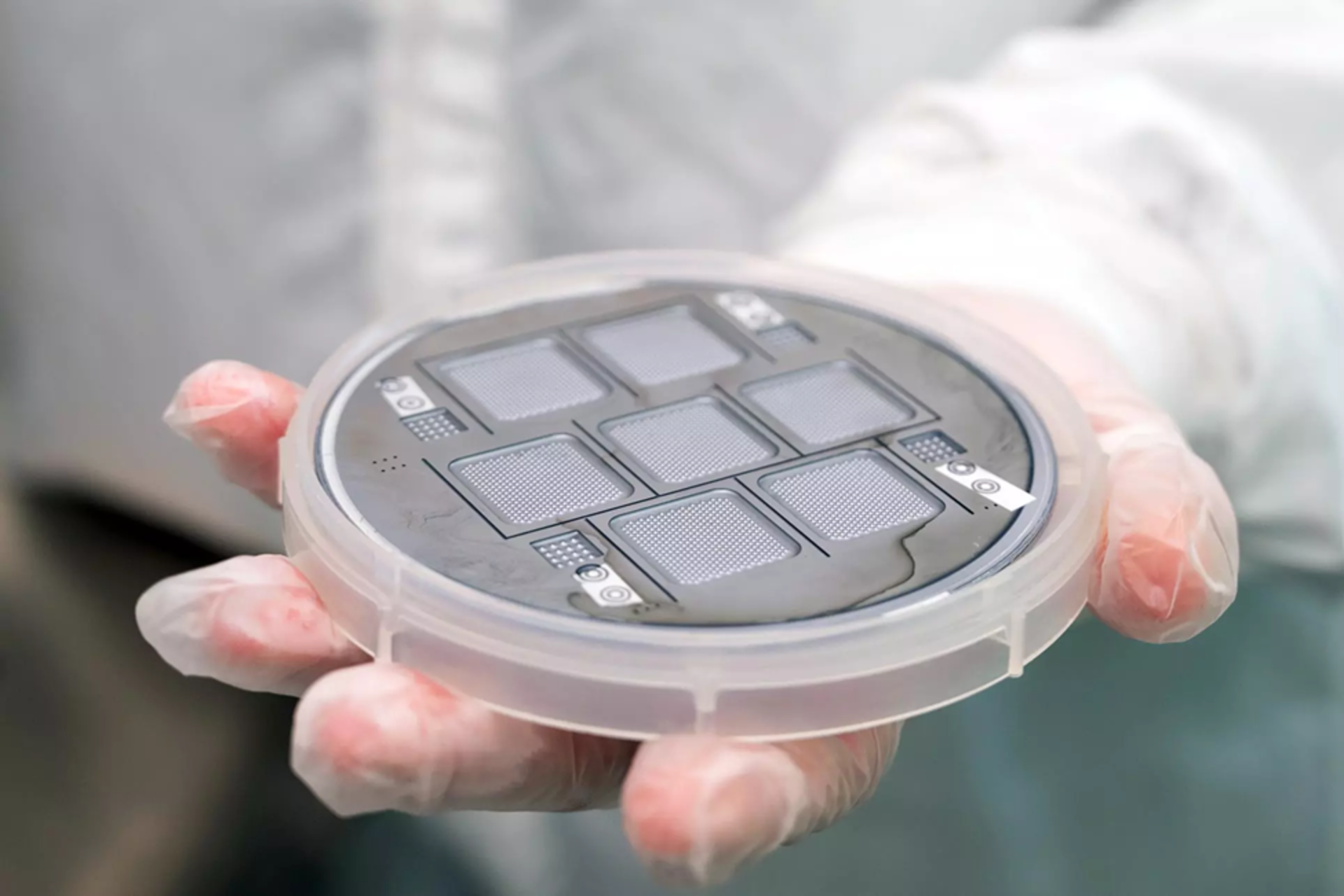
European Space Agency (ESA) is developing a palm-sized propulsion system called ATHENA, which uses electrospray technology to propel CubeSats and small satellites. The system, based on ionic-liquid salts as fuel, achieved over 400 hours of continuous operation and offers highly customizable thrust. The micro-fabricated ATHENA system uses non-toxic propellants and can be clustered together to provide thrust for satellites up to 50kg in mass. The project is expected to be completed by the end of next year.

NASA's Moon-Orbiting Gateway Space Station Successfully Tests Powerful New Thrusters
space2 years ago

NASA's Moon-Orbiting Gateway Space Station Successfully Tests Powerful New Thrusters

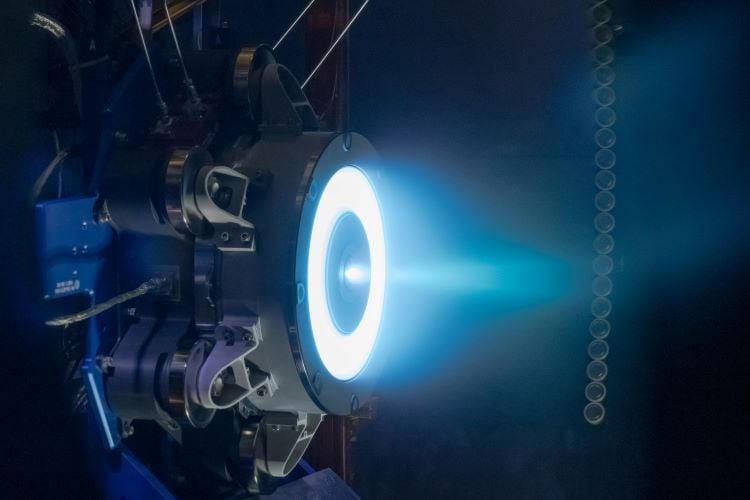
NASA and Aerojet Rocketdyne are conducting qualification testing for the Advanced Electric Propulsion System (AEPS), a powerful ion propulsion engine that will be used to power lunar exploration. The AEPS, a Hall effect thruster, uses solar-generated electricity to create a stream of ionized xenon gas, producing efficient thrust. This 12-kilowatt thruster is the most powerful electric propulsion thruster in production and will be critical for future moon and space exploration missions. The thrusters will be used on the Power and Propulsion Element (PPE) of NASA's Gateway space station, and a second thruster qualification article will be tested in 2024.

"Breakthrough Test Success: Unleashing Unprecedented Power in Ion Engine for Gateway"
space-technology2 years ago

"Breakthrough Test Success: Unleashing Unprecedented Power in Ion Engine for Gateway"

NASA and Aerojet Rocketdyne have successfully completed qualification testing of the Advanced Electric Propulsion System (AEPS), the most powerful electric propulsion thruster currently being manufactured. AEPS, a 12-kilowatt solar electric propulsion engine, uses ionized xenon gas to produce a longer duration and more efficient thrust compared to traditional chemical propulsion. The goal is to use AEPS on NASA's Gateway space station, providing power, propulsion, and communication capabilities. AEPS could also be used for deep space missions in the future.