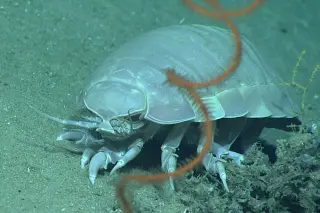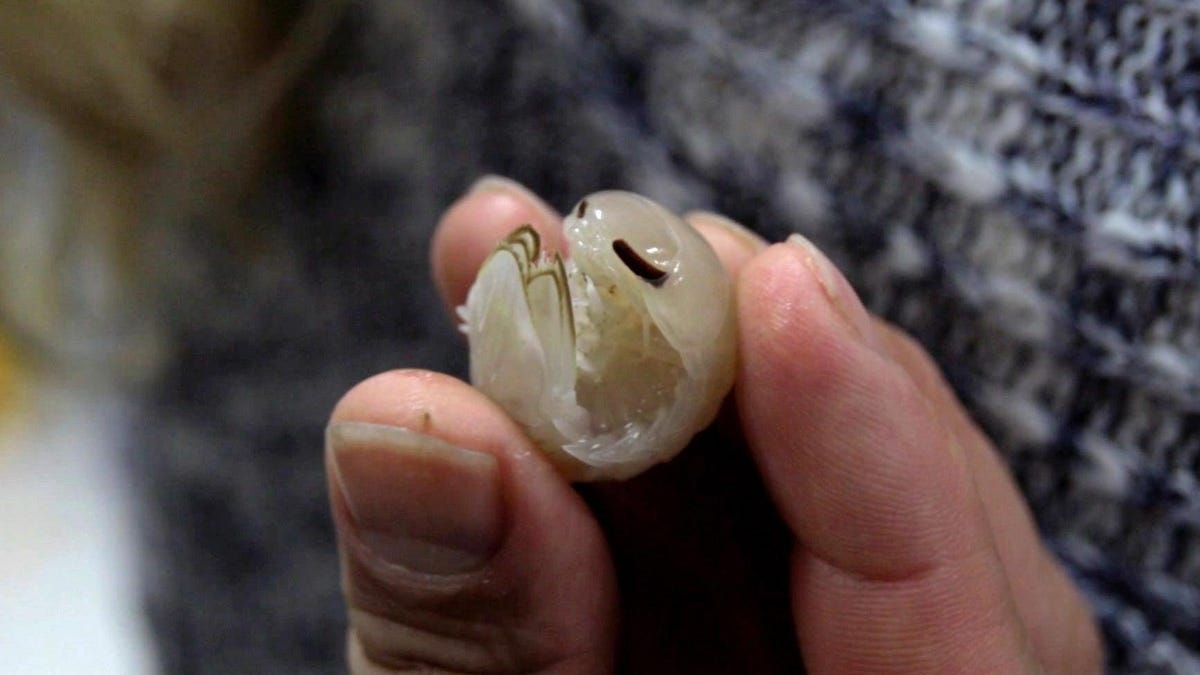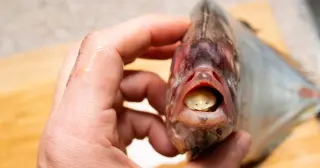
Parasite Replaces a Fish’s Tongue and Lives as its Mouthpart
A tongue-eating isopod (Cymothoa exigua) enters a fish through the gills, drains blood from the tongue to cause it to wither, and then clamps onto the tongue’s stump to function as the fish’s new tongue for the rest of its life. The species is protandrous hermaphroditic, with rare cases of a female at the tongue site and a male in the gill chamber; researchers have identified related mouth-dwelling isopods (including Cymothoa facimar) and noted how parasite load can vary with fishing pressure and market sightings.