Tag

Lcdm

All articles tagged with #lcdm

Cosmic Expansion Gap Grows: Dark Energy May Be Evolving
science1 month ago

Cosmic Expansion Gap Grows: Dark Energy May Be Evolving

Two long-standing methods for measuring the universe’s expansion—early-universe data from Planck and local observations of supernovae—remain at odds, a discrepancy known as the Hubble tension. New DESI results, when combined with other probes, hint that dark energy might not be a constant after all, challenging the simplest ΛCDM model. Riess and Leauthaud have warned that the standard cosmology could be cracking, even as some newer analyses (e.g., Lyman-alpha forest data) either align with or complicate this evolving picture. The cosmos’ expansion history thus remains an active, debated frontier.
Lambda Reborn: The Cosmology That Could Still Be Wrong
science2 months ago

Lambda Reborn: The Cosmology That Could Still Be Wrong

Einstein’s general relativity implied a dynamic universe, prompting him to insert a cosmological constant to keep it static; decades later, observations of accelerating expansion revived that constant as dark energy, fueling the Lambda-CDM model. While LCDM explains a vast range of cosmic phenomena, many cosmologists acknowledge it could still be incomplete or even wrong.

Sharper dark‑energy map tightens cosmic clues while hinting at clustering mysteries
space8 months ago

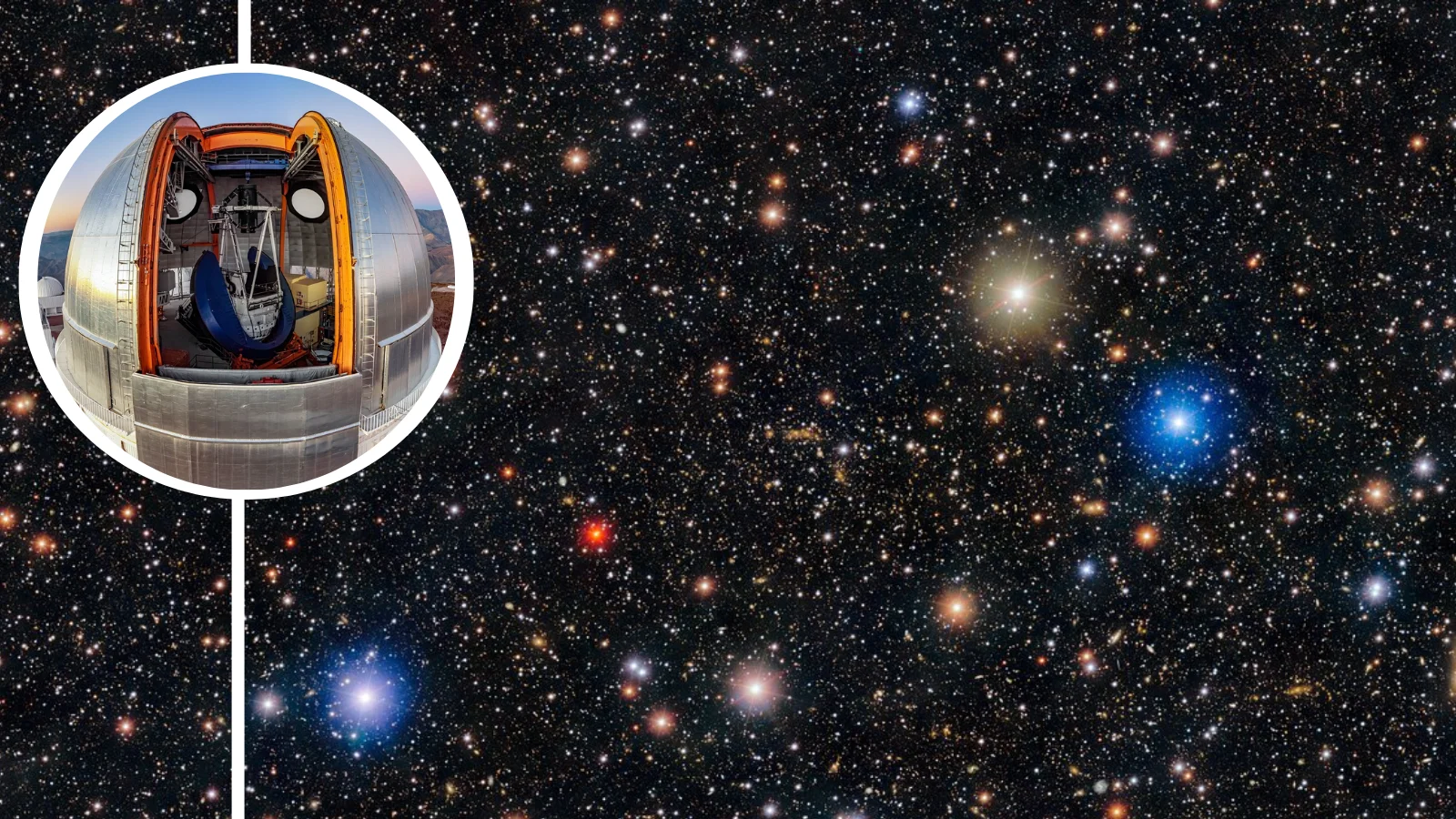
Sharper dark‑energy map tightens cosmic clues while hinting at clustering mysteries

Six years of DES data from the Dark Energy Camera (DECam) on the Blanco telescope, spanning 758 nights and about 669 million galaxies, were analyzed using four probes—Type Ia supernovae, weak gravitational lensing, galaxy clustering and baryon acoustic oscillations—to dramatically tighten constraints on dark energy and the expansion of the universe. The results largely align with LCDM and the wCDM model, but reveal a tension in how matter clusters today compared with early-universe predictions, hinting at potential new physics as DES plans to combine its data with observations from the Vera C. Rubin Observatory’s LSST for even clearer cosmic maps.