Tag

Cosmological Constant

All articles tagged with #cosmological constant

Lambda Reborn: The Cosmology That Could Still Be Wrong
science1 month ago

Lambda Reborn: The Cosmology That Could Still Be Wrong

Einstein’s general relativity implied a dynamic universe, prompting him to insert a cosmological constant to keep it static; decades later, observations of accelerating expansion revived that constant as dark energy, fueling the Lambda-CDM model. While LCDM explains a vast range of cosmic phenomena, many cosmologists acknowledge it could still be incomplete or even wrong.
Topology Could Tame the Cosmological Constant
science2 months ago

Topology Could Tame the Cosmological Constant

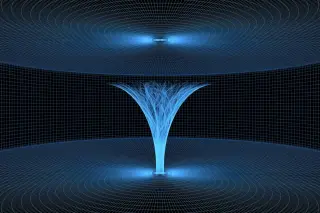
Brown University researchers argue that space-time topology in the CSK (Chern-Simons-Kodama) approach to quantum gravity could stabilize the cosmological constant at a small, quantized value by a mechanism analogous to the quantum Hall effect's topological protection, offering a potential path to reconciling vacuum energy with the universe’s expansion.

Right-Handed Neutrinos Hint at a Hidden Dimension in Dark Dimension Theory
science3 months ago

Right-Handed Neutrinos Hint at a Hidden Dimension in Dark Dimension Theory

Scientists analyzing data from the Karlsruhe Tritium Neutrino Experiment (KATRIN) explore whether a heavy, right-handed neutrino could reside in a hidden micron-scale dimension as suggested by the Dark Dimension Proposal; by translating KATRIN beta-decay spectra into a test for extra dimensions, they identify two regions where a kink in the spectrum would reveal such a particle, potentially linking neutrino physics to dark matter, dark energy, and a changing cosmological constant and guiding future experiments.

Unveiling the Universe's Mysteries: Dark Matter and Dark Energy Explored
science1 year ago

Unveiling the Universe's Mysteries: Dark Matter and Dark Energy Explored

Recent evidence suggests that dark energy, previously thought to be a constant, may actually be evolving over time, but the data is still inconclusive and interpretations vary among scientists. The debate revolves around whether dark energy is changing, which could impact our understanding of the universe's expansion, or if current measurement discrepancies are due to errors or biases. Future missions are expected to clarify whether dark energy is indeed dynamic or remains a cosmological constant.

"Universe's Fate: Dark Energy's Changing Power and the Future of Expansion"
astronomycosmology2 years ago

"Universe's Fate: Dark Energy's Changing Power and the Future of Expansion"

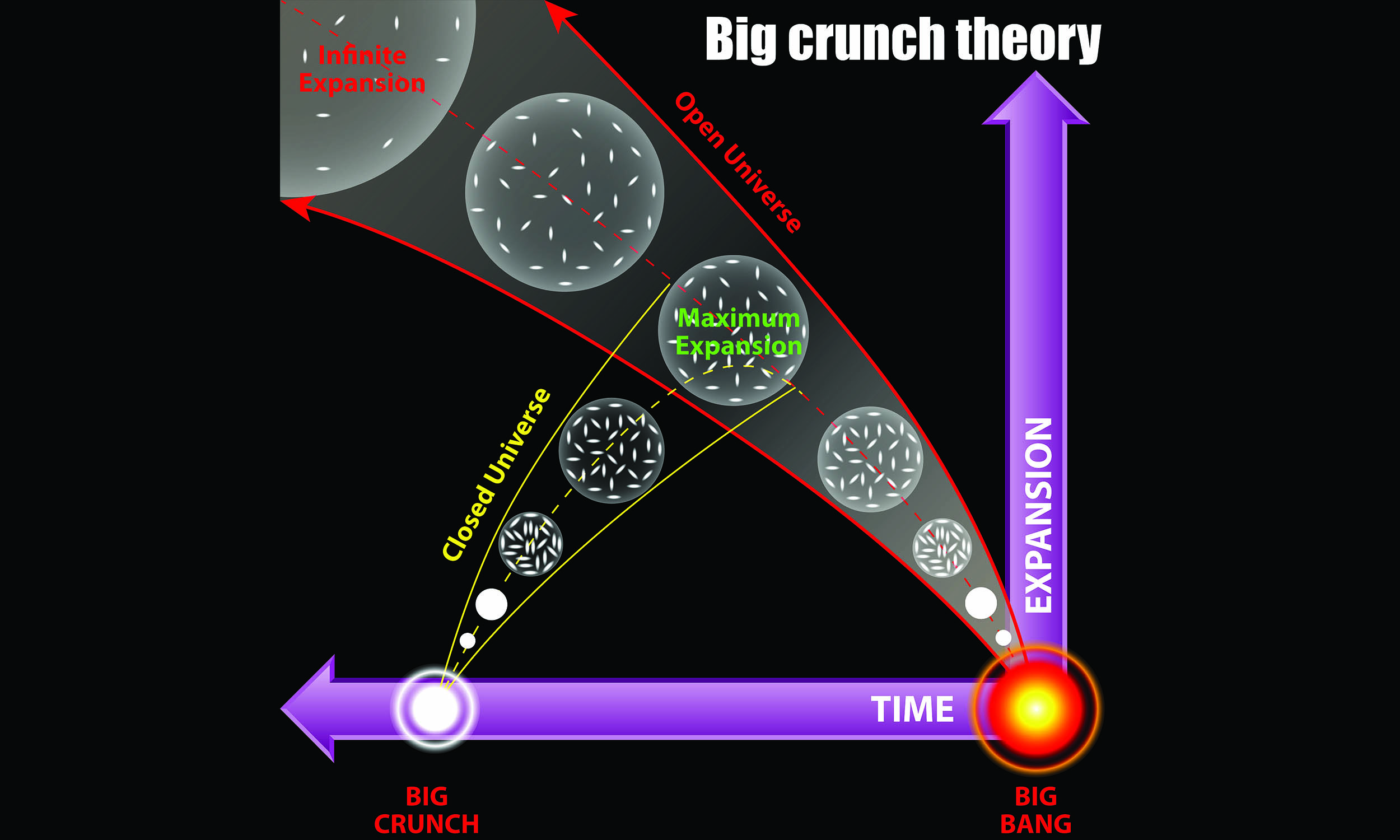
New observations from the Dark Energy Spectroscopic Instrument (DESI) suggest that dark energy, the force driving the universe's accelerated expansion, may be weakening, challenging the standard Lambda Cold Dark Matter (LCDM) model. This finding could lead to a paradigm shift in cosmology, potentially indicating a "Big Crunch" end for the universe instead of a "Big Rip" or "Big Chill." The discovery of evolving dark energy would be as revolutionary as the initial discovery of the universe's accelerated expansion. Further observations from DESI and the Euclid space telescope are expected to provide a more comprehensive understanding of dark energy and the universe's fate.

"Is the Universe's Accelerated Expansion Slowing?"
astronomy2 years ago

"Is the Universe's Accelerated Expansion Slowing?"

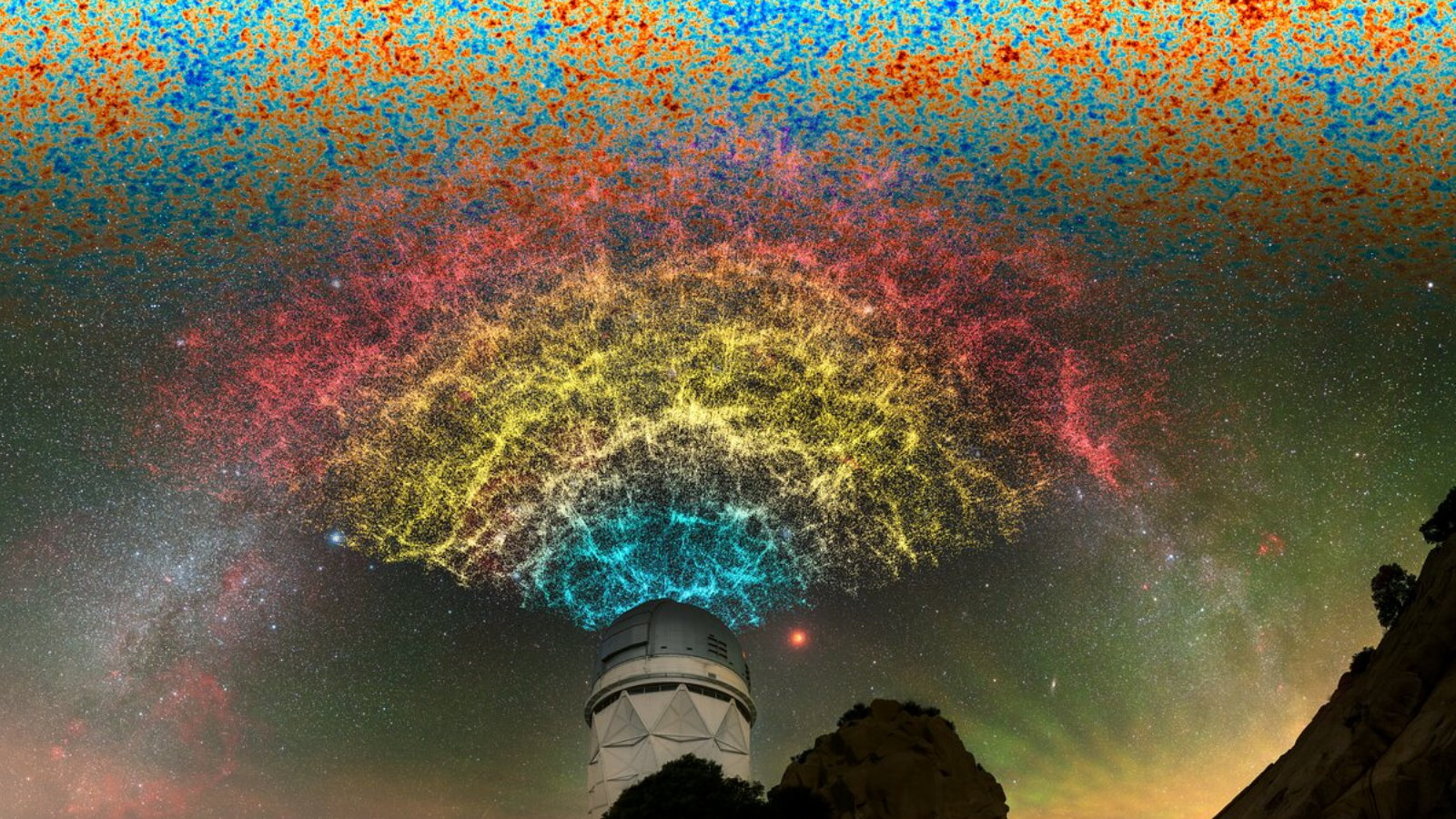
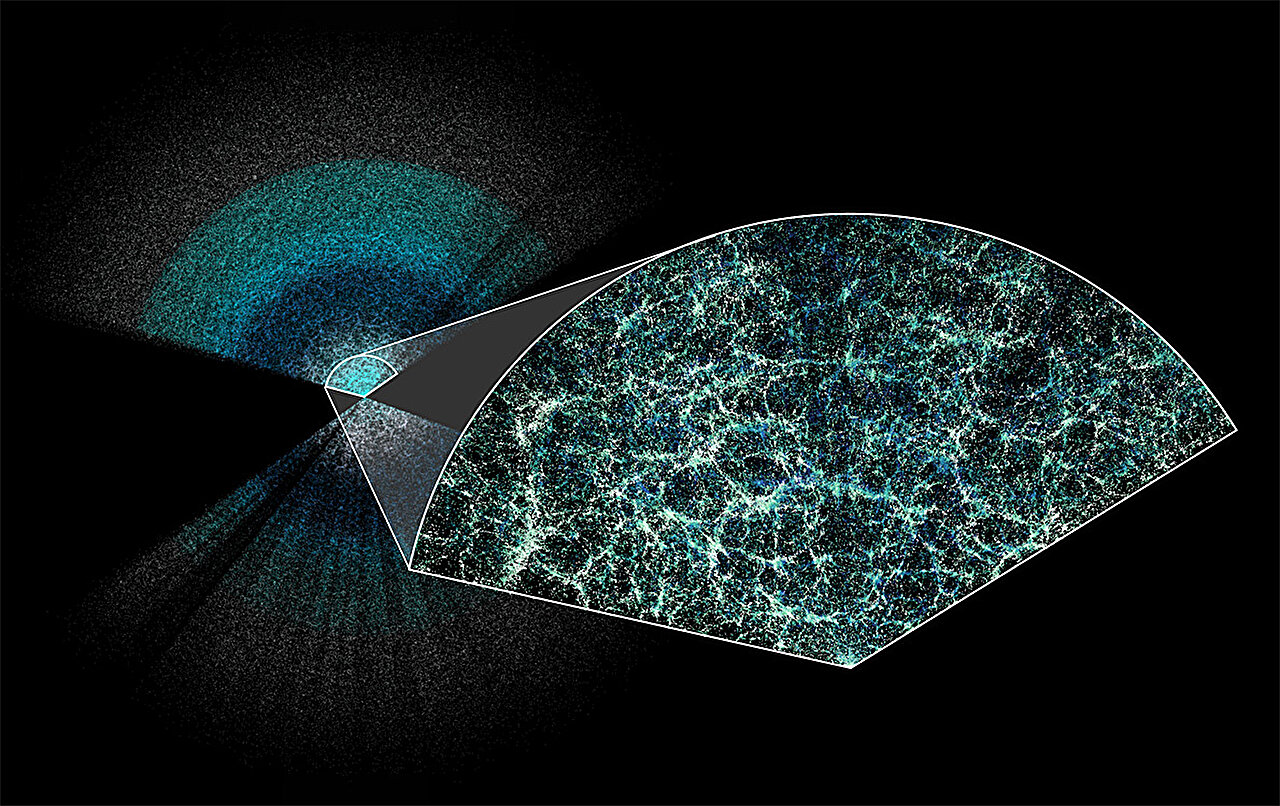
Early results from the Dark Energy Spectroscopic Instrument (DESI) suggest that the universe's accelerated expansion may be slowing down, challenging our understanding of dark energy and the cosmos. DESI has created the largest 3D map of the universe to date, observing six million galaxies and quasars up to 11 billion years into the past. If confirmed, these findings could indicate that dark energy is evolving over time, potentially requiring a reevaluation of our current understanding of the universe and its expansion.

"Controversial Study: Universe Has No Dark Matter and Is 27 Billion Years Old"
astronomyphysics2 years ago

"Controversial Study: Universe Has No Dark Matter and Is 27 Billion Years Old"

A new paper by University of Ottawa physics professor Rajendra Gupta challenges the existence of dark matter, suggesting that the universe is twice as old as current models suggest and doesn't require dark matter to exist. Gupta's theory, which builds on his previous work about the universe's age, proposes a revised model based on a "covarying coupling constant" and the tired light hypothesis, arguing that dark matter doesn't have to be part of the equation at all. This controversial claim directly contradicts prevailing theories and is expected to face pushback from Gupta's peers.

"Challenging the Notion of Design in the Universe: A Physicist's Perspective"
science-and-cosmology2 years ago

"Challenging the Notion of Design in the Universe: A Physicist's Perspective"

Physicist Alexander Vilenkin discusses the fine-tuning of the universe and the cosmological constant, suggesting that the universe's constants appear to be finely tuned for life and mind. He introduces the idea of a multiverse to explain this fine-tuning but acknowledges the failure to derive the constants from a fundamental theory. Vilenkin rejects the notion of a designed universe, citing the cosmological constant's lack of a special value and its role in entropic selection. However, the cosmological constant's nature and its theoretical support remain unclear, leading to debates about the universe's potential design.