Diverse bacterial donors and giant viruses helped forge the first eukaryotes
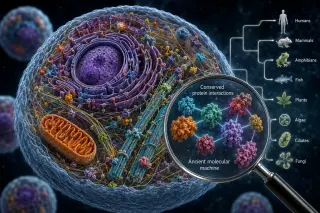
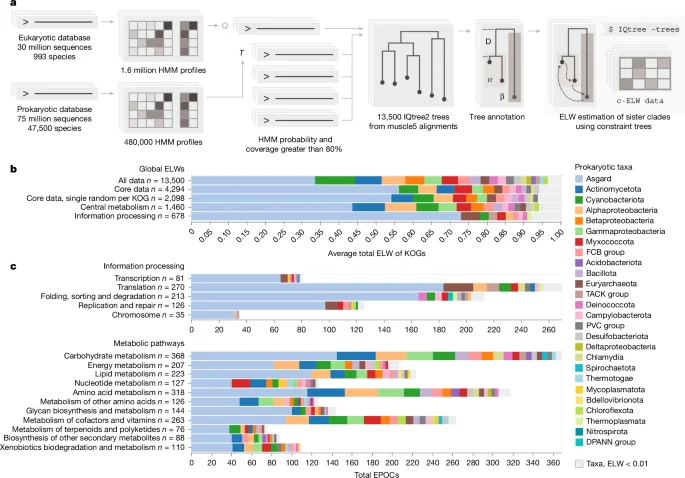
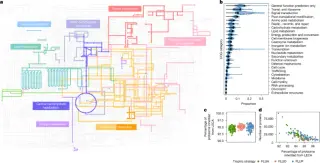
A large-scale phylogenomic study reconstructs the LECA proteome and finds that, beyond the mitochondrial alphaproteobacterial endosymbiont and Asgard archaea, substantial gene acquisitions came from diverse bacteria (notably Planctomycetota and Myxococcota) and from Nucleocytoviricota giant viruses. Timing analyses reveal multiple acquisition waves, including virus-mediated transfers, suggesting that early eukaryotes arose within complex microbial ecosystems via progressive, multi-partner gene exchange, rather than a single endosymbiotic event. The LECA appears to be a chimeric organism with core metabolism, endomembrane systems, and capabilities like phagocytosis, shaped by both innovations and horizontal transfers.