Tag

Lhcb

All articles tagged with #lhcb

LHC hints at new physics through rare B meson decays
science23 hours ago

LHC hints at new physics through rare B meson decays

CERN’s LHCb reports a four-sigma deviation from Standard Model predictions in a rare penguin decay of B mesons to a kaon, a pion and two muons, suggesting possible undiscovered physics. The independent CMS results earlier in 2025 strengthen the case, but five-sigma confirmation is not yet reached; future LHC upgrades and larger datasets are planned to verify or refute the deviation.

Rare B-meson decays spark potential new physics beyond the Standard Model
science26 days ago

Rare B-meson decays spark potential new physics beyond the Standard Model

LHCb’s study of a rare penguin decay—B mesons decaying to a kaon and two muons—shows angular distributions that differ from Standard Model predictions at about 4 sigma, hinting that new particles could enter the decay loop. Possible explanations include a heavier Z’ boson or leptoquarks, with CMS hinting at a compatible but less significant signal. The analysis uses ~650 billion decays from 2011–2018, making this one of the most intriguing LHC anomalies, though it could still be affected by charming-penguin effects. Further data are needed to confirm any new physics.

LHCb hints at physics beyond the Standard Model in rare B meson decays
science1 month ago

LHCb hints at physics beyond the Standard Model in rare B meson decays

New results from CERN’s LHCb show a rare electroweak penguin decay of B mesons that disagrees with Standard Model predictions at about four standard deviations, hinting at possible new physics. The finding is supported by earlier CMS results and comes from analyzing roughly 650 billion B decays (2011–2018). Although intriguing, it does not reach the five-sigma discovery threshold; further data and upgrades planned for the 2030s could confirm whether this points to new particles or remains a heavy overlap within the current theory.

CERN Spots New Double-Charmed Baryon Xi-cc-plus After Upgrades
science2 months ago

CERN Spots New Double-Charmed Baryon Xi-cc-plus After Upgrades

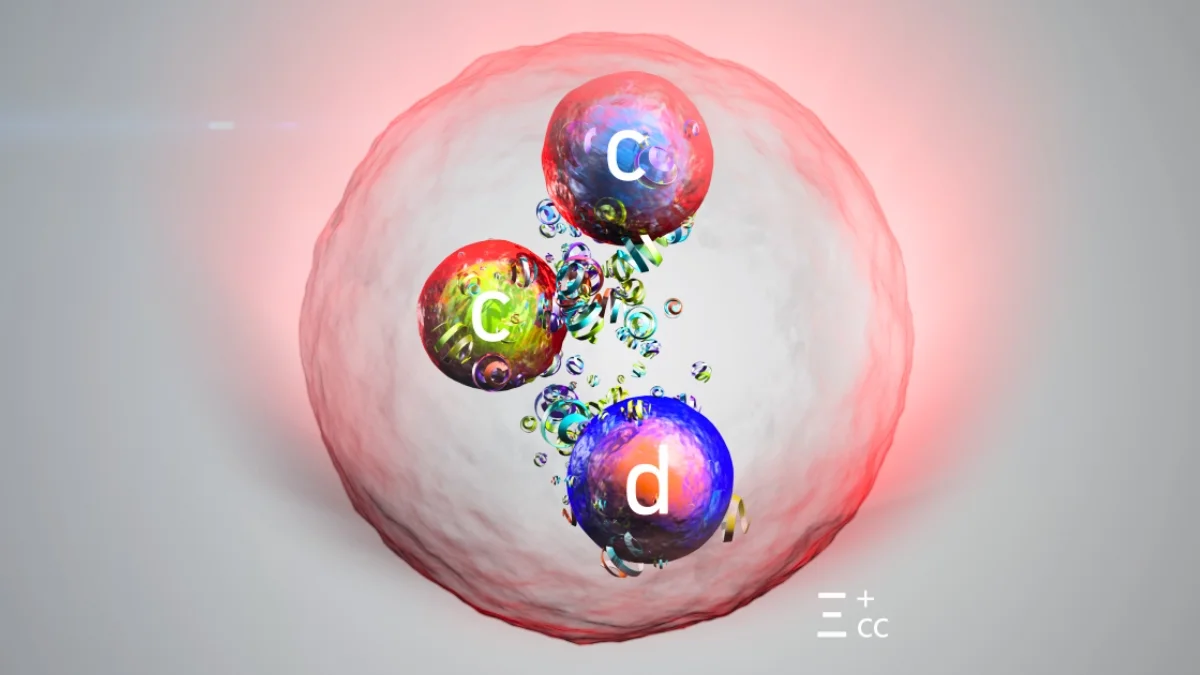
CERN’s LHCb collaboration announced the discovery of a new baryon called Xi-cc-plus, containing two charm quarks and one down quark, making it the 80th identified particle and the first new one found after the LHCb upgrades completed in 2023. It is heavier than a proton and has a shorter lifetime—about six times shorter than a similar earlier particle—posing detection challenges but providing a test bed for quantum chromodynamics and guiding future collider plans like the Future Circular Collider.

science2 months ago

LHCb Finds Proton-Like Baryon With Two Charm Quarks

At CERN, the LHCb collaboration announced the discovery of a proton‑like baryon made of two charm quarks and one down quark, about four times the proton’s mass, observed with 7-sigma significance in Run 3 data; it’s the second baryon with two heavy quarks and a key test for quantum chromodynamics, including a shorter lifetime than the up-quark counterpart, and follows upgrades to the LHCb detector completed in 2023.

LHCb detects rare baryon decay
science9 months ago

LHCb detects rare baryon decay

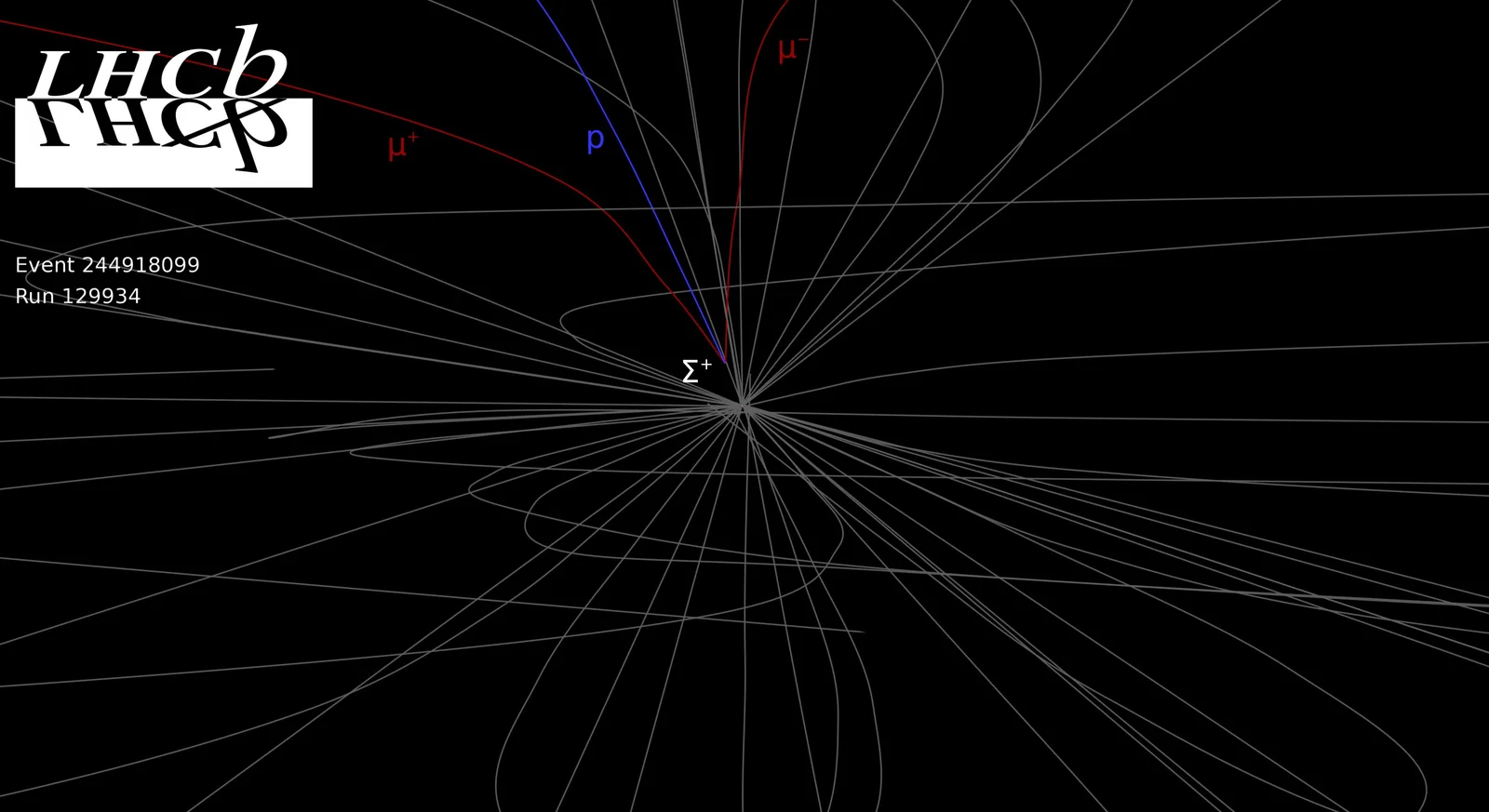
The LHCb collaboration at CERN has observed the ultra-rare decay of the Sigma-plus baryon into a proton and two muons, a process that could reveal physics beyond the Standard Model and help understand matter-antimatter asymmetry. This achievement was made possible by analyzing extensive data from proton-proton collisions and employing machine learning techniques, marking a significant milestone in particle physics research.

LHCb Probes Mysteries of Elusive Particle
science1 year ago

LHCb Probes Mysteries of Elusive Particle

The LHCb collaboration at CERN has made significant progress in understanding the χc1(3872) particle, a puzzling entity in particle physics. Using data from LHC Run 1 and Run 2, they found that the particle's decay ratios are inconsistent with a pure molecular hypothesis, suggesting it contains a compact component. This supports theories that χc1(3872) could be a conventional charmonium, a compact tetraquark, or a mixture of molecules with a compact core.