Tag

Lhc

All articles tagged with #lhc

CMS measures W boson mass with record precision at 13 TeV
science2 days ago

CMS measures W boson mass with record precision at 13 TeV

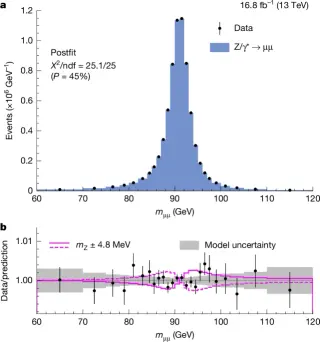
CMS analyzed over 100 million W→μν decays from 2016 pp collisions at 13 TeV to extract mW using a highly granular, in-situ template fit of the muon pT, eta and charge distributions, aided by state-of-the-art NNLO+N3LL theory and data-driven PDFs; the result mW = 80,360.2 ± 9.9 MeV agrees with the Standard Model and helps address the prior CDF tension, with an additional W+ vs W− mass difference measurement of 57.0 ± 30.3 MeV. The analysis validates via Z-boson mass checks and a W-like mZ cross-check, and features robust muon momentum scale and hadronic recoil calibrations.

LHCb Discovers Xi-cc-plus, a New Two-Charm Baryon
science20 days ago

LHCb Discovers Xi-cc-plus, a New Two-Charm Baryon

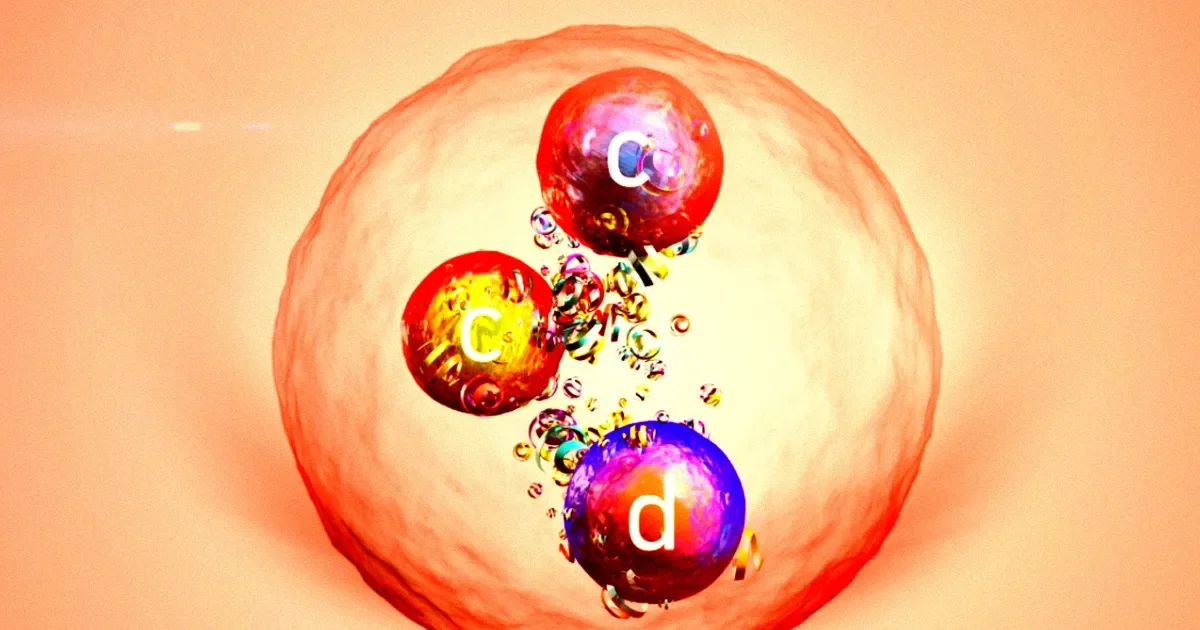
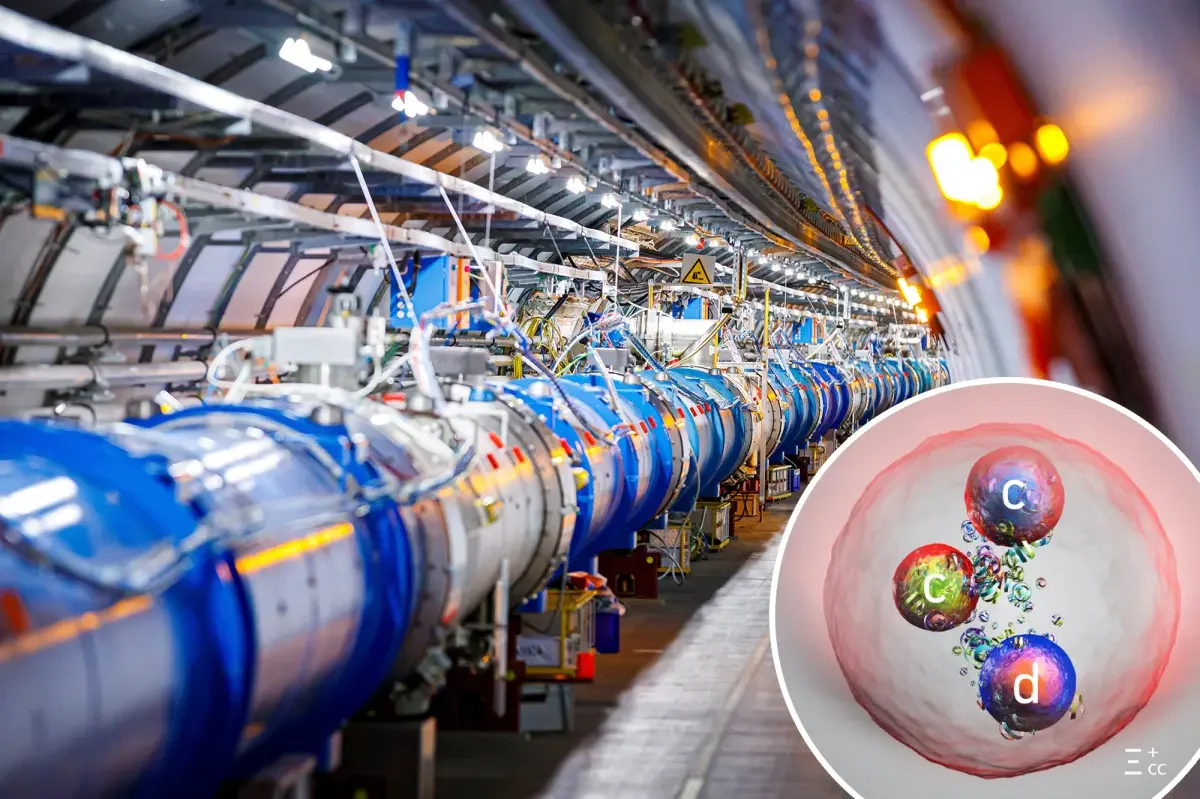
Scientists at CERN's LHCb have identified a new baryon, Xi-cc-plus, composed of two charm quarks and one down quark. Weighing about four times the mass of a proton, it offers a testbed for quantum chromodynamics and the strong force; discovered after 2023 detector upgrades, it is only the second observed baryon with two heavy quarks and has a lifetime up to six times shorter than a similar earlier baryon.

LHC Finds Quark-Gluon Plasma Flows Like a Liquid in Early-Universe Conditions
science1 month ago

LHC Finds Quark-Gluon Plasma Flows Like a Liquid in Early-Universe Conditions

Physicists at the Large Hadron Collider recreated brief, Big-Bang–like conditions by colliding heavy nuclei, forming a droplet of quark-gluon plasma that behaves more like a liquid than a gas. By tagging quarks with Z bosons, researchers observed a tiny wake and a sub-percent dip in particle production, indicating energy transfer to the plasma and opening new avenues to study the primordial state of matter, as reported in Physics Letters B.

LHC reveals primordial quark-gluon soup behaved like a liquid
science2 months ago

LHC reveals primordial quark-gluon soup behaved like a liquid

Using the Large Hadron Collider, researchers recreated quark‑gluon plasma and observed that the ultra‑hot primordial soup behaved as a nearly perfect liquid, producing wakes as fast‑moving quarks traversed it. By tagging events with a Z‑boson to isolate single-quark wakes, they found fluid‑like ripples that match hybrid model predictions, offering new insight into the universe’s first microseconds and the properties of the quark‑gluon plasma (Physics Letters B).

Particle Physics at a Crossroads: Hard Questions, New Paths
science2 months ago

Particle Physics at a Crossroads: Hard Questions, New Paths

More than a decade after the Higgs discovery, particle physics has yet to find new physics beyond the Standard Model, prompting a crisis about the field’s direction. Proposals for big next-gen machines (the Future Circular Collider, muon colliders) and smaller-scale tests (axions, hidden valleys) mingle with advances in AI-assisted data analysis, but there’s no discovery guarantee and talent is drifting toward other fields. In short, particle physics isn’t dead, but it’s hard—and the path forward remains uncertain.

Private donors back CERN's multi-decade Future Circular Collider plan
science2 months ago

Private donors back CERN's multi-decade Future Circular Collider plan

CERN has secured $1 billion in private donations from the Breakthrough Prize Foundation, the Eric and Wendy Schmidt Fund, John Elkann, and Xavier Niel to kick off the Future Circular Collider (FCC), a 90.7-km tunnel intended as the Large Hadron Collider’s successor. The plan features a two-phase roadmap: FCC-ee as a Higgs factory starting around 2030 with operations by 2047, followed by FCC-hh protons at 85 TeV in the 2070s to probe new physics. A CERN Council decision is expected in 2028, with construction potentially starting in 2030. China’s CEPC stall may open collaboration opportunities modeled after ITER, while the HL-LHC upgrade remains a priority in the near term.

CERN chills the LHC to chase new physics
science2 months ago

CERN chills the LHC to chase new physics

The Large Hadron Collider is being upgraded to reach extreme cryogenic temperatures to improve measurements and reduce electronic noise. A new CO2-based heat exchanger, developed with Swep, cools Atlas components to -45C, while other accelerator sections reach 1.9 Kelvin for superconducting magnets. This relies on dilution refrigeration using helium-4 and helium-3, a key tech for quantum computing, with broader applications in cryogenic cooling for semiconductors and even supermarket refrigeration. By achieving colder conditions, scientists aim to probe physics beyond the Standard Model.

Affordable and Rapid Route to a Higgs Factory in Particle Physics
science8 months ago

Affordable and Rapid Route to a Higgs Factory in Particle Physics

The article discusses the current state and future prospects of particle colliders for studying the Higgs boson, highlighting the potential of a cost-effective and faster option called LEP3, which would repurpose existing infrastructure to produce large numbers of Higgs particles for detailed study, as an alternative to more expensive and longer-term projects like the Future Circular Collider.

science9 months ago

LHC Detects Rare Top-Quark Pair Romance

Researchers at CERN's LHC, through CMS and ATLAS experiments, have observed a fleeting bound state of top quark and antiquark pairs, called toponium, challenging previous assumptions about the top quark's behavior and opening new avenues for understanding the strong nuclear force and potential new particles.

science1 year ago

ALICE Discovers Antimatter Counterpart of Hyperhelium-4

The ALICE collaboration at the Large Hadron Collider has found the first evidence of antihyperhelium-4, the heaviest antimatter hypernucleus observed at the LHC, with a significance of 3.5 standard deviations. This discovery, based on 2018 lead-lead collision data, supports the statistical hadronisation model's predictions and contributes to understanding the matter-antimatter asymmetry in the universe. The findings also include evidence of antihyperhydrogen-4 and confirm equal production of matter and antimatter at LHC energies.