CERN’s LHCb reports a four-sigma deviation from Standard Model predictions in a rare penguin decay of B mesons to a kaon, a pion and two muons, suggesting possible undiscovered physics. The independent CMS results earlier in 2025 strengthen the case, but five-sigma confirmation is not yet reached; future LHC upgrades and larger datasets are planned to verify or refute the deviation.
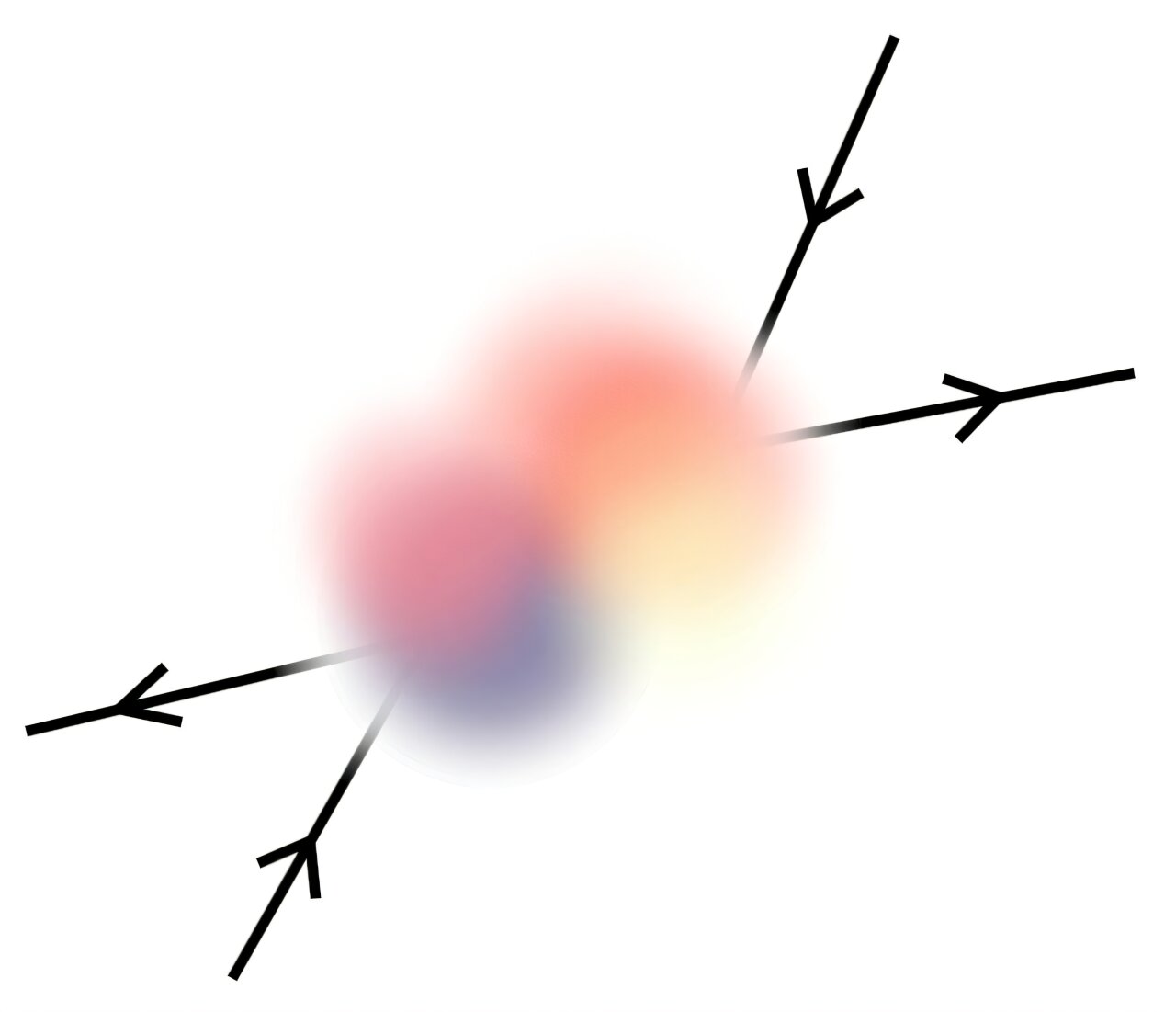
LHCb’s study of a rare penguin decay—B mesons decaying to a kaon and two muons—shows angular distributions that differ from Standard Model predictions at about 4 sigma, hinting that new particles could enter the decay loop. Possible explanations include a heavier Z’ boson or leptoquarks, with CMS hinting at a compatible but less significant signal. The analysis uses ~650 billion decays from 2011–2018, making this one of the most intriguing LHC anomalies, though it could still be affected by charming-penguin effects. Further data are needed to confirm any new physics.
New LHCb results on rare B-meson decays, corroborated by CMS data, show tensions with Standard Model predictions in electroweak penguin processes, hinting at heavy new particles such as leptoquarks. While not definitive, the anomalies are growing and future LHC upgrades and larger datasets may confirm a need for new physics beyond the Standard Model.
Scientists at CERN have successfully observed double crystal channeling at the LHC, a novel technique that could enable more precise measurements of short-lived particles like charm baryons, potentially opening new avenues in the search for physics beyond the Standard Model.
A former NASA engineer claims to have developed a propulsion system powered by a 'New Force' that can generate thrust without expelling propellant, potentially overcoming Earth's gravity. However, such claims are highly controversial and require independent verification, as they challenge established physical laws.
Physicists at Emory University used AI and neural networks to discover new physics in dusty plasma, correcting previous assumptions and providing precise models of non-reciprocal forces, with potential applications across various complex systems.
Physicists at ETH Zurich are using precision atomic spectroscopy of calcium isotopes to search for a potential fifth force of nature, which could help explain mysteries like dark matter and extend beyond the Standard Model. Their experiments aim to detect subtle energy shifts that might indicate the presence of an unknown force carried by a new particle, although current results are inconclusive and further research is ongoing.
The KATRIN experiment has analyzed data to set new constraints on hypothetical general neutrino interactions that could indicate physics beyond the standard model, although no signs of these interactions have been detected yet. The experiment aims to measure neutrino mass and is expanding its search for new physics phenomena, with future phases expected to improve sensitivity.
Physicists used antimatter, supercomputers, and giant magnets to resolve a 20-year-old mystery about the muon's magnetism, which could have indicated new physics related to dark matter. Recent experiments and simulations have clarified the discrepancy, but the question of potential new particles like the dark photon remains open, offering clues about dark matter.
Recent high-precision spectroscopy experiments on helium isotopes reaffirm a significant discrepancy between theoretical calculations and experimental measurements of the ionization energy of the helium-3 and helium-4 triplet states, suggesting potential new physics or unknown interactions affecting only the triplet spectrum.
New data from the James Webb Space Telescope confirms previous Hubble Space Telescope measurements of the Universe's expansion rate, suggesting discrepancies with theoretical models may indicate new physics. The study, published in The Astrophysical Journal, supports the accuracy of Hubble's data, ruling out measurement errors and highlighting a tension between observed expansion rates and predictions from the standard LambdaCDM model. Theorists are now exploring explanations such as early dark energy or exotic particles to resolve this "Hubble tension."
Physicists are investigating discrepancies in quark mixing predictions within the Standard Model, which currently do not sum to 100%, suggesting potential new physics. Researchers, including Jordy de Vries, have developed a new framework to more accurately calculate quark mixing, particularly between up and down quarks, using precise measurements from nuclear beta decays. This work aims to refine theoretical models and reduce uncertainties, potentially revealing new physics beyond the Standard Model.
Primordial black holes (PBHs), potentially formed after the Big Bang, may be exploding due to Hawking radiation, offering a chance to discover new physics. These explosions, detectable by upcoming telescopes, could reveal unknown particles and provide insights into dark matter. Theoretical physicists have developed methods to study PBHs' mass and spin during evaporation, which could revolutionize particle physics by confirming the existence of exotic particles like axions. Detecting an exploding PBH could significantly advance our understanding of the universe's fundamental laws.
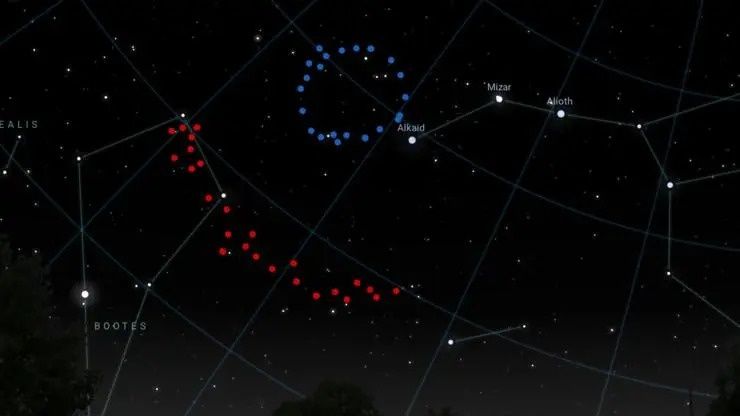
An enormous intergalactic ring-shaped superstructure of galaxies and galaxy clusters, dubbed the "Big Ring," has been discovered, spanning 1.3 billion light-years in diameter and challenging current cosmological theory. This structure, along with the even larger "Giant Arc in the Sky," raises questions about the formation of such immense superstructures and their implications for our understanding of the universe. The discovery may hint at exotic forms of known physics or even new physics, such as Conformal Cyclic Cosmology or cosmic strings, as potential explanations for these enigmatic structures.
Astronomers have discovered the highest-energy outburst of light from a pulsar ever seen, indicating potential new physics around these dense, rapidly spinning dead stars. The gamma-ray output of the Vela pulsar was found to be around 200 times more powerful than average pulsars, with gamma-ray photons reaching 20 tera electron volts (TeV). This suggests that something unexpected is happening around the Vela pulsar and its polar jets, which have been observed to stretch as far as 0.7 light-years. The team proposed several possibilities for the powerful gamma-ray emission mechanism, including accelerated particles outside the standard light-cone zones, well-structured magnetic fields, or the bulk movement of winds from neutron stars. Further investigations will be conducted to understand the acceleration and emission processes in pulsars and their implications for other highly magnetized astrophysical objects.