U.S. stock indexes jumped after employers unexpectedly cut 23,000 jobs, signaling cooling labor conditions and boosting investor bets that the Federal Reserve may pause further rate hikes.
Stocks rallied on Tuesday with the S&P 500 up nearly 6% and the Nasdaq-100 rising about 3%; bullish bets surged as one-standard-deviation out-of-the-money QQQ calls jumped 42%, the strongest single-day move in five years and ninth-largest in a decade. The rally came amid rising VIX alongside stocks, supported by robust earnings expectations (S&P Q2 earnings seen up about 47%) and improving market momentum, signaling one of the Nasdaq-100’s most bullish days in ten years.
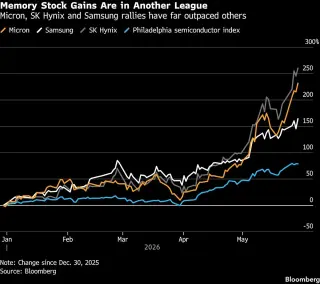
South Korea’s Kospi surged about 17.9% on Friday, led by a tech rebound as AI-related shares bounce back; SK hynix jumped around 30% after Chey Tae-won bought roughly $3 million of stock, while Samsung Electronics rose about 27%. The rally was supported by government plans to invest nearly $14 billion into AI-related assets and data centers, with earnings from U.S. tech giants also fueling sentiment.
South Korea's Kospi surged more than 16% as chipmaking stocks led a broad rally, boosting sentiment across Seoul's equity market amid renewed optimism for semiconductor demand and AI-related chip sales.
Trump’s investment accounts reportedly bought hundreds of stocks the day before he announced a 90-day tariff pause, including Apple, Microsoft, Nvidia, Amazon, and Alphabet; the trades were disclosed a year later, and the move coincided with a near-10% jump in the S&P 500 the following day, raising ethics concerns about insider information and late reporting.
SpotGamma warns that June’s catalyst-packed calendar could trigger a volatility spasm and test the nine-week stock rally: May CPI data due June 10 amid energy-cost pressures, SpaceX’s June 12 IPO with potential Russell index inclusion, and a busy mid-June schedule capped by a Fed decision and quadruple witching options expiry. The note points to stretched bullish positioning in AI names and hedging in IWM puts and SPY protection, plus notable XSP put-diagonal activity as traders seek downside protection. If upside demand eases and calls unwind, a sharper pullback could follow even as the market sits near record highs.
The AI hype-versus-reality debate heats up as a broad rally in chip and tech stocks—led by Nvidia and peers like Microsoft—pushes markets to historic highs and reshapes investor expectations about the AI boom’s sustainability.
The software stock rally continues, with the iShares Expanded Tech-Software ETF (IGV) up about 35% from April lows after Friday’s gains led by ServiceNow and Workday. Options activity is extremely bullish: IGV calls outrun puts by roughly 4-to-1, with more than 50,000 IGV calls traded and even higher volumes in individual software names, signaling strong upside bets despite some hedging. Traders compare IGV’s strength to semiconductor dispersion and expect mean reversion to persist, noting notable options contracts like the June 18 105 strike and December 90 strike as part of outsized bets.
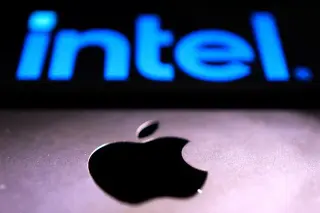
Intel stock jumped about 14% to a fresh record as a broader chip rally fueled by Apple’s report lifted semiconductor shares, with peers like AMD and Micron also posting gains and major indices climbing.
Asian shares rose on hopes that the Strait of Hormuz could reopen, keeping oil prices above $100 a barrel and sending Tokyo's Nikkei 225 up about 5.7%.
A broad market rally is being driven by short-covering in heavily shorted stocks, with Goldman Sachs’ basket up over 13% this week and S3 Partners estimating about $93 billion of shorts covered this month. While indices rise on hopes tensions with Iran may ease, gains are uneven across sectors. Earnings are expected to grow around 12% year over year, and a generally bullish SPY outlook suggests more upside if results come in strong.
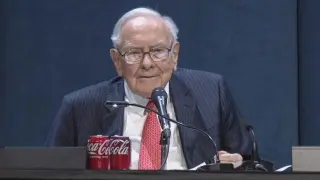
While the S&P 500 closed above 7,100 for the first time in a broad rally driven by easing fears about Iran, inflation, and earnings, Berkshire Hathaway’s A and B shares lagged, slipping about 1% month-to-date and trailing the index by roughly 9.7 percentage points—its widest gap in 2026. Berkshire has fallen more than 12% since Buffett announced plans to step down as CEO at the end of 2025, though the company remains cash-rich and has resumed stock buybacks. With Berkshire’s annual meeting looming and a new comprehensive history of Buffett and Berkshire being released, investors are watching whether Buffett’s leadership continues to influence the stock’s performance.
U.S. stocks edged higher toward fresh records as oil prices cooled, boosting investor sentiment on a market awaiting earnings and data that could push major benchmarks to new highs.
U.S. equities jumped as the S&P 500 rose about 1% to around 6,954, trading near its all-time high of 7,002.28, helped by roughly 20 leading stocks fueling the move and supported by broad strength across large-cap names and related ETFs like SPY and VOO.
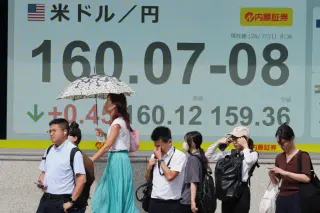
Japan’s Sanae Takaichi-led LDP won a sweeping supermajority, giving her latitude to push defense spending and tax policy; the yen firmed to about 156.9 per dollar and Tokyo stocks hit records. In U.S. markets, futures were higher and the Dow closed above 50,000 for the first time, with the S&P 500 and Nasdaq rising as tech stocks rebounded after a week of big losses totaling more than $1 trillion in market value. Other notes include a U.S.–India trade framework with agricultural access friction, Trump’s removal of a 25% tariff on Indian oil from Russia, Luckin Coffee opening its first high-end Shenzhen store, and SpaceX/xAI shaping Elon Musk’s path to a potential trillionaire fortune.