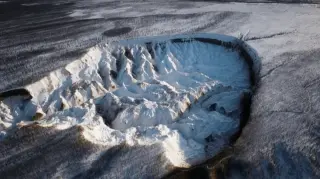
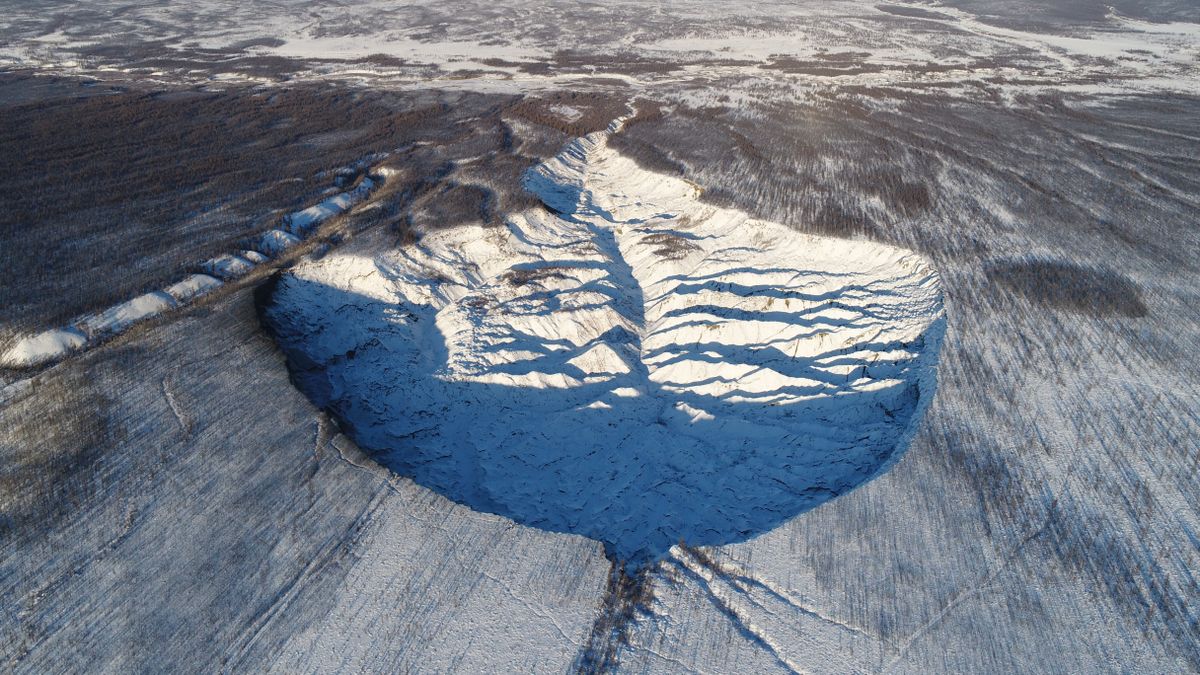
The Batagay megaslump in Siberia is widening as permafrost thaws, releasing greenhouse gases and unearthing ice-age fossils such as a 50,000-year-old mammoth and an ancient horse, highlighting climate feedback risks and ongoing paleontological discoveries.
Scientists have discovered that the permafrost in the Batagay megaslump, the largest known megaslump on Earth, is 650,000 years old, making it the second-oldest ever discovered on Earth. The slump is located in northern Yakutia, Russia, and is known to locals as the "gateway to the underworld." The permafrost can offer scientists a glimpse into animals and plants from the past, and studying it provides a window into the past and the future by showing how it responded to previous climate change events. The researchers used three dating methods to reveal the age of the permafrost layers and are analyzing any ancient DNA that might still remain.