
Tag

Multiomics

All articles tagged with #multiomics

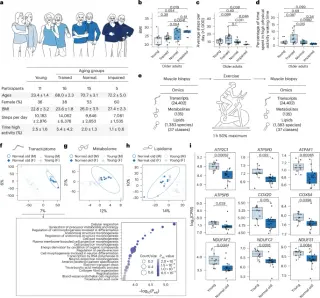
Exercise training slows molecular aging in human muscle and preserves energy metabolism
science11 days ago

Exercise training slows molecular aging in human muscle and preserves energy metabolism

Regular physical training reshapes age-related muscle molecular profiles: trained older adults show about half of the age-related declines in energy metabolism gene expression disappear, producing aging muscle signatures similar to younger individuals. While acute exercise triggers immune and stress responses in everyone, the strength of these responses in older adults correlates with fitness. Integrated multi-omics reveal links between mitochondrial respiration, lipid metabolism, stress responses, and NAD+ biology, suggesting that sustained training decelerates molecular aging and preserves energy metabolism while enhancing exercise responsiveness in aging muscle.

A 117-Year-Old's Biology Challenges Our View of Aging
science1 month ago

A 117-Year-Old's Biology Challenges Our View of Aging

Scientists studied Maria Branyas, the oldest verified person, through genome, proteome, epigenome, metabolome, transcriptome, and microbiome analyses. They found a paradox: signs of advanced aging (short telomeres, pro‑inflammatory immunity, clonal hematopoiesis) coexisted with protective traits (genetic variants linked to immune fitness and brain/heart protection, favorable lipid metabolism, very low inflammation, and a gut microbiome rich in Bifidobacterium). Epigenetic clocks suggested her cells behaved younger than her years by as much as about 23 years in some measures, implying aging and disease can be decoupled at the molecular level. The study warns that extreme longevity likely requires a rare genetic-lifestyle-environment blend and points to biomarkers for healthy aging as potential strategies to extend life expectancy.

New AI Blood Test Flags Six Heart Diseases Up to 15 Years Early
technology1 month ago

New AI Blood Test Flags Six Heart Diseases Up to 15 Years Early

Researchers at the University of Hong Kong developed CardiOmicScore, an AI-powered blood test that uses multiomics data (genomics, metabolomics, proteomics) to predict the future risk of six major cardiovascular diseases up to 15 years before symptoms appear, outperforming traditional polygenic risk scores and enabling earlier, proactive prevention.