Sandisk shares dropped 12% on Tuesday after an analyst lowered his price target, reflecting broader fears about AI memory demand. The stock is down 70% from its June peak despite strong data center revenue growth.
Sandisk shares have fallen approximately 70% from their June 2026 peak, reaching $87.71 after an 8-for-1 stock split. Despite a sharp decline, the company reported robust fiscal Q1 revenue of $11.03 billion and data center sales surging 1,682% year-over-year. Analysts are divided on whether the current valuation offers a margin of safety or signals a deeper cyclical downturn in the NAND memory market.
Micron Technology shares trade near $690, up 201% in a year, driven by AI memory demand and tight supply. Analysts predict a 2028 price range of $610 to $1,040, assuming earnings peak before new capacity ramps. Recent NAND price weakness has spooked investors, with SanDisk falling 14% on bearish forecasts, highlighting sector volatility.
SanDisk shares dropped 4% to $763.41 on November 18, 2026, following a GF Securities warning of a NAND flash glut. The decline occurred just days before the company’s 8-for-1 stock split takes effect. While SanDisk remains up 222% year-to-date, peers Micron and Seagate also fell, reflecting broader concerns about memory supply oversupply despite strong recent earnings.
SanDisk shares plummeted 18% on November 5, 2026, following a Democratic sweep of Congress that raised fears of AI infrastructure regulation. Despite reporting record Q1 FY2027 revenue of $11.03 billion and beating estimates, the stock remains down 47% since July. Analysts debate whether the drop reflects a value trap or a peak-cycle correction, with some citing strong long-term contracts as a buffer against policy risks.
SanDisk announced an 8-for-1 stock split effective November 20, 2026, following a fiscal Q1 revenue jump of 23% to $11.0 billion. While the company’s stock has risen 551% over the past year, it currently trades 43% below its June peak. Historical data suggests stocks splitting near their highs tend to perform well, but SanDisk’s current valuation and slowing growth rate resemble companies that underperformed after similar announcements.
A severe memory chip shortage, driven by AI data center expansion, has reversed the negotiating power between Apple and its flash storage suppliers. Once dominant in pricing, Apple now faces higher costs, leading to price increases across its product lineup and margin pressures.
SanDisk shares dropped 13% to close at $1,150.89 on October 30, 2026, following the release of its fiscal first-quarter earnings. Although the company reported strong datacenter demand and beat estimates, investors focused on consumer revenue declines, limited ability to reallocate wafer supply, and competitive pressures. Management highlighted AI-driven NAND demand and improved revenue visibility through customer agreements, but market concerns over valuation and supply constraints led to a sharp sell-off.
SanDisk reported strong third-quarter results, beating revenue and earnings estimates, and announced an 8-for-1 stock split effective November 19. The company’s performance was driven by robust demand for NAND flash memory in AI data centers, with management citing multiyear supply contracts that secure significant future revenue. While the stock has surged over 460% year-to-date, it has recently stabilized after a sharp peak in June.
SanDisk reports fiscal Q1 2027 results on October 29, facing a 32% monthly stock decline despite record revenue and margins. The market questions if the AI storage boom is peaking, while analysts point to long-term contracts and strong guidance as evidence of sustained demand.
Sandisk shares dropped nearly 30% in a month amid fears that AI infrastructure spending is unsustainable. However, TSMC and ASML recently reported strong earnings and raised forward guidance, signaling that AI demand remains resilient. This supports continued growth in NAND storage requirements for inference workloads. Sandisk's advancing BiCS technology and upcoming fiscal Q1 earnings are expected to drive a recovery.
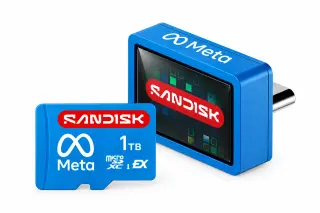
Meta and Sandisk have partnered to offer official 'Made for Meta' microSD cards and USB-C flash drives for the upcoming Meta VR Glasses. The headset, launching in Spring 2027 at $1,300, will feature 128GB of internal storage but support microSD cards up to 1TB. Sandisk will be the exclusive provider of these certified accessories, allowing users to expand capacity without increasing the base device price. This move addresses rising NAND flash costs by shifting storage expenses to consumers who require larger capacities, while keeping the entry-level price competitive.
Memory chip price increases are decelerating sharply, with DDR4 contract prices rising only 4% in September and NAND flash prices nearly flat. While Micron reported record revenue, its earnings surprise narrowed, and analysts debate whether this signals a peak in the current supercycle or a temporary pause before further gains.
SanDisk stock returned 1,493% in the twelve months ending October 1, 2026, driven by a sharp rise in NAND flash memory prices rather than volume growth. The company’s fiscal 2026 revenue reached $20.2 billion, up 175%, while operating margins expanded from 6.9% to 62%. Management attributes the surge to supply constraints and surging demand from data centers, which now account for 38% of memory sales, up from 12% a year earlier. While prices remain elevated, management expects only modest increases in fiscal Q1 2027, signaling a potential slowdown in the pricing cycle.
Sandisk shares have risen 644% this year, driven by AI-fueled demand for memory. Rosenblatt analyst Kevin Cassidy initiated coverage with a Buy rating and a $2,400 price target, citing a shift from commodity storage to critical AI infrastructure. Wall Street expects memory chip prices to rise over 20% in Q3, with DRAM and NAND remaining undersupplied into 2027.