
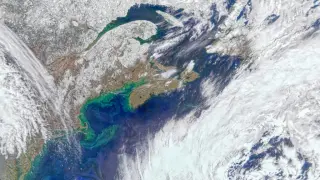
Microscopic Ocean Life, Not Forests, Drives Half of Earth's Oxygen Production
Phytoplankton, microscopic organisms in the sunlit ocean, generate approximately half of the oxygen produced annually on Earth, rivaling all terrestrial forests combined. While forests store carbon, phytoplankton operate on a rapid turnover cycle, producing and consuming oxygen at similar rates. This balance means the atmosphere's oxygen is a long-term geological accumulation, not a daily output from any single ecosystem. NASA's PACE satellite, launched in 2024, now helps map these invisible producers by analyzing ocean color, revealing how nutrient availability and light penetration drive global productivity. Although phytoplankton are critical for marine food webs and carbon cycling, their oxygen contribution is offset by respiration and decomposition, challenging the myth that the Amazon acts as a net oxygen source for the planet.