Diamond melts under extreme pressure, aligning with theory and boosting fusion energy prospects
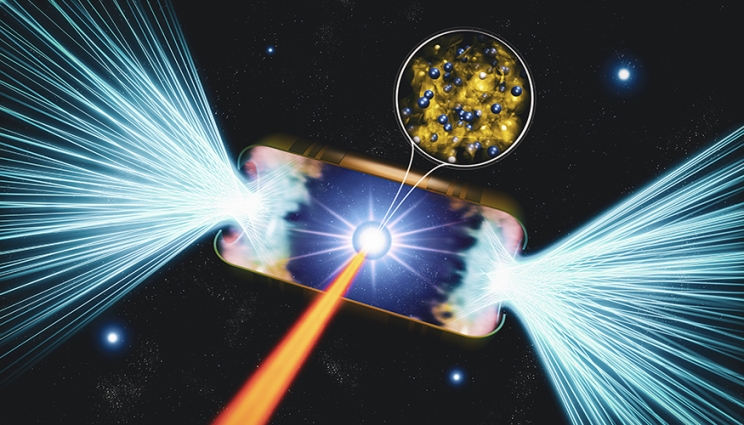
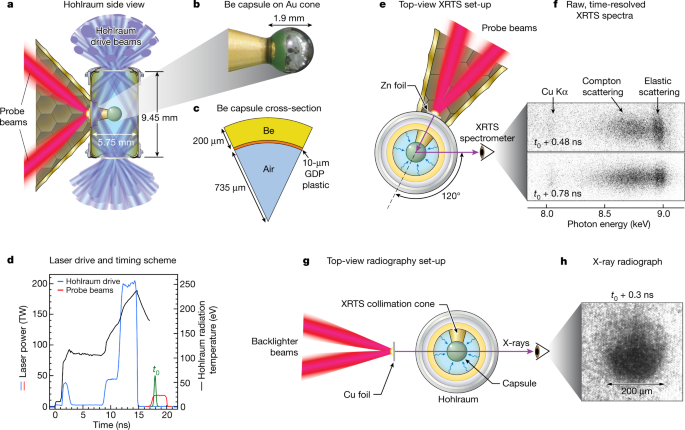
LLNL researchers used the Omega Laser Facility to shock-compress synthetic diamond up to about 1 terapascals, directly observing melting via X-ray diffraction and finding the diamond retains its cubic structure all the way to melting. The results resolve a ~20-year gap between experiments and theory, show that a weaker initial shock could fully melt diamond in NIF implosions to improve fuel compressibility and energy yield, and provide tighter constraints on carbon behavior under extreme pressures relevant to ice-giant interiors (diamond rain).