An open-source tool called nxnative allows users to run Nintendo Switch games natively on iPhones, iPads, and Macs by leveraging shared Arm architecture, bypassing traditional emulation.
Apple confirms Notion will migrate its UI to SwiftUI to gain performance and UI consistency, marking a major shift away from its Electron/web stack. Notion has already been moving its mobile apps to native, with the editor still largely web-based; Apple touts AI-assisted tooling and broader SwiftUI improvements that unify SwiftUI with AppKit and UIKit, boost layout speed and caching, and add features like drag-to-reorder, swipe actions, and full text selection for developers.
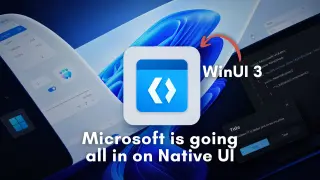
At Build 2026, Microsoft signaled a shift toward native Windows 11 apps by doubling down on WinUI, forming a dedicated team, and planning to rewrite key UI components in native code while de-emphasizing web-based approaches. The company aims to fix WinUI gaps, improve performance and memory use, and reduce tearing, with upcoming enterprise features like DataGrid and Charting, plus AI-assisted development workflows to encourage developers to build modern Windows apps using WinUI rather than web frameworks.
Microsoft is refocusing Windows 11 on fundamentals—speed, quality, and a native-first UX—after acknowledging user friction and ads in setup. Satya Nadella pledges to win back fans, while internal teams push to move away from web wrappers toward native WinUI experiences, start menu improvements, and faster, leaner updates. The plan aims to reduce RAM usage, unify the ecosystem around 100% native apps, and position Windows as a base for on-device AI, with 1.6 billion active Windows devices and an ongoing rollout of 18+ improvements in 2026.
Microsoft is forming a new team led by Rudy Huyn to develop Windows 11 apps that are 100% native, moving away from web-based wrappers and PWAs. The shift aims to improve performance and UI consistency as part of a broader Windows 11 update focused on faster File Explorer launches, quicker context menus, and a redesigned Start menu and taskbar. Details on which apps will be rebuilt and how strictly “100% native” will be enforced remain forthcoming.
Microsoft says Windows 11 will get 100% native apps and is forming a dedicated team to build them, potentially using WinUI and moving away from web-based components. The update rollout will also include OS improvements like faster context menus, quicker File Explorer, and a WinUI-based Start menu with a movable/resizeable taskbar. It’s unclear whether all future apps will be fully WinUI-native or if existing web apps will be migrated, and some developers question the 100% native claim as current apps often mix WebView components.
A survey of popular apps reveals that none will be available as native apps on the Apple Vision Pro at launch, with just over one-third available in compatibility mode. Notable apps like Spotify and Netflix have opted out, while others like Disney+ may become available later. The survey also found that several Apple apps may be available in compatibility mode, but it's unclear for some. Despite the limited availability of popular apps, indie developers are expected to offer high-quality apps for the new platform.
The Stocks app on the Apple Watch has been redesigned in watchOS 10, offering a new user interface and a richer experience. The app now provides more information at a glance, including price change, percentage change, and market cap. Users can switch between day, month, and year performance charts, and easily add stocks to their watchlist. The app syncs between the Apple Watch and iPhone, and continues to use Yahoo for its data.
Apple TV will have native VPN app support in tvOS 17, which means users won't have to install a VPN on their router to use it. This feature is not available on Google's Chromecast or Amazon's Fire TV devices. Other new features in tvOS 17 include enhanced dialogue, Dolby Vision 8.1 support, and updates to Apple Fitness+.