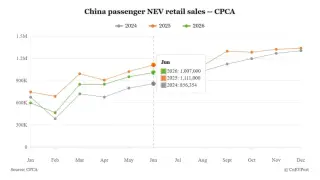
China’s NEV retail sales fell for the sixth consecutive month in June 2026, even as exports surged, underscoring a divergence between domestic demand and overseas demand in the electric-vehicle market according to CPCA data cited by CnEVPost.
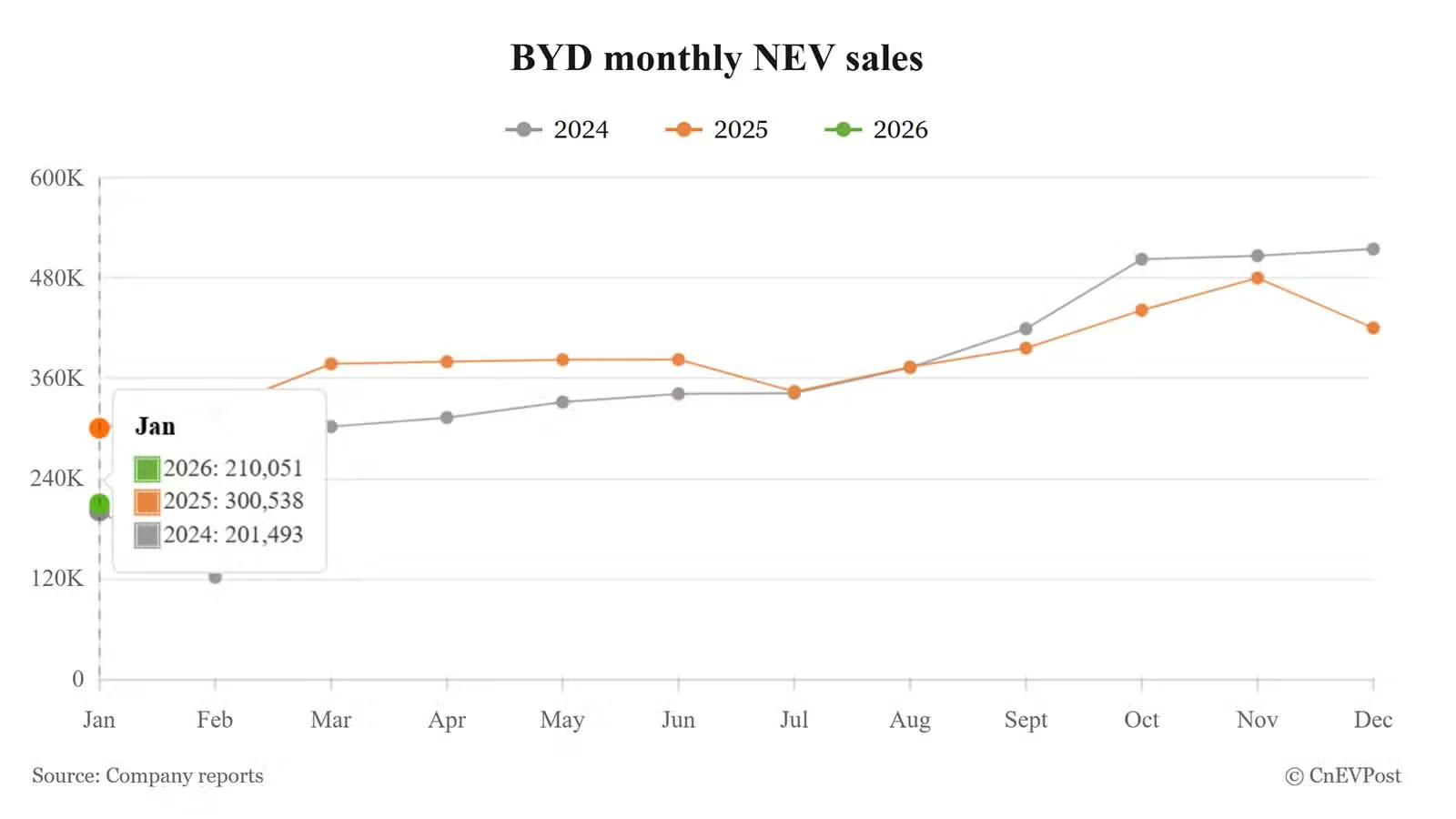
BYD sold 210,051 NEVs in January 2026, down 30.11% YoY and 50.04% MoM as demand softens amid policy changes; passenger NEVs were 205,518 (BEVs 83,249; PHEVs 122,269), commercial NEVs rose 10.78% YoY to 4,533; overseas passenger NEV sales reached 100,482 (+51.47% YoY); January battery installations were 20.187 GWh (+30.15% YoY) as BYD targets about 1.3 million overseas vehicle sales in 2026.
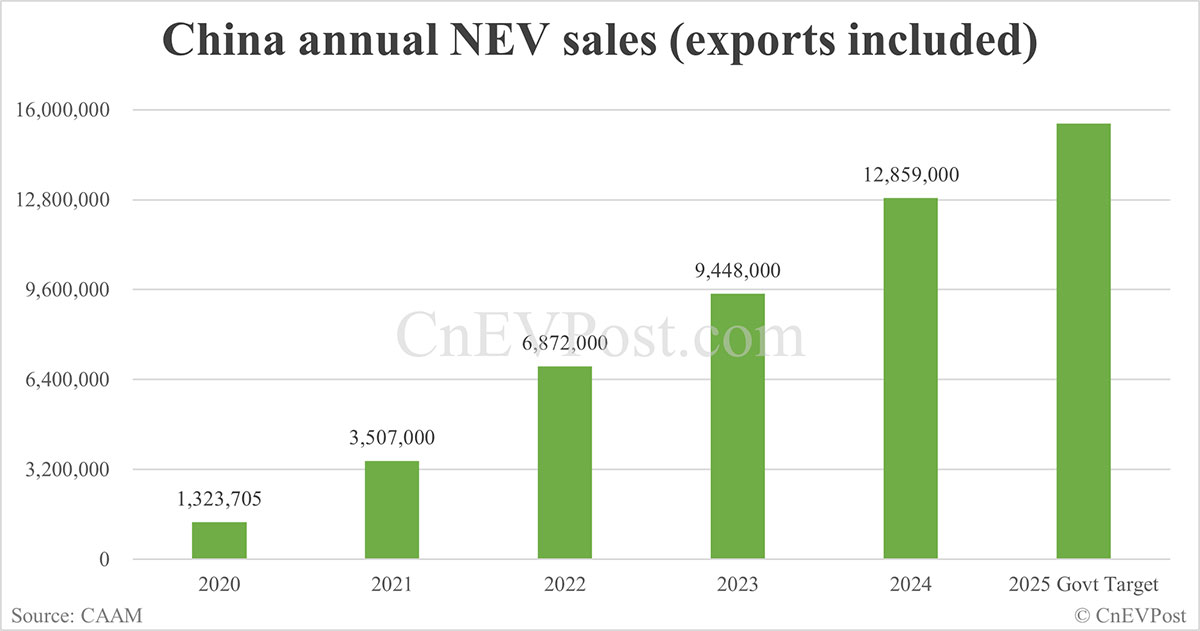
China aims to sell about 15.5 million new energy vehicles (NEVs) in 2025, with a 20% annual growth, targeting a 48% NEV penetration rate, as part of a broader automotive industry growth plan amid global challenges.
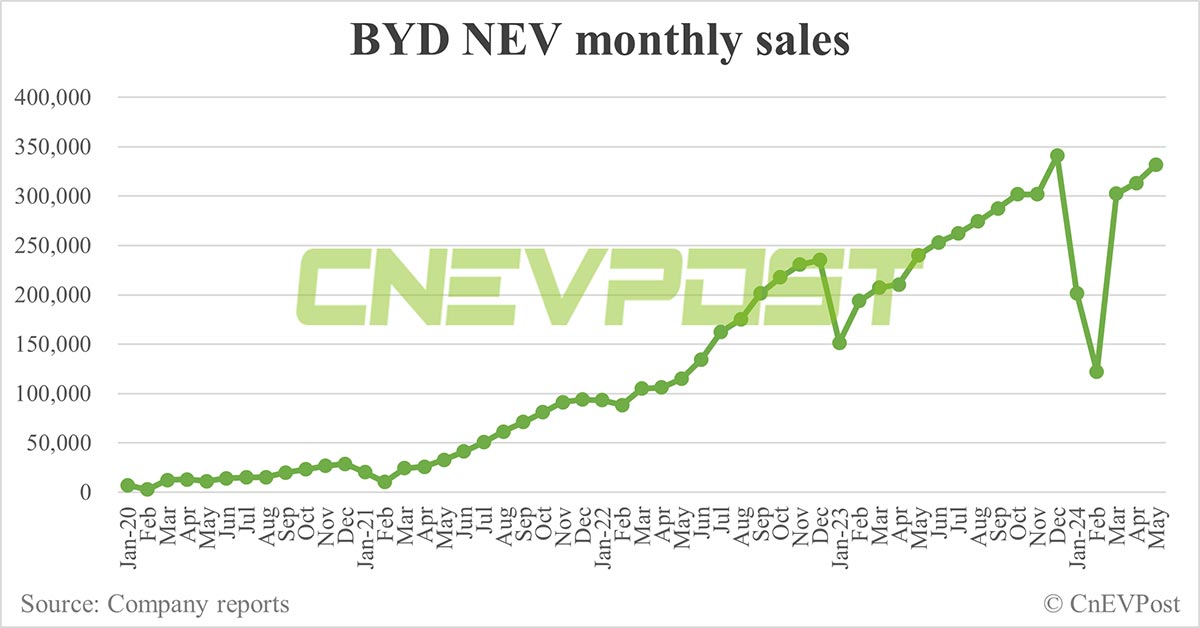
BYD sold 331,817 new energy vehicles (NEVs) in May, marking a 38.13% year-on-year increase, with plug-in hybrid electric vehicle (PHEV) sales hitting a record high for the third consecutive month. The company's focus on PHEVs over battery electric vehicles (BEVs) reflects market trends favoring hybrids. BYD also unveiled its fifth-generation DM technology and new models to strengthen its market position. Despite strong domestic sales, overseas sales saw a slight decline from April.
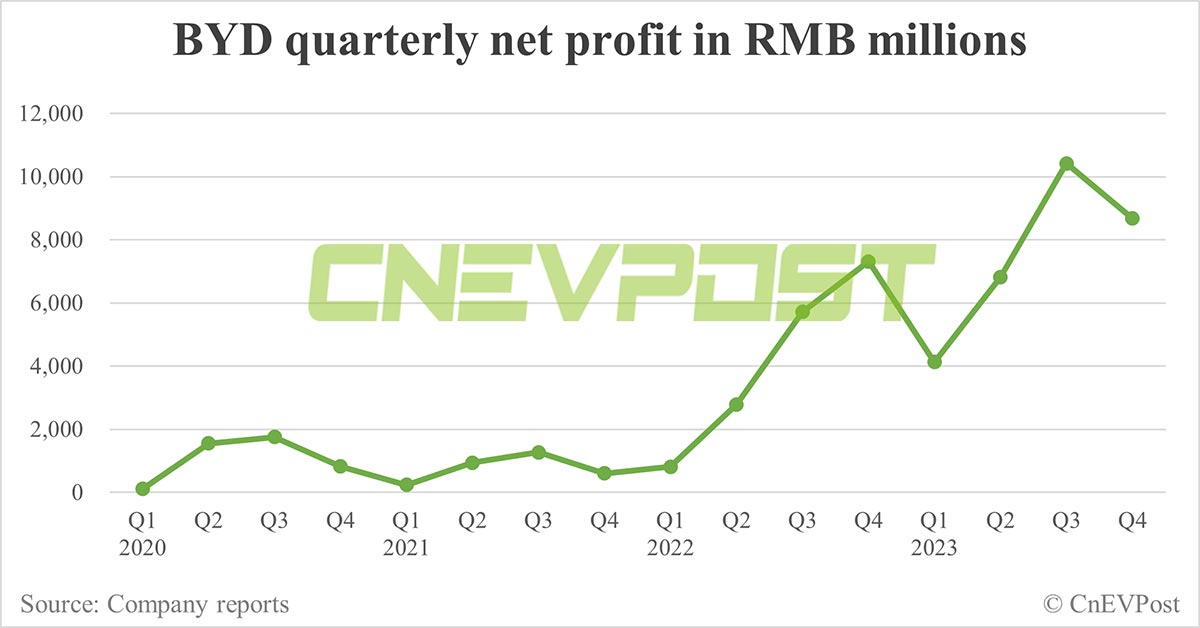
Despite achieving record sales and revenue, Chinese NEV maker BYD's net profit slipped in the fourth quarter of 2023, possibly due to a price war and dealer incentives. The company reported a net profit of RMB 8.67 billion, down 16.70 percent from the third quarter, while achieving record revenue of RMB 180 billion. BYD sold 944,779 NEVs in the fourth quarter and 3,024,417 NEVs in 2023, meeting its sales target of 3 million units. The company's full-year revenue for 2023 was RMB 602.3 billion, with a net profit of RMB 30 billion, representing an 80.72 percent increase year-on-year.
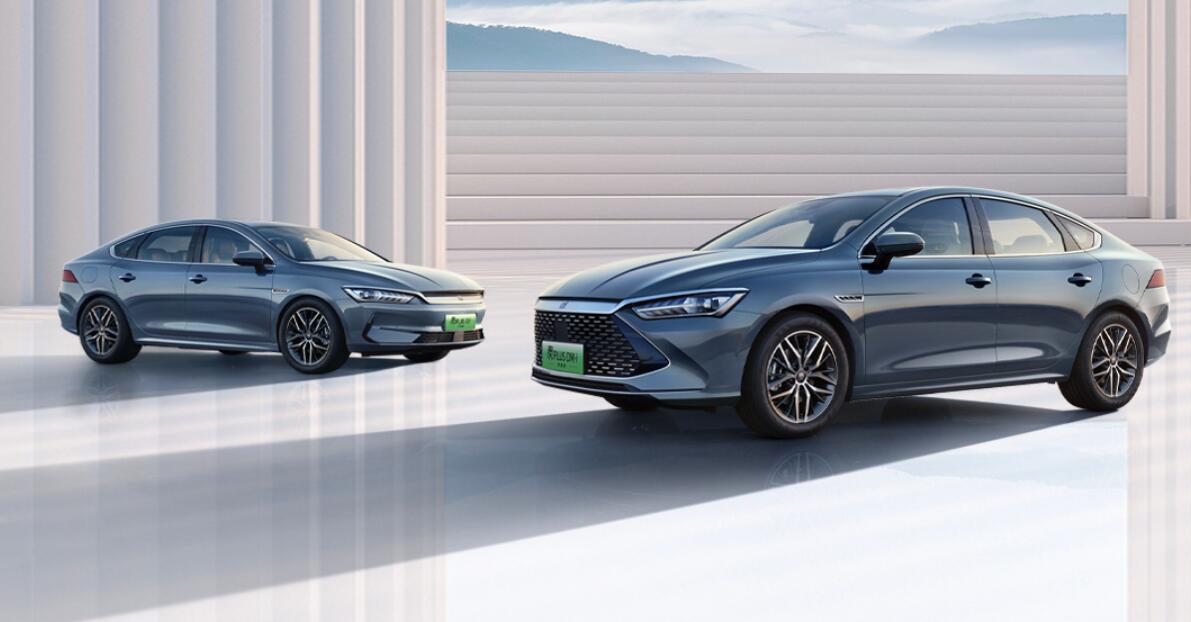
BYD has launched lower-priced variants of its entry-level sedans, the Qin Plus Glory Edition and the Chaser 05 Glory Edition, with starting prices of RMB 79,800, undercutting traditional fuel models. This move marks the company's second strong offensive against fuel cars, aiming to disrupt the market. The NEV maker's EVs are priced lower than fuel cars, signaling a potential price war in the A-class market.
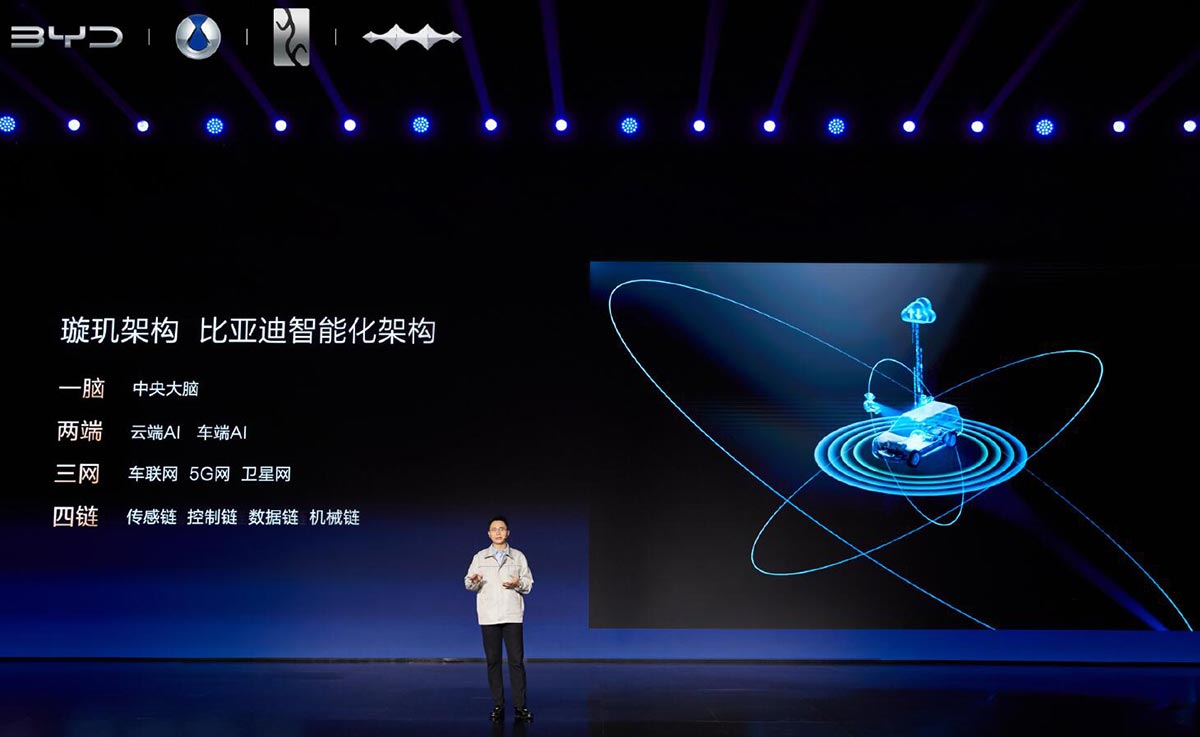
Chinese automaker BYD unveils its vehicle intelligence strategy, including the Xuanji Architecture, and plans to invest over $14 billion in vehicle intelligence to lead the way in new energy vehicle (NEV) development. The strategy encompasses various technologies such as central brain, cloud-based AI, vehicle networking, and smart driving systems, with a focus on expanding computing power and developing advanced driving systems. BYD aims to make high-level intelligent driving systems standard on its higher-priced models and plans to launch over 10 LiDAR-equipped models in 2024.
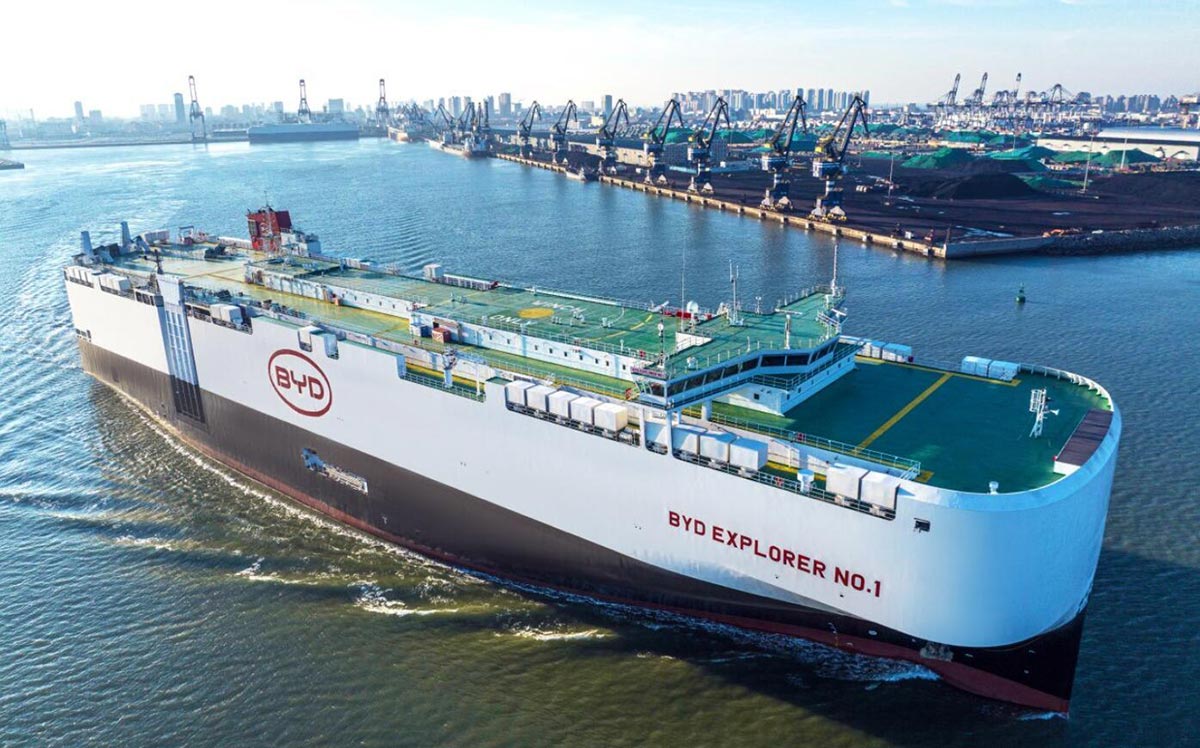
BYD's first roll-on roll-off (ro-ro) car carrier, BYD Explorer No.1, has set sail fully loaded, marking the company's expansion into overseas markets. The vessel, with a capacity of 7,000 standard parking spaces, is the first of eight ro-ro vessels to join BYD's fleet in the next two years. The NEV maker also achieved record sales in 2023, selling over 3 million NEVs, with a significant increase in overseas sales.