Tag

Nuclear Forensics

All articles tagged with #nuclear forensics

Fireball Forge: A New Iron-Silicon Alloy Emerges from Hiroshima Debris
science23 days ago

Fireball Forge: A New Iron-Silicon Alloy Emerges from Hiroshima Debris

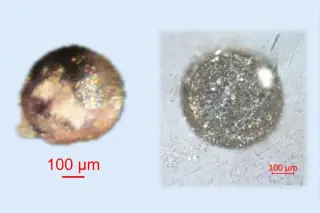
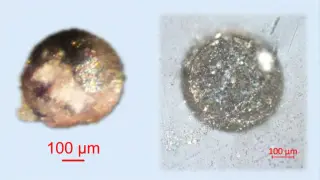
Scientists studying Hiroshima fallout discovered a previously unknown iron–silicon alloy inside hiroshimaites, glassy particles formed in the fireball. The alloy’s structure is near-quasicrystalline and likely crystallized from rapidly cooled metallic vapors—a process not yet reproducible in labs. Similar blast-derived quasicrystals were found in Trinity’s trinitite, underscoring how extreme detonations can create unique materials. These materials serve as a time capsule for rapid alloy formation and could inform future alloy design and planetary impact research, per the Science Advances study led by Luca Bindi.
Tiny Hiroshima Grain Reveals a Novel Silicon-Rich Iron Alloy
science29 days ago

Tiny Hiroshima Grain Reveals a Novel Silicon-Rich Iron Alloy

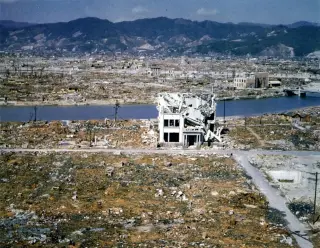
A glassy bead from Hiroshima Bay contains a microscopic grain that preserves a previously unknown silicon-rich alloy of iron, chromium, nickel, manganese, molybdenum, silicon, and aluminum, formed when city materials vaporized in the fireball and cooled rapidly. Using single-crystal X-ray diffraction, researchers found an ordered AlAu4-type structure, an unusual arrangement for iron-rich alloys, suggesting the blend of materials from urban debris can crystallize into exotic, highly ordered phases in seconds. While this could aid nuclear forensics by linking grains to blast conditions and temperatures, the finding is based on a single tiny grain and is not yet a practical alloy recipe.

Silicon-Rich Multicomponent Alloy Found in Hiroshima Blast Debris
physics-and-chemistry1 month ago

Silicon-Rich Multicomponent Alloy Found in Hiroshima Blast Debris

A Science Advances study reports the discovery of a previously unknown, silicon-rich multicomponent alloy formed inside microscopic grains called ‘hiroshimaites’ created by the Hiroshima atomic blast. The highly ordered tiny crystal demonstrates that extreme, rapid quenching from nuclear detonations can forge new crystalline materials, potentially encoding diagnostic information about the device, environment, and detonation conditions, with implications for nuclear forensics and materials science.

World's First Nuclear Bomb Test Creates 'Impossible' Crystal
science-and-technology2 years ago

World's First Nuclear Bomb Test Creates 'Impossible' Crystal

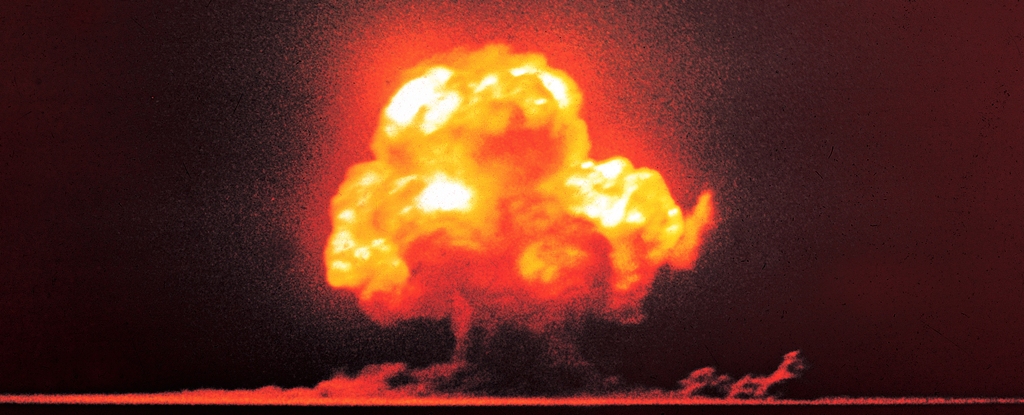
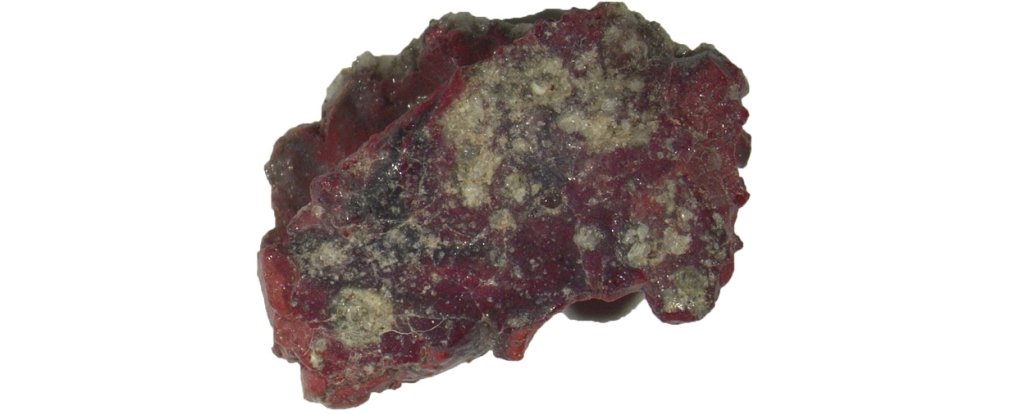
Scientists have discovered a quasicrystal, a rare form of matter once thought to be impossible, in a sample of red trinitite created during the world's first nuclear bomb test in 1945. Quasicrystals are formed in extreme environments that rarely exist on Earth and require traumatic events with extreme shock, temperature, and pressure. The discovery of this quasicrystal in trinitite could provide insights into nuclear explosions and help in understanding illicit nuclear tests. It also suggests that there may be other natural pathways for the formation of quasicrystals, such as lightning strikes and meteor impact sites. The thermodynamic properties of quasicrystals could be a valuable tool for nuclear forensics.

The Atomic Origins of Trinitite Rock.
science3 years ago

The Atomic Origins of Trinitite Rock.

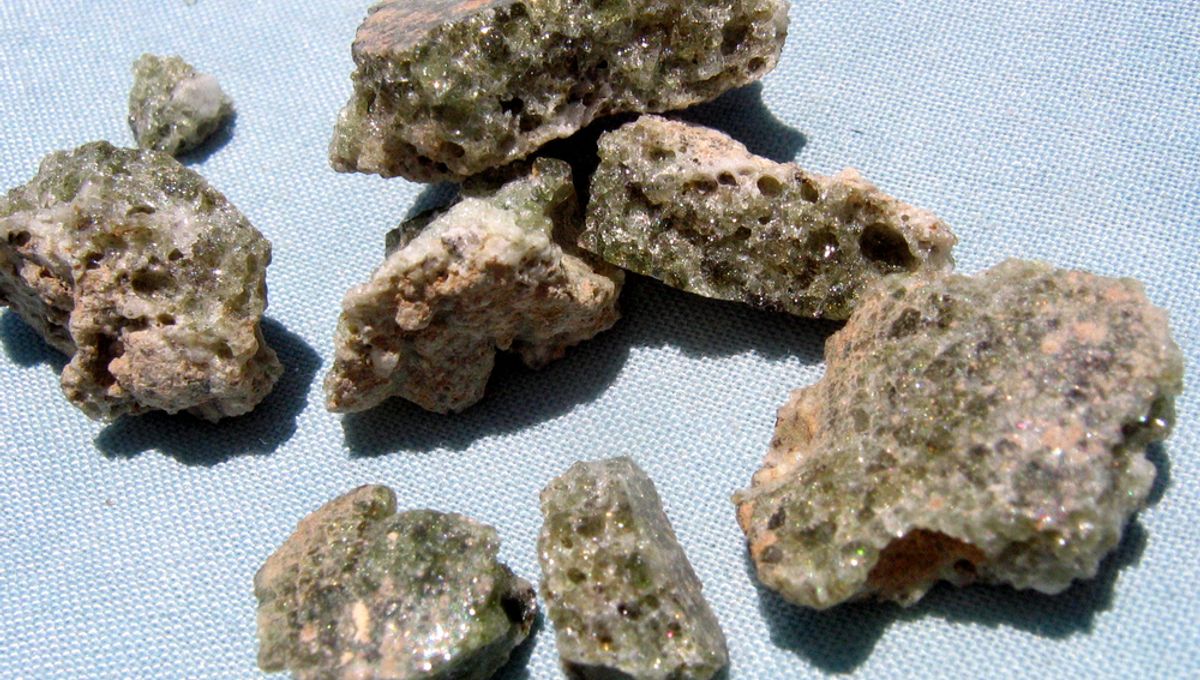
Trinitite is a green-red glass formed by sand that was melted by the heat of atomic bombs. It contains silicate dioxide, melted quartz grain, feldspar, and other minerals. Trinitite is mildly radioactive and can be used as forensic evidence to understand the composition and origin of nuclear bombs. Scientists have recently discovered that it contains "forbidden" quasicrystals, which have an unusual atomic structure not seen in typical crystals. Quasicrystals are known to be formed by meteorites and in labs, but atomic blasts also pack enough punch to create them.