Tag

Open Weight

All articles tagged with #open weight

China's Open-Weight AI Gamble: Free Models, Expensive Reality
technology18 minutes ago

China's Open-Weight AI Gamble: Free Models, Expensive Reality

China’s open-weight AI push isn’t open-source software; it spreads capability but rarely generates profits because each extra user inflates costly compute and data-center needs, so model creators earn little from the models themselves. Firms like Zhipu (GLM 5.2) and MiniMax posted big losses on modest revenue, Moonshot paused sign-ups after launching K3 due to lack of compute, and most money comes from hosting/inference rather than selling software. Intense domestic price competition compounds the problem, shifting profits to infrastructure operators. Still, Beijing’s openness rhetoric and policy backing suggest a longer-term strategic objective, even if near-term profitability remains uncertain.

Alibaba's Qwen 3.8: open-weight AI aims for frontier parity behind Fable 5
technology1 day ago

Alibaba's Qwen 3.8: open-weight AI aims for frontier parity behind Fable 5

Alibaba unveils Qwen 3.8, a 2.4-trillion-parameter open-weight AI model that the company says can match frontier models and sit just behind Fable 5. It supports multimodal inputs (images, videos, documents), promises improved coding and productivity tasks over Qwen 3.7-Max, and will offer open weights soon with a preview of Qoder at 10% of standard pricing.

Moonshot Kimi K3 Sparks US Open-Source AI Debate
technology1 day ago

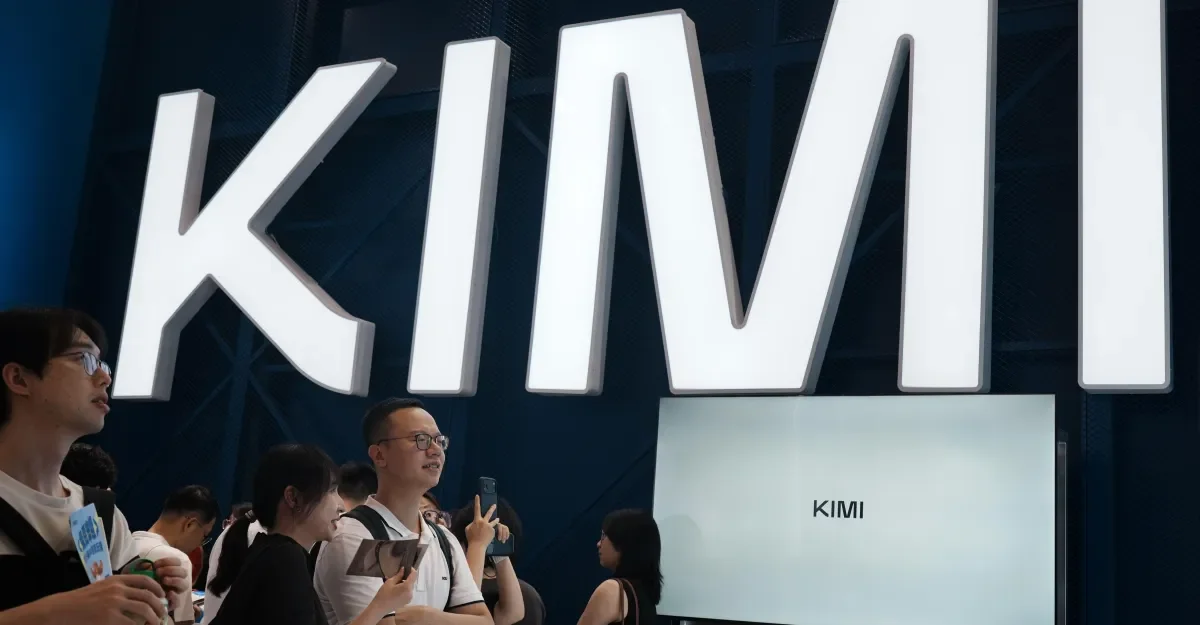
Moonshot Kimi K3 Sparks US Open-Source AI Debate

Moonshot AI's Kimi K3 model—lauded for strong benchmarks at a fraction of US cost—reignited the open vs. closed AI battle in the US, as open-weight Chinese models draw scrutiny from American labs and policymakers. A top OpenAI executive's comments about regulatory risk around open Chinese models intensified the debate, drawing backing from open-source advocates who argue openness drives innovation while critics warn of national-security risks and regulatory capture. The broader takeaway: China leans into open-source AI, while many US labs favor closed systems, fueling ongoing policy tensions.

Open-weight AI reshapes the race as China surges ahead
technology2 days ago

Open-weight AI reshapes the race as China surges ahead

Chinese labs led by Moonshot AI are accelerating the shift to cheaper, open-weight AI that users can download and run locally; OpenRouter rankings show Chinese models occupying the top five spots, signaling a move from premium, centralized models to customizable, low-cost solutions and pressuring Silicon Valley incumbents to adapt, with wide implications for enterprise AI spending and future IPO dynamics.

Thinking Machines Launches Inkling, a 975-Billion-Parameter Open-Weight AI Model
technology5 days ago

Thinking Machines Launches Inkling, a 975-Billion-Parameter Open-Weight AI Model

Thinking Machines Lab released Inkling, a 975-billion-parameter open-weight AI model trained from scratch to understand text, audio, and video; it is downloadable and modifiable to encourage broader research and competition with OpenAI and Anthropic, while illustrating a move toward decentralized AI development, with Inkling’s reasoning explanations becoming more concise over time to boost efficiency.

Cheaper Chinese AIs Reshape Corporate AI Buying
business7 days ago

Cheaper Chinese AIs Reshape Corporate AI Buying

Faced with rising AI bills, major firms like DoorDash, Airbnb, and Siemens are turning to cheaper Chinese models (DeepSeek, Z.ai) over US rivals such as Claude and ChatGPT, bolstered by their open-weight customization. The shift is driven by cost savings and flexibility, even as concerns about data control and trust in US AI leadership persist, reflected in extreme spending per employee and incidents like the Mythos ban.

The AI price split: why the middle market is disappearing
technology2 months ago

The AI price split: why the middle market is disappearing

OpenAI’s GPT-5.5 pricing (about $5 input, $30 output per million tokens) and DeepSeek’s open-weight V4-Pro/Fl­ash offerings have created a two-cluster AI market, widening the cost gap between a closed, vendor-managed product and cheaper, open infrastructure. The once-smooth price-performance curve now shows a thinning middle, forcing developers to route workloads across the high-end integrated stack and the lower-cost open-weight stack, and reshaping how AI agents and coding assistants are built and deployed.

DeepSeek’s Open-Weight Leap Prompts a China-Driven Reboot of the AI Arms Race
technology5 months ago

DeepSeek’s Open-Weight Leap Prompts a China-Driven Reboot of the AI Arms Race

DeepSeek’s open-weight R1 stunned markets by matching elite LLMs at a fraction of the cost, triggering a $750 billion drop in the S&P 500 and a $590 billion hit to Nvidia on one day in 2025. Yet the story didn’t end there: U.S. hyperscalers plan over $600 billion in AI infrastructure for 2026, while Chinese firms push efficiency with open-weight models like Alibaba’s Qwen, seeding global adoption and capital inflows back to China. Critics say the real change is on the Chinese side, where cheaper, efficient architectures and state-driven AI policy are reshaping the race, even as the U.S. maintains a hardware edge and export controls. The long-run winner may hinge on whether scale or smarter design proves most valuable.