Tag

Partial Lunar Eclipse

All articles tagged with #partial lunar eclipse

Aug. 27–28, 2026: Deep Partial Lunar Eclipse Sparks Worldwide Skywatching
stargazing1 month ago

Aug. 27–28, 2026: Deep Partial Lunar Eclipse Sparks Worldwide Skywatching

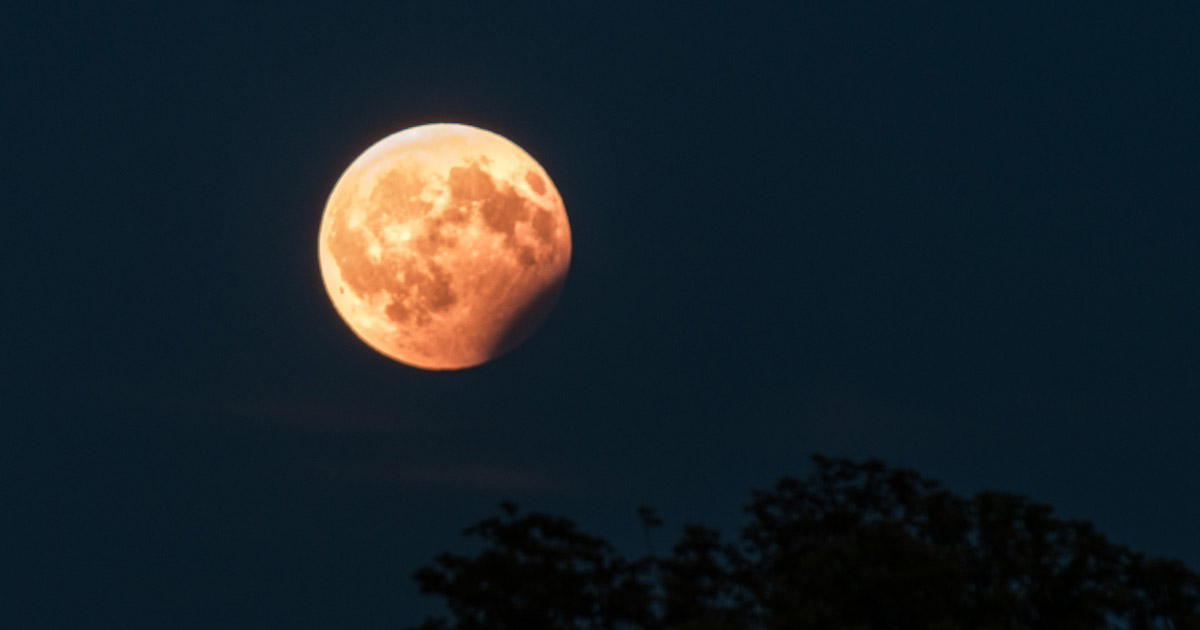
Space.com reports a deep partial lunar eclipse on Aug. 27–28, 2026, with up to 96.2% of the Moon’s disk entering Earth’s umbra—the deepest such event until 2028—visible across the Americas, Europe, and Africa. The maximum occurs late on eclipse night (beginning around 9:23 p.m. EDT on Aug. 27), and readers are guided to viewing tips, key timings, and multiple livestreams to watch online if skies are cloudy. The piece also covers why August’s full moon is called the Sturgeon Moon and offers photography tips for capturing the event.
Moon turns red in a 96% partial lunar eclipse late Thursday into Friday
science1 month ago

Moon turns red in a 96% partial lunar eclipse late Thursday into Friday

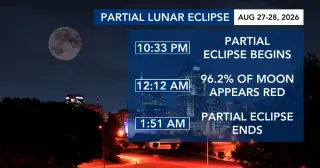
A partial lunar eclipse will occur late Thursday night into Friday morning (Aug 27–28, 2026), with up to 96% of the Moon entering Earth’s umbra and turning a reddish hue. The event starts with a penumbral phase around 9:24 p.m., the umbra begins about 10:34 p.m., 50% of the Moon in shadow by 11:15 p.m., and the maximum near 12:12 a.m. (about 96% in umbra). The eclipse tapers off in the early hours, with the red tint most visible after about 10:33 p.m. Viewers are encouraged to watch and share photos when possible.

The Almost-Blood Moon: Deep Partial Lunar Eclipse on Aug 27–28, 2026
stargazing1 month ago

The Almost-Blood Moon: Deep Partial Lunar Eclipse on Aug 27–28, 2026

Space.com’s live coverage explains the Aug. 27–28, 2026 deep partial lunar eclipse, when up to 96.2% of the Moon will be in Earth's umbra and take on a reddish hue. The piece notes the event is visible from most of the night sky, with the Americas offering the best views, and provides viewing tips that require no special gear beyond binoculars or a telescope for a closer look, plus reminders that this is the deepest partial eclipse until 2028 and will be followed with live updates.

Skywatchers brace for 2026’s deepest partial lunar eclipse
stargazing1 month ago

Skywatchers brace for 2026’s deepest partial lunar eclipse

Space.com’s live coverage explains that the Aug. 27–28, 2026 partial lunar eclipse will see up to 96.2% of the Moon enter Earth's umbra, producing a deep reddish hue and marking the deepest such event until 2028. Visible across the Americas, Europe, Africa and parts of western Asia, it’s a skywatching can’t-miss that will require clear, dark skies and a good view of the western horizon; Space.com will provide latest news and practical viewing tips for peak viewing.

Bitten Moon: August 27, 2026 Partial Lunar Eclipse Feeds a Bright Rim, Not a Red Disk
science1 month ago

Bitten Moon: August 27, 2026 Partial Lunar Eclipse Feeds a Bright Rim, Not a Red Disk

A deep partial lunar eclipse on August 27–28, 2026 will see about 93% of the Moon’s diameter enter Earth’s umbra, producing a striking “bitten” look as a bright rim remains visible rather than a red Moon. The 96% figure you may see refers to area, not width, and the Moon never reaches totality (greatest eclipse around 04:13 UTC). This event is one of the deepest partial eclipses of 2021–2030, not a blood Moon, and the Danjon brightness scale doesn’t apply here. Timing for observers varies by location, with Americas facing the deepest phase at night on the 27th; the next total lunar eclipse won’t occur until June 26, 2029.

"Full Hunter's Moon and Jupiter Align for Spectacular Sky Show"
skywatching2 years ago

"Full Hunter's Moon and Jupiter Align for Spectacular Sky Show"

The full Hunter's Moon will coincide with a partial lunar eclipse, providing a spooky spectacle for skywatchers in Africa, Europe, Asia, and parts of Western Australia. The eclipse will begin at 2:01 p.m. EDT on Oct. 28, and the Hunter's Moon will rise around 5:19 p.m. local time in New York City. The moon will appear as if a bite has been taken out of it. Bright Jupiter will also be visible near the moon. The Hunter's Moon marks the start of a new lunar cycle, and it has various names associated with hunting and autumn in different cultures.

Unveiling the Lunar Eclipse: Myths, Facts, and Spectacular Views
astronomy2 years ago

Unveiling the Lunar Eclipse: Myths, Facts, and Spectacular Views

Tonight, a partial lunar eclipse will be visible over the UK, Europe, Africa, the Middle East, and Asia. Only a narrow portion of the Moon will be darkened by Earth's shadow. The eclipse will occur between 20:35-21:53 BST (19:35-20:53 UT). Additionally, Jupiter will be visible near the Moon. Observing the eclipse with kids can be done through sketches or using a DSLR camera. Lunar eclipses occur when the Moon passes into Earth's shadow, causing a darkening effect.