A 2024 study linked the contraceptive injection Depo-Provera to a fivefold increased risk of meningiomas, prompting updated safety warnings. However, the UK regulator’s comprehensive review of this risk is not due until June 2028. As lawsuits against manufacturer Pfizer grow in the US and UK, patients report delayed diagnoses and inadequate prior warnings.
Pfizer exceeded third-quarter expectations and raised its full-year revenue forecast to $62-64 billion, driven by strong sales of new and acquired products. The company also appointed Cecile Guegan as permanent CFO, replacing Dave Denton who moved to Nike.
Vaxcyte reported positive phase 3 results for its 31-valent pneumococcal vaccine, VAX-31, demonstrating non-inferiority against Pfizer and Merck competitors. The stock surged 57% in pre-market trading, reaching $88.50, as the company prepares for an FDA approval application in early 2028.
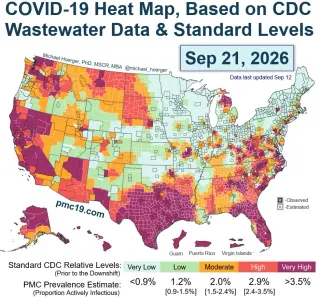
Updated COVID-19 vaccines targeting the XFG variant are now available in the US, with the FDA approving four formulations in late August. While medical groups broadly recommend vaccination to prevent severe illness, public uptake remains mixed due to lingering skepticism. A new JAMA review confirms that updated shots significantly reduce hospitalizations and deaths, particularly for older adults, though no specific data exists yet for the 2026-2027 formula.
The FDA has approved four updated COVID-19 vaccines for the 2026-2027 season, targeting the JN.1-lineage XFG variant. These include Pfizer's Comirnaty, Moderna's Spikevax and mNexspike, and Novavax's Nuvaxovid. While eligibility remains restricted to older adults and high-risk individuals, insurance coverage is expected for those groups, though out-of-pocket costs can be high for others.
Pfizer has released data indicating its four-dose Lyme disease vaccine is over 70% effective, marking a significant step toward human prevention after decades of absence. While the US currently lacks licensed human vaccines, rising tick populations and climate change have increased infection rates to an estimated 476,000 cases annually. The new candidate targets the OspA protein, aiming to neutralize bacteria within the tick before transmission. Although the trial involved over 9,400 participants, fewer infections occurred than expected, limiting statistical conclusiveness. Pfizer plans to submit the vaccine for regulatory approval, while other firms like Moderna and Tarsus Pharmaceuticals advance alternative vaccines and oral medications. Experts emphasize that while current prevention methods like protective clothing remain effective, they are often impractical for daily use, highlighting the potential public health benefit of accessible medical interventions.
A Pfizer-Valneva Lyme vaccine has completed trials but faces uncertain rollout due to the defunct CDC Advisory Committee on Immunization Practices. Maine, with record tick cases, lacks clear insurance coverage guidance as legal battles over the panel’s legitimacy continue.
Pfizer reported Q2 2026 adjusted earnings of 77 cents on $15.03 billion in revenue, beating estimates, and raised its full-year revenue guidance low end to $60.5 billion. The company expanded cost-cutting initiatives to target $9.7 billion in savings through 2029. Meanwhile, partner BioNTech missed Q2 revenue expectations and lowered its full-year outlook, citing weak Covid vaccine demand.
A Danish Medicines Agency study using about 3 million women's health data over 25 years found Depo-Provera and five other hormonal birth control drugs are linked to a small, temporary increase in risk for meningioma, a rare brain tumor. The risk is higher during use and largely fades within five years after stopping; the absolute risk remains very low.
Nike announced that David M. Denton will join as Executive Vice President and Chief Financial Officer, effective August 17, succeeding Matthew Friend who will step down but stay through September 4 to ensure a smooth transition. Denton, currently CFO of Pfizer since 2022, has more than 30 years of finance leadership at companies including Lowe’s and CVS Health and prior board experience. Nike also updated on fourth-quarter/fiscal-2026 results (June 30); the report will include a one-time tariff-refund benefit and is expected to be broadly in line with prior guidance absent that benefit.
Pfizer’s first new ADC after acquiring Seagen failed to meet its primary endpoint in a phase 3 nonsquamous NSCLC trial, showing no significant overall survival advantage vs docetaxel. The company cites a stronger signal in a patient subgroup with one prior therapy and notes ongoing phase 3 studies combining sigvotatug vedotin with pembrolizumab in first-line NSCLC, sustaining optimism for the program despite the setback.
Mid-stage data from Pfizer’s obesity drug berobenatide (from Metsera) suggest dosing it monthly after an initial weekly period can sustain weight loss through 28 weeks, with up to 12.1% loss in patients who stayed on treatment, though the monthly pace lags Lilly’s Zepbound and competitive clarity remains uncertain.
Pfizer presented midstage results for berobenatide, a monthly GLP-1 obesity drug acquired with Metsera for $10 billion, showing a side-effect profile similar to Novo Nordisk’s Wegovy (average nausea ~38%, vomiting ~23%). The long half-life makes monthly dosing front-loaded, and researchers plan a slower dose ramp in late-stage trials. Weight loss reached up to 12.3% in non-diabetics; analysts expect 20–25% vomiting and see monthly dosing as a potential differentiator from weekly rivals like Wegovy and Lilly’s Zepbound.
Chai Discovery announced a license with Pfizer to deploy its frontier AI platform, including the Chai-3 model and a Pfizer-custom model, within Pfizer’s drug discovery engine to accelerate biomolecule design and target hard-to-reach areas. Pfizer will gain early access to Chai-3, which advances antibody design and generalization, alongside a tailored model leveraging Pfizer’s data. The deal highlights growing use of AI in pharma to shorten discovery timelines that traditionally span months to weeks.
Pfizer and Innovent announced a broad collaboration worth up to $10 billion to develop 12 cancer medicines, starting with a $650 million upfront and up to $9.85 billion in milestones. Pfizer will gain exclusive global licenses for four programs, ex-China rights to four, and co-develop four with Innovent, while Innovent handles eight programs through phase 1. The partners will co-commercialize jointly owned assets in the U.S. and Europe, illustrating how Western pharma is leveraging China’s rapid early development to boost productivity and global reach.